Get your free personalized podcast brief
We scan new podcasts and send you the top 5 insights daily.
Startups like Cursor that are built on foundation models face existential platform risk. Their supplier (e.g., Anthropic) could limit access, degrade service, or copy their product, effectively killing their business, much like the scorpion stinging the frog mid-river.

Related Insights
The "AI wrapper" concern is mitigated by a multi-model strategy. A startup can integrate the best models from various providers for different tasks, creating a superior product. A platform like OpenAI is incentivized to only use its own models, creating a durable advantage for the startup.

Widespread anxiety from founders before OpenAI's Developer Day highlights a key challenge for AI startups. The fear is not a new competitor, but that the underlying platform (OpenAI) will launch a feature that completely absorbs their product's functionality, making their business obsolete overnight.

The notion of building a business as a 'thin wrapper' around a foundational model like GPT is flawed. Truly defensible AI products, like Cursor, build numerous specific, fine-tuned models to deeply understand a user's domain. This creates a data and performance moat that a generic model cannot easily replicate, much like Salesforce was more than just a 'thin wrapper' on a database.

Counter to fears that foundation models will obsolete all apps, AI startups can build defensible businesses by embedding AI into unique workflows, owning the customer relationship, and creating network effects. This mirrors how top App Store apps succeeded despite Apple's platform dominance.

Startups are becoming wary of building on OpenAI's platform due to the significant risk of OpenAI launching competing applications (e.g., Sora for video), rendering their products obsolete. This "platform risk" is pushing developers toward neutral providers like Anthropic or open-source models to protect their businesses.
Unlike traditional SaaS, AI applications have a unique vulnerability: a step-function improvement in an underlying model could render an app's entire workflow obsolete. What seems defensible today could become a native model feature tomorrow (the 'Jasper' risk).

According to Airbnb CEO Brian Chesky, a major reason for the scarcity of consumer AI startups is founder apprehension. They worry that if they build a successful consumer product, large platform players like OpenAI and Google will simply absorb their functionality, making it difficult to build a defensible, standalone business.

To escape platform risk and high API costs, startups are building their own AI models. The strategy involves taking powerful, state-subsidized open-source models from China and fine-tuning them for specific use cases, creating a competitive alternative to relying on APIs from OpenAI or Anthropic.
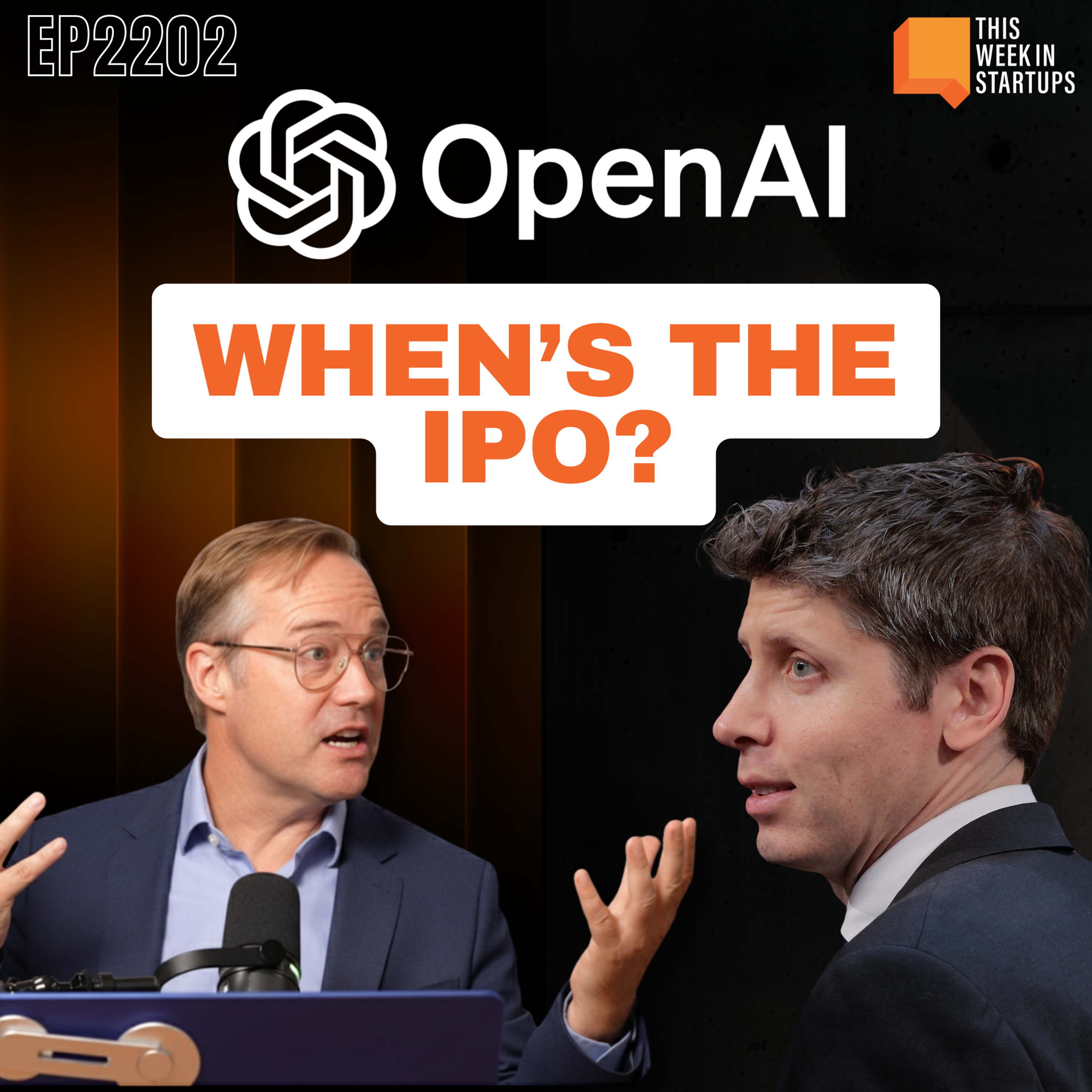
A growing movement in the startup community involves not using OpenAI's API. Founders fear OpenAI, in its push for revenue, will release services that directly compete with and kill startups built on its platform, similar to Microsoft's historical "embrace, extend, extinguish" strategy.
An AI app that is merely a wrapper around a foundation model is at high risk of being absorbed by the model provider. True defensibility comes from integrating AI with proprietary data and workflows to become an indispensable enterprise system of record, like an HR or CRM system.
