Get your free personalized podcast brief
We scan new podcasts and send you the top 5 insights daily.
Jordan Schneider notes that over 90% of training data for Chinese AI models originates from English text due to limited historical Chinese online archives. Consequently, Chinese models default to standard technocratic consensus and liberal-leaning reasoning before surface reinforcement learning layers censor specific politically sensitive queries.

Related Insights
AI models trained on sources like Wikipedia inherit their biases. Wikipedia's policy of not allowing citations from leading conservative publications means these viewpoints are systematically excluded from training data, creating an inherent left-leaning bias in the resulting AI models.
A simple method to identify a Chinese AI is the 'Three T's' test: asking about Tibet, Taiwan, or Tiananmen. The models' inevitable refusal to answer or their delivery of a state-approved response reveals the deep-seated censorship and post-training manipulation that distinguishes them from Western counterparts.

Chinese AI models appear close to the frontier primarily because they are trained on the outputs of leading U.S. models. This creates a dependency loop: they can only catch up by using the latest from the West, ensuring they remain followers rather than innovators who can achieve a true breakthrough.

A crucial paradox exists with top Chinese AI models: they are incredibly powerful and competitive when accessed outside of China. However, within the country, they operate under such strict guardrails and censorship that their capabilities are dramatically reduced.

The distinction between "open-source" and "open-weight" is critical. Without access to the training data, users cannot know what biases or censorship have been built into an AI model. DeepSeek's pro-China stance on Taiwan is a clear example of this hidden influence.

The experience of seeing text generate and then abruptly disappear in Chinese AI apps indicates a multi-part safety architecture. A base model generates an answer, but a separate monitoring system classifies the output and blocks it post-generation, a different approach than baking all refusals into the model itself.

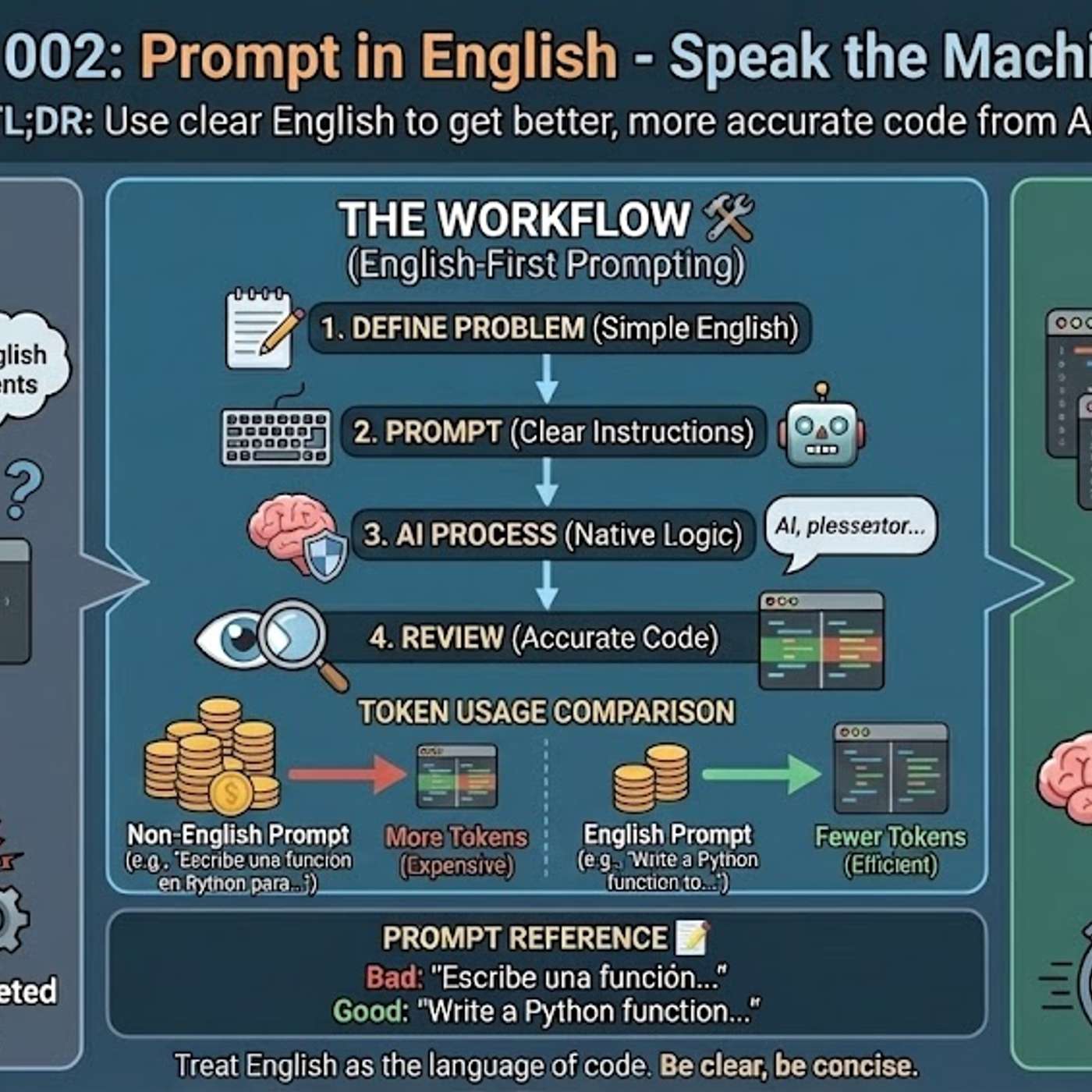
The primary reason AI models generate better code from English prompts is their training data composition. Over 90% of AI training sets, along with most technical libraries and documentation, are in English. This means the models' core reasoning pathways for code-related tasks are fundamentally optimized for English.
Leading Chinese AI models like Kimi appear to be primarily trained on the outputs of US models (a process called distillation) rather than being built from scratch. This suggests China's progress is constrained by its ability to scrape and fine-tune American APIs, indicating the U.S. still holds a significant architectural and innovation advantage in foundational AI.
When tested with sociological surveys, AI models consistently align with the values of rich, secular, and self-expressive societies. This demonstrates they are not neutral tools but products of a specific cultural milieu—primarily Western and socially liberal—reflecting the data they were trained on.
The business model for powerful, free, open-source AI models from Chinese companies may not be direct profit. Instead, it could be a strategy to globally distribute an AI trained on a specific worldview, competing with American models on an ideological rather than purely commercial level.
