Get your free personalized podcast brief
We scan new podcasts and send you the top 5 insights daily.
Instead of copying other armies, Harvard professor Georges Doriot used laboratories, physiological data, and a sensor-equipped copper dummy to objectively test what keeps a soldier warm and dry. This data-driven R&D approach led to a revolutionary design.

Related Insights
Breakthroughs often come from systematically testing a high volume of possibilities, not from a single brilliant insight. Edison tested 6,000 filaments to find one that worked. This redefines resilience not as mere persistence, but as a deliberate strategy to run more experiments than anyone else.

While competitors analyze exhaustively before building, SpaceX invests upfront in prototypes to discover problems that analysis can't predict. This treats reality as the primary validation tool, using failures as data points to eliminate uncertainty through doing, not just planning.

Early-stage R&D teams can stretch their budget by being efficient with prototypes. A small batch of 10 catheters can yield as much data as 100 if teams sequence their test plan carefully, performing non-destructive tests before destructive ones and reusing catheters for multiple tests where appropriate.

When a patient told him he "needed to figure this out," the founder's first step wasn't to write a business plan, but to scientifically understand *why* the device worked. This focus on first principles and efficacy over immediate commercialization built a strong foundation for the product.

The US military's intensive research for a single "perfect jacket" concluded that no such thing exists. The real breakthrough was a modular system of layers—a liner, a shell, and a parka—that could be adapted to any environment, revolutionizing apparel design.
Laura Deming's co-founder, Hunter, wasn't swayed by existing research. His initial skepticism turned to conviction only after he independently re-derived the fundamental physics of ice formation from first principles. This illustrates the depth of technical diligence required to validate radical ideas and build a foundation for tackling seemingly sci-fi challenges.

At American Housing Corp, engineers who design components also manufacture them in the factory and assemble them in the field. This forces them to experience the "pain" of their design decisions firsthand, creating a rapid, visceral feedback loop that leads to faster and more effective product improvements.

The best way for entrepreneurs to find a meaningful problem in the defense sector is not through research papers but by directly engaging with end-users. The advice is to go to naval bases, listen to the pain points of sailors and marines, and identify high-impact challenges worth solving.

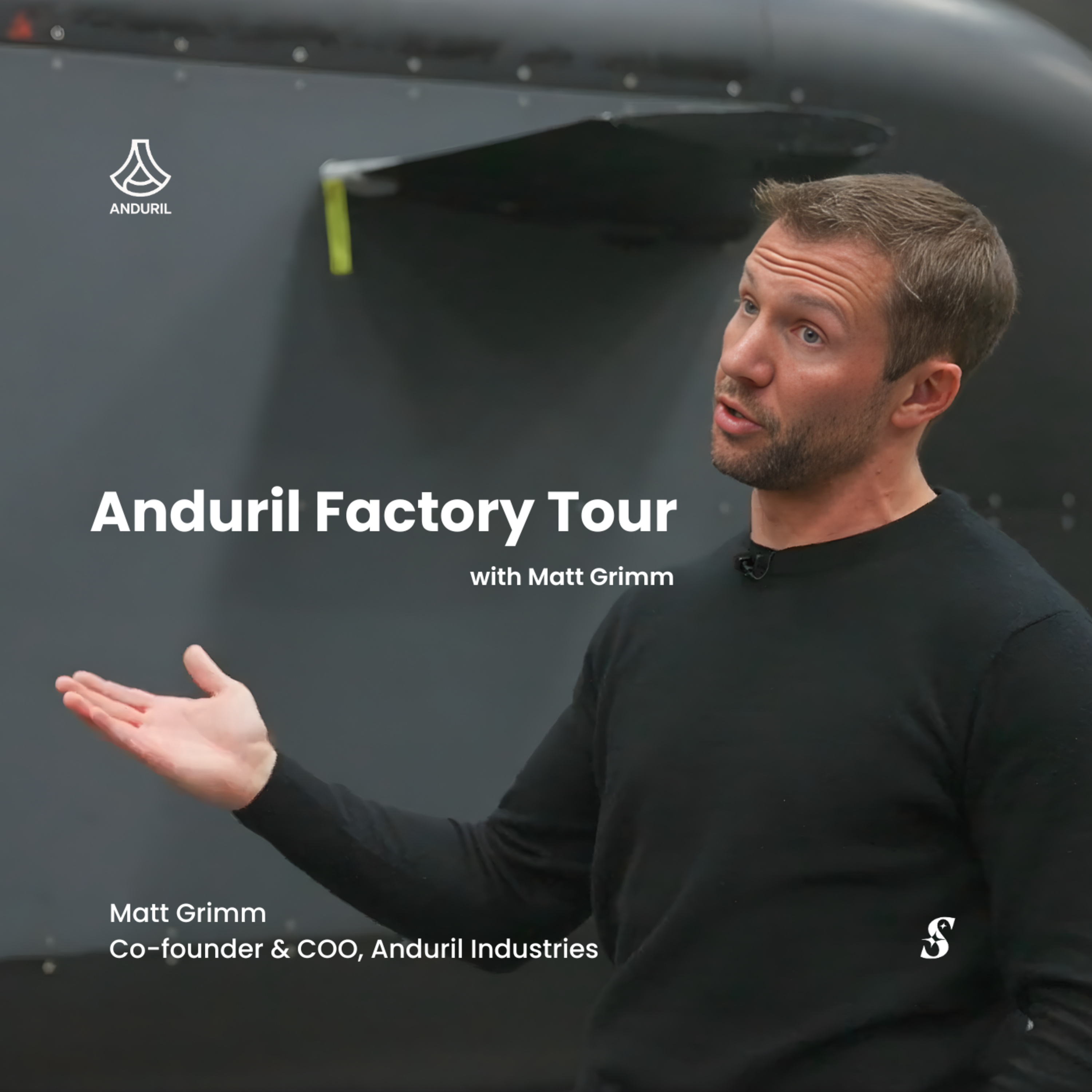
Anduril's R&D building houses machine shops, labs, and a 'dev test area' designed specifically to break products. By putting engineers across the parking lot from facilities that can rapidly prototype and test for failures (e.g., saltwater corrosion, vibration), they create an extremely tight feedback loop, speeding up iteration.
Scientists are naturally curious, but their potential is constrained by budgets focused solely on building pre-defined solutions. Allocating resources for R&D to investigate the 'why' behind a user problem unleashes their creativity, leading to multiple innovative solutions and a robust product pipeline.
