Get your free personalized podcast brief
We scan new podcasts and send you the top 5 insights daily.
By pricing a humanoid robot at $1,688—cheaper than an iPhone—Nordic Robotics is creating a new market. The robot is sold not as a finished consumer good but as an accessible development platform. This strategy seeds a community of developers to build out the AI and use cases for the hardware.

Related Insights
The hardware for advanced robotics has existed for decades, but the intelligence to power it was prohibitively expensive. With the advent of cheap, powerful AI models, the final barrier has been removed, unleashing a rapid explosion in robotics innovation.

The founder of robotics company Matic discovered a hard ceiling for consumer adoption. Their product saw "organ rejection" at $1,500 and only found traction under $1,000. This suggests there are virtually no ubiquitous consumer electronics devices priced over $2,000, a significant challenge for expensive hardware like humanoid robots.

For consumer robotics, the biggest bottleneck is real-world data. By aggressively cutting costs to make robots affordable, companies can deploy more units faster. This generates a massive data advantage, creating a feedback loop that improves the product and widens the competitive moat.

The first home humanoid robot, Nio, requires frequent human remote intervention to function. The company frames this not as a flaw but a "social contract," where early adopters pay $20,000 to actively participate in the robot's AI training. This reframes a product's limitations into a co-development feature.

The prohibitive cost of building physical AI is collapsing. Affordable, powerful GPUs and application-specific integrated circuits (ASICs) are enabling consumers and hobbyists to create sophisticated, task-specific robots at home, moving AI out of the cloud and into tangible, customizable consumer electronics.

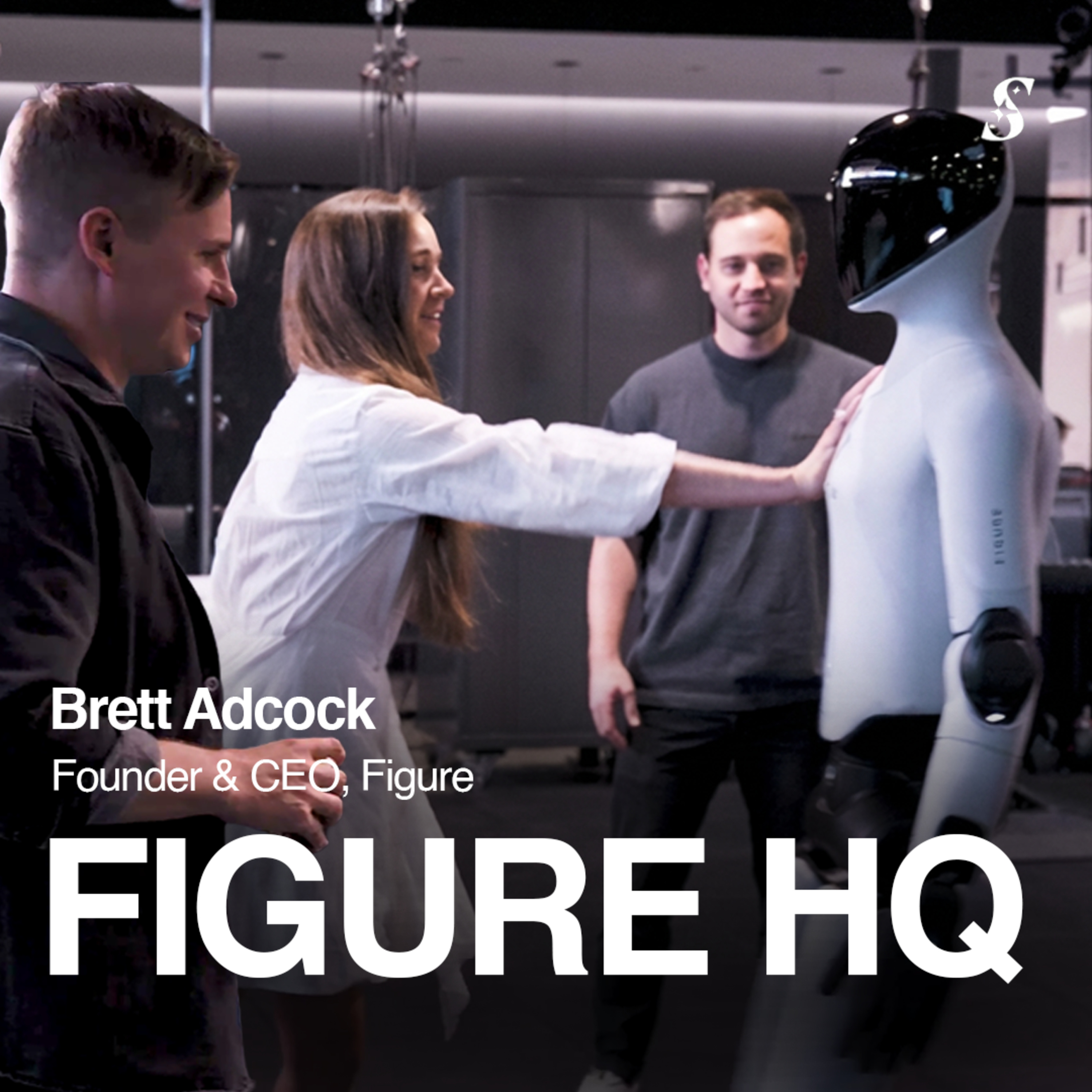
Figure's first robots were optimized for development speed using expensive CNC manufacturing. For its third generation, the company focused on design-for-manufacturing, successfully reducing the cost by nearly an order of magnitude while simultaneously improving the robot's capabilities and slimming its design.
One X is positioning its Neo robot not just as a product but as an open platform. This will allow third-party developers to build and sell specific 'skills,' creating an ecosystem akin to an app store. This strategy aims to accelerate the development of useful applications across society, beyond just the consumer market.

By solving the core "intelligence" problem with a foundation model, the barrier to entry for creating novel robotic applications and form factors will dramatically decrease. This will enable a "Cambrian explosion" of hardware creativity, as builders will no longer need to solve AI from scratch for each new idea.
![Sergey Levine - Building LLMs for the Physical World - [Invest Like the Best, EP.465] thumbnail](https://megaphone.imgix.net/podcasts/fdcd4328-2c77-11f1-a72b-977309fd08f1/image/b1bb4368d6e13a4a804924681ffe3ab1.jpg?ixlib=rails-4.3.1&max-w=3000&max-h=3000&fit=crop&auto=format,compress)
The humanoid robot company 1X is pricing its Neo robot at $20,000 to buy or $500/month to rent. This price point is a major signal for the industry because it's already competitive with, or cheaper than, human labor for tasks like housekeeping. This makes economic viability a near-term reality, even before full autonomy is achieved.
Firms are deploying consumer robots not for immediate profit but as a data acquisition strategy. By selling hardware below cost, they collect vast amounts of real-world video and interaction data, which is the true asset used to train more advanced and capable AI models for future applications.