Get your free personalized podcast brief
We scan new podcasts and send you the top 5 insights daily.
China's Communist Party (CCP) architected its system with capital controls and ultimate state authority to prevent subordination by Western corporate and financial powers. Unlike in other nations, there is no private entity or external force more powerful than the CCP.

Related Insights
To stop starving its population, China embraced capitalist ideas: leveraging self-interest, creating jobs, and allowing for income inequality. This paradoxical move by a communist regime serves as powerful evidence that capitalism is the most effective tool for pulling masses out of poverty.

Unlike in the West, China's economic dysfunctions like industrial overcapacity paradoxically strengthen its global position. This creates massive trade surpluses and investment leverage, forcing other nations to welcome Chinese capital and increasing Beijing's geopolitical heft.

Observing the USSR's fall, the Chinese Communist Party drew key lessons to ensure its survival: use overwhelming force against dissent, prioritize the Party's power monopoly even at the cost of economic efficiency, and aggressively assimilate ethnic minorities to prevent separatism.

For D1 Capital, the primary risk in China isn't economic but political. The government's ability to arbitrarily influence resource allocation, punish successful companies, and eliminate entire sectors without due process creates an unacceptable level of uncertainty for capital allocators, regardless of how cheap valuations become.

To counter the economic threat from China's state-directed capitalism, the U.S. is ironically being forced to adopt similar strategies. This involves greater government intervention in capital allocation and industrial policy, representing a convergence of economic models rather than a clear victory for free-market capitalism.

China aims for maximum self-sufficiency while simultaneously encouraging foreign economic dependence on its market. This calculated strategy creates powerful geopolitical leverage, as countries like Germany become hesitant to challenge China for fear of damaging their significant commercial interests.
In 1978, Deng Xiaoping effectively staged a coup by keeping the Communist Party's branding while completely rewiring the country's economic system to a capitalist model. This pivotal but unacknowledged discontinuity from Maoism fueled China's modernization.

China's economic miracle was not a triumph of communism but a pragmatic adoption of capitalist incentives. The government realized that allowing individuals to selfishly get ahead—creating income inequality—was the only effective mechanism to spur economic activity and lift millions of people from starvation.

China's central bank is flooding its market with liquidity not just for stimulus, but to bolster its financial system against capital flight through stablecoins. This defensive move aims to prevent citizens from bypassing capital controls, which the government perceives as a major threat to its monetary sovereignty.

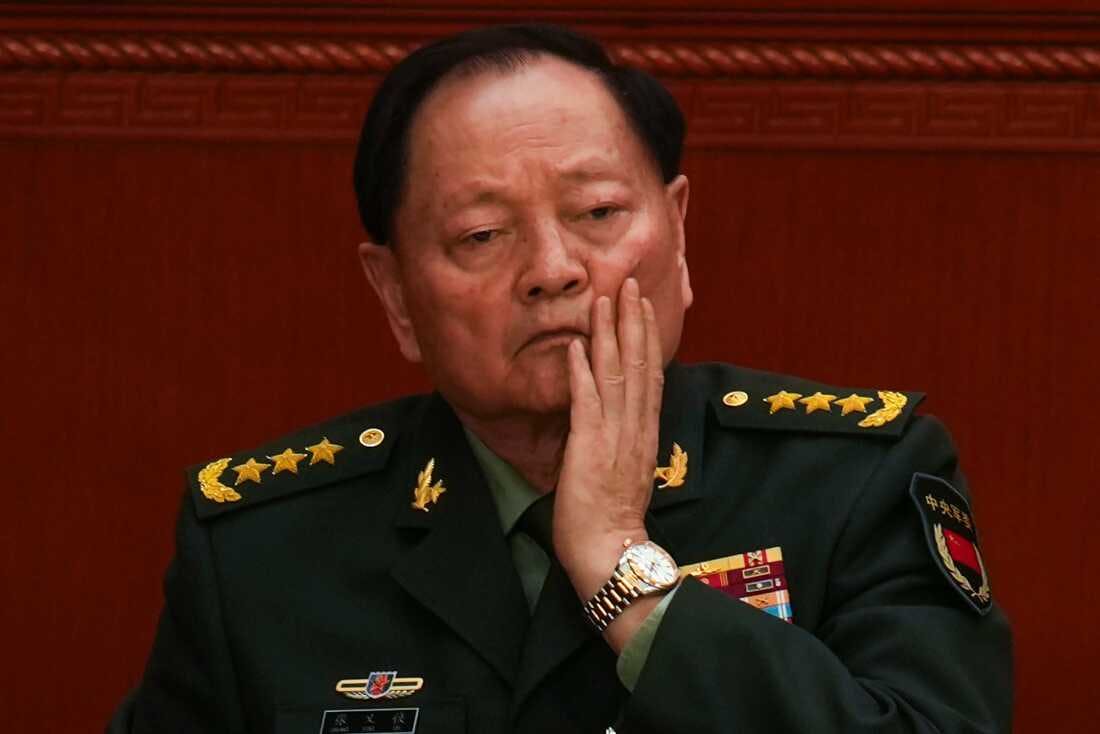
The PLA is the armed wing of the Chinese Communist Party, not the state. Xi Jinping is the only civilian on the Central Military Commission, making it the sole locus of party (and civilian) control, unlike Western models with extensive civilian oversight.