Get your free personalized podcast brief
We scan new podcasts and send you the top 5 insights daily.
Bringing on the first AEs forced AirOps' founders to distill their intuitive, "founder jazz" sales process into a repeatable playbook. This transition is a critical moment that requires making hard decisions and focusing the product offering to enable new hires to succeed.

Related Insights
Founders often hire their first sales leader to solve the problem of selling, which they haven't yet cracked. This role requires an entrepreneurial "renaissance rep" to discover the sales motion, not someone with a big-company resume to simply execute a known playbook. This mismatch in expectations is a primary cause of high turnover.
Blings hired talented salespeople early on, but they couldn't close deals without a repeatable process. The founder learned the true signal to scale the sales team is when the playbook is so refined that even a mediocre rep can succeed, proving the process works, not just the person.

Before your sales motion is repeatable, hire sellers motivated by long-term equity who can help solve foundational problems. Once you have a clear, repeatable playbook and ICP, switch to hiring "coin-operated" reps who are experts at executing a proven process at scale. Using the wrong type at the wrong time leads to failure.
Before scaling a sales organization, founders must personally learn how to sell the product, even if they do it poorly. This hands-on experience provides an invaluable, holistic understanding of the full customer journey, which is critical context that cannot be outsourced or delegated when building a GTM engine.

Founders can secure meetings, pivot in conversations, and leverage their deep product knowledge in ways that hired salespeople cannot. This initial success is a unique, non-repeatable phase of founder-led selling, not a scalable go-to-market strategy to be replicated by a sales team.

A startup's initial salesperson should prioritize mirroring the founder's successful sales approach. Their job is to deconstruct the founder's "hook" through observation and trial-and-error, not to immediately implement formal sales processes, metrics, or a CRM. Success comes from successful knowledge transfer, not premature system building.
Founders with deep domain expertise often sell effectively themselves but can't enable a sales team. They are 'unconsciously competent,' unable to extract their innate knowledge into a structured, repeatable sales motion that reps without their brain can execute.

Founders who sell intuitively often can't explain their methods. Instead of expecting new hires to "just do what I do," they need someone who can translate their talent into a teachable process, effectively acting as an interpreter for the rest of the team.
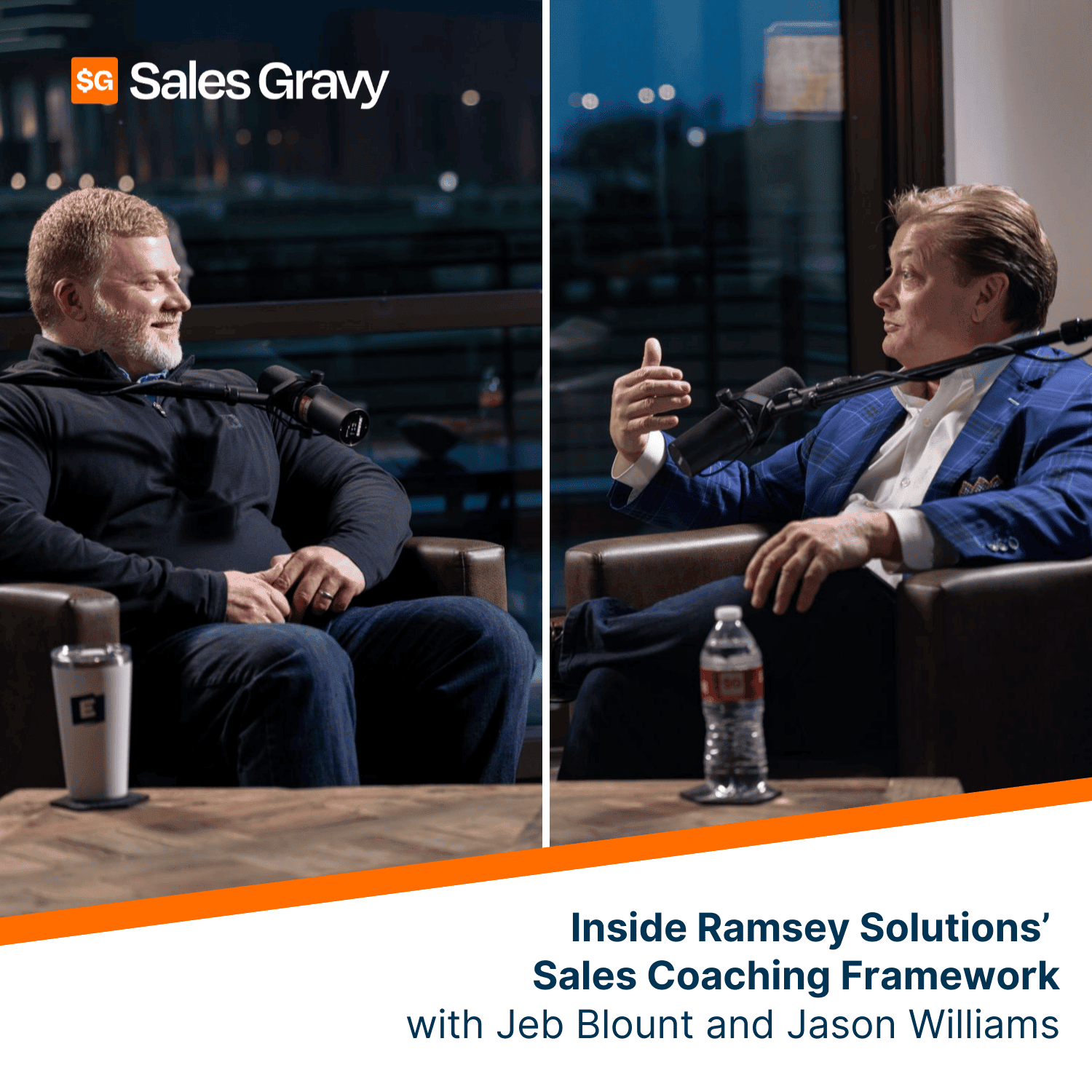
The founder, as the best salesperson, should always have a trainee shadowing them. This "double dips" on their time, turning every sales activity into a real-time training session. It's the most efficient way to transfer skills, duplicate the founder's success across a team, and build a scalable sales process based on modeling.

Create a defined process for every sales activity, from weekly planning to discovery calls, with clear exit criteria. This provides a repeatable playbook, removing guesswork about "what's next" and allowing the sales team to operate faster and more efficiently as it scales.