Get your free personalized podcast brief
We scan new podcasts and send you the top 5 insights daily.
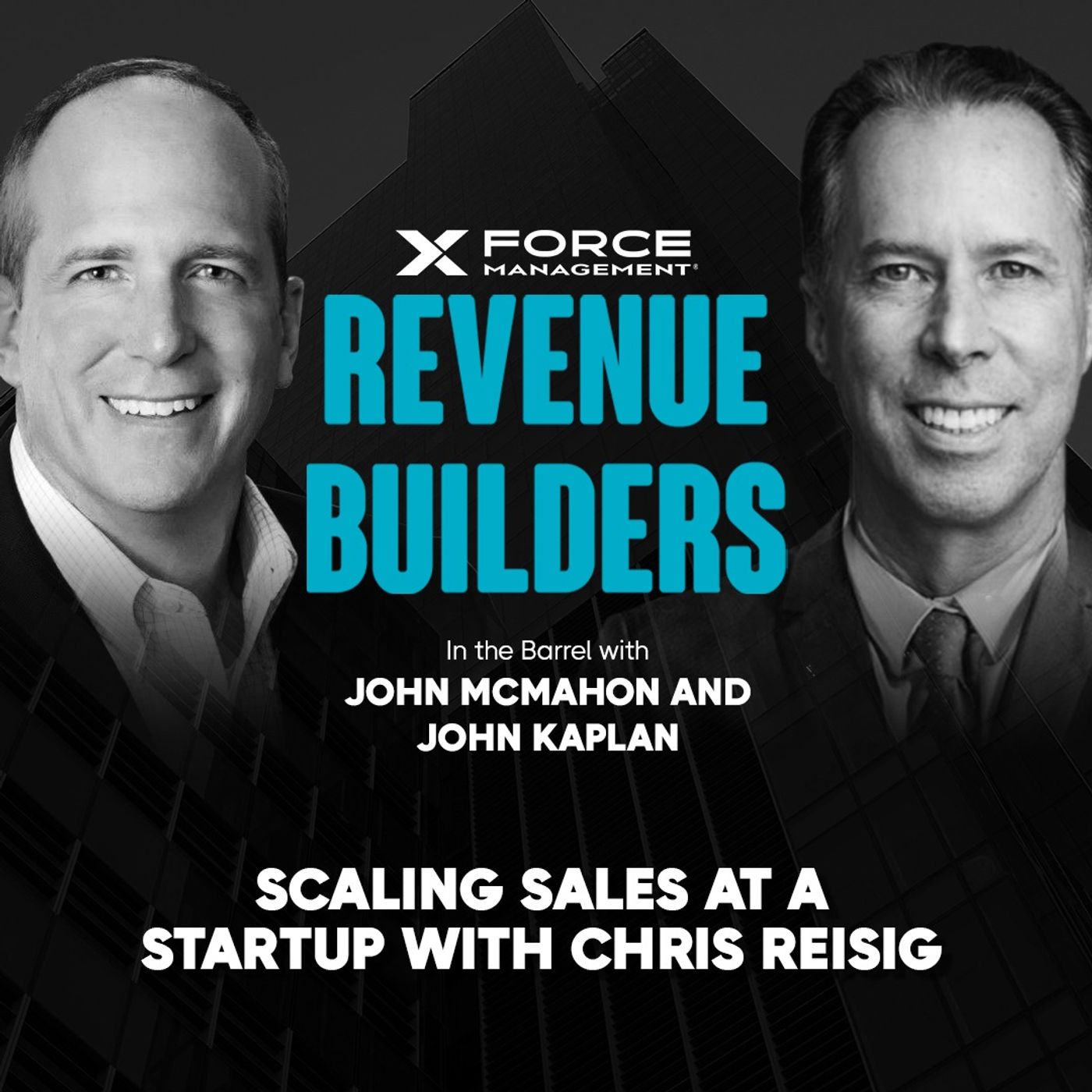
Founders who sell intuitively often can't explain their methods. Instead of expecting new hires to "just do what I do," they need someone who can translate their talent into a teachable process, effectively acting as an interpreter for the rest of the team.
Related Insights
Your best reps are often "unconsciously competent" and can't explain their own success. Before an SKO, leaders must help these individuals deconstruct their process and build a prescriptive presentation, translating their individual "art" into a replicable science for the entire sales team.

Founders often hire their first sales leader to solve the problem of selling, which they haven't yet cracked. This role requires an entrepreneurial "renaissance rep" to discover the sales motion, not someone with a big-company resume to simply execute a known playbook. This mismatch in expectations is a primary cause of high turnover.
If branding dilutes your high-touch founder sales process, the problem isn't the market. The solution is to "scale the unscalable" by creating a small, elite team trained to replicate the founder's one-on-one approach, even if they only perform at a B-minus level.

Many top-performing salespeople operate on instinct and talent, making them "unconsciously competent." While successful in the field, they struggle to lead teams because they lack the self-awareness to deconstruct and teach the specific actions that make them great.
Founders can secure meetings, pivot in conversations, and leverage their deep product knowledge in ways that hired salespeople cannot. This initial success is a unique, non-repeatable phase of founder-led selling, not a scalable go-to-market strategy to be replicated by a sales team.

A startup's initial salesperson should prioritize mirroring the founder's successful sales approach. Their job is to deconstruct the founder's "hook" through observation and trial-and-error, not to immediately implement formal sales processes, metrics, or a CRM. Success comes from successful knowledge transfer, not premature system building.
The founder, as the best salesperson, should always have a trainee shadowing them. This "double dips" on their time, turning every sales activity into a real-time training session. It's the most efficient way to transfer skills, duplicate the founder's success across a team, and build a scalable sales process based on modeling.

Relying on a single "gifted" individual for a skill like copywriting creates a bottleneck. To scale that expertise, the expert must deconstruct their intuitive process into a concrete, teachable system for their team.

To scale a sales-driven business, the top-performing individual must transition their focus from personal deal-closing to codifying their successful behaviors into a trainable system for others. Their value becomes their ability to make anyone a great closer, not just being one themselves. This identity shift is essential for exponential growth.
A founder's ability to sell is not proof of a scalable business. The real litmus test for repeatability is when a non-founder sales hire can close a deal from start to finish. This signals that the value proposition and process are teachable, which is the first true sign of a scalable go-to-market motion.