Get your free personalized podcast brief
We scan new podcasts and send you the top 5 insights daily.
The ratio of patients to optometrists is worsening dramatically, projected to shift from 1:5000 today to 1:8000 in a decade. This widening provider gap, driven by a declining pipeline of new doctors, makes automated solutions like iBot's vision testing kiosk a necessity, not just a convenience.

Related Insights
While fears of AI-driven job loss are valid in some industries, healthcare faces a massive and growing supply-demand mismatch. With record shortages of clinicians and unlimited demand, AI is less a job destroyer and more a critical tool to augment existing workers.

The push towards agentic AI in healthcare isn't just about efficiency. It's a direct response to compounding crises: an aging population with more chronic illnesses, severe clinician burnout, and tightening regulatory SLAs. These factors make traditional, human-centric care management unscalable.
The platform reduces labor needs by 90%. While this cuts costs, the primary benefit is overcoming the industry's severe shortage of highly skilled scientists. This talent scarcity is the true bottleneck to scaling cell therapy production, making automation a necessity for growth, not just an efficiency play.

Doctronic's AI-native care platform dramatically increases physician productivity. By using AI to handle initial intake and summarization, doctors can see 15 or more patients an hour, compared to the traditional telehealth rate of four. This demonstrates AI's potential to address the supply-demand mismatch in healthcare.

The most significant opportunity for AI in healthcare lies not in optimizing existing software, but in automating 'net new' areas that once required human judgment. Functions like patient engagement, scheduling, and symptom triage are seeing explosive growth as AI steps into roles previously held only by staff.
A standard pair of eyeglasses costs as little as $5 to make. The high consumer price and lack of access stem not from manufacturing, but from the difficulty and cost of obtaining a prescription. This highlights that automating and commoditizing the vision test is the key to unlocking the market.
Unlike the top-down, regulated rollout of EHRs, the rapid uptake of AI in healthcare is an organic, bottom-up movement. It's driven by frontline workers like pharmacists who face critical staffing shortages and need tools to manage overwhelming workloads, pulling technology in out of necessity.
Instead of replacing doctors, AI will serve as a force multiplier for scarce General Practitioners. By automating paperwork and answering repetitive patient questions, AI frees doctors to focus on high-value human interaction and complex diagnosis.

A primary driver of physician burnout isn't the difficulty of medicine but the overwhelming administrative load. Talented doctors are leaving the profession because their time is consumed by paperwork and fighting with insurance companies, creating a huge opportunity for automation.
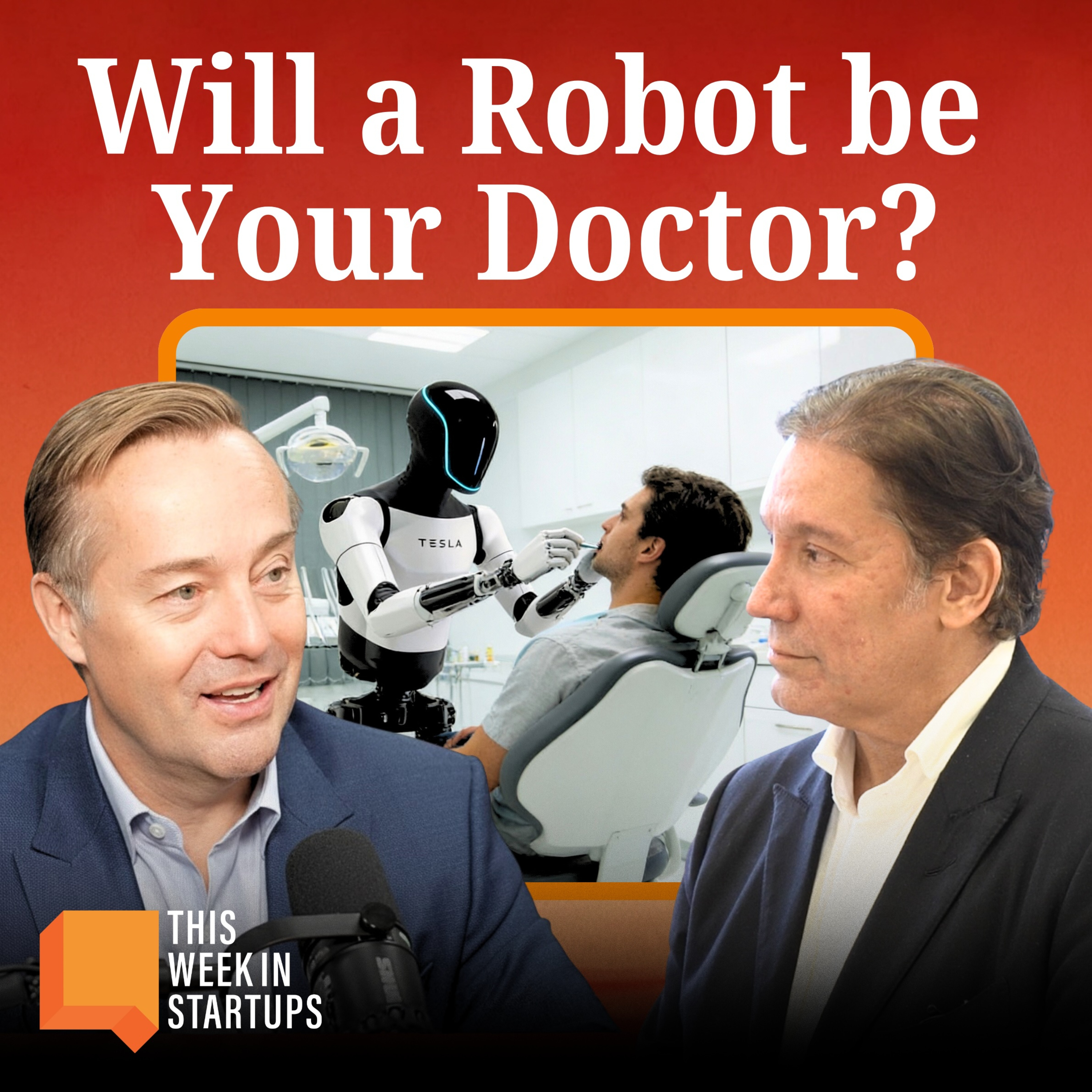
The long-term viability of home-based care models depends on solving the critical shortage of home healthcare workers. The convergence of AI and robotics is poised to address this by providing assistance with daily tasks, enabling sophisticated remote monitoring, and facilitating virtual physician visits, thus making scalable "Hospital at Home" and "Aging in Place" models a reality.