Get your free personalized podcast brief
We scan new podcasts and send you the top 5 insights daily.
In relapsed/refractory mantle cell lymphoma, the bispecific antibody glofitimab is achieving complete remission rates above 75%. This is unprecedented and notably better than existing CAR-T therapy data, suggesting an accessible, off-the-shelf immunotherapy can outperform more complex cellular therapies in this setting.

Related Insights
For third-line follicular lymphoma, where both CAR-T and bispecifics are approved, experts are leaning towards CAR-T. The long-term follow-up data for CAR-T suggests a potential for cure, making it a more compelling option for eligible patients despite logistical challenges.

Previously underperforming cancer targets like TIGIT and LAG-3 are seeing renewed interest. Innovative antibody engineering, such as creating bispecific antibodies that target multiple pathways simultaneously, is giving these 'failed' targets new life and potential for clinical success.

In follicular lymphoma, the treatment goal is durable remission with manageable toxicity, not necessarily a cure. Therefore, clinicians frequently prefer using a bispecific antibody first, reserving the more complex and toxic CAR-T cell therapy for transformed disease or after a bispecific fails.
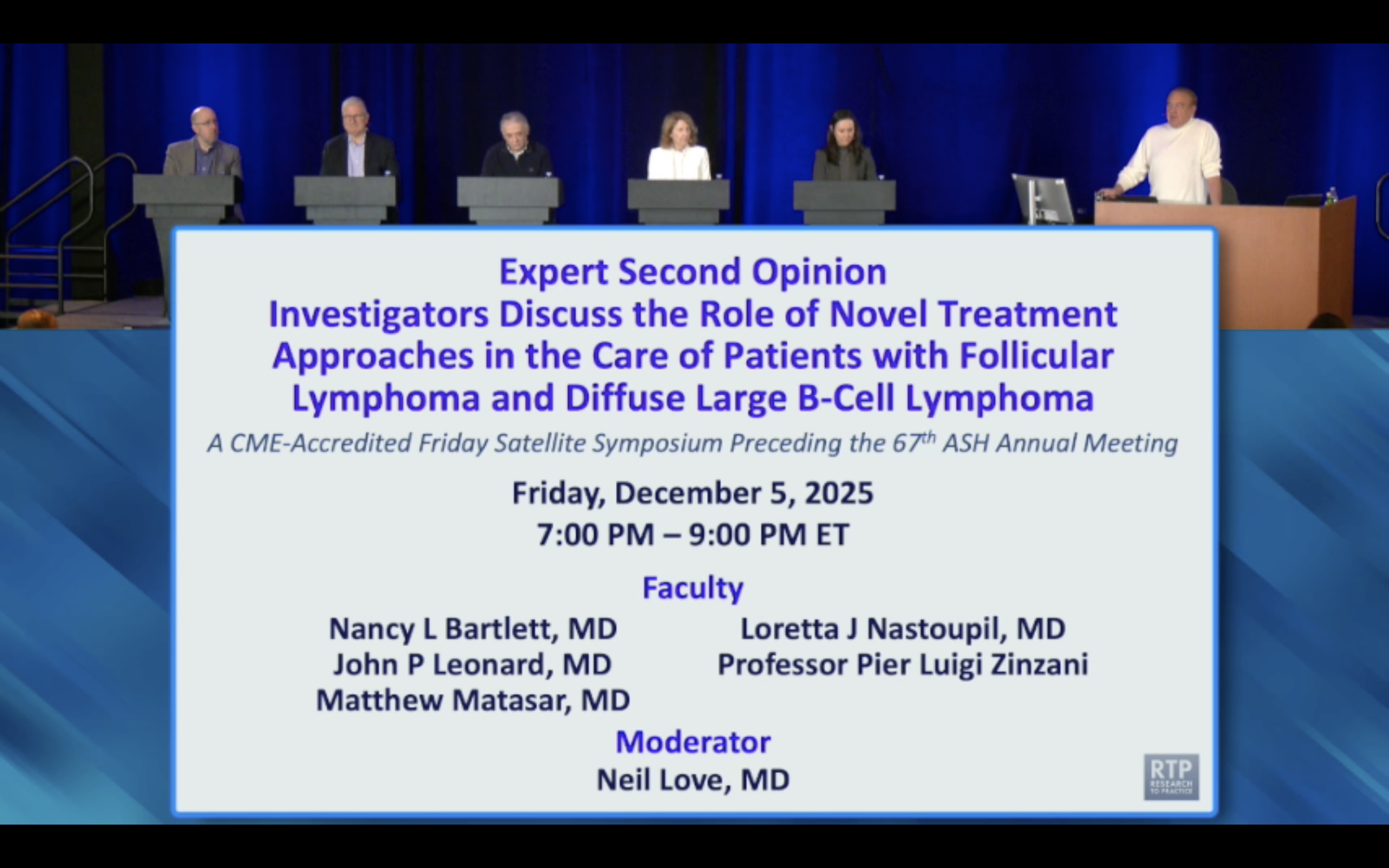
Data from the MAJESTIC three trial shows bispecific antibodies achieving progression-free survival rates comparable to CAR-T therapy. This creates a new clinical dilemma, forcing a choice between an immediate, off-the-shelf option for rapid progression versus a one-time therapy with a longer track record, making treatment an individualized decision.

A convergence of data from pivotal trials (MAJESTIC, CARTITUDE) establishes that BCMA-directed therapies, including CAR-T and bispecifics, provide superior outcomes in early relapse. This marks a paradigm shift, making them the new standard of care after initial therapy failure, even in patients refractory to prior common treatments.
Bispecific antibodies are "off-the-shelf" therapies with manageable side effects that don't require specialized manufacturing centers like CAR T. This allows community practices to administer highly effective T-cell redirecting therapies, equalizing access for patients far from major academic institutions.

Beyond their direct anti-myeloma effects, CELMoDs potently activate the immune system. This positions them as ideal partners for immunotherapies like CAR T and bispecifics, with the potential to restore immune function and overcome resistance to T-cell redirecting therapies.

Clinicians report significant and durable responses using Belantamab in patients who have relapsed after BCMA-targeted CAR-T. This success may be due to Belantamab's immunogenic mechanism, which doesn't rely on endogenous T-cells and may favorably interact with the post-CAR immune environment.
Current CAR-T therapy for CLL requires a complete response (CR) for long-term benefit. A partial response provides only about two years of disease control, an outcome similar to the oral drug pirtobrutinib but with significantly more toxicity, complexity, and logistical burden for the patient.

Moving CAR T-cell therapy from the third-line to the second-line setting for high-risk DLBCL doesn't just improve survival curves, it meaningfully increases the cure fraction from approximately 40% to 50-55%. This quantifiable benefit provides a strong rationale for using CAR T therapy earlier in the disease course.
