Get your free personalized podcast brief
We scan new podcasts and send you the top 5 insights daily.
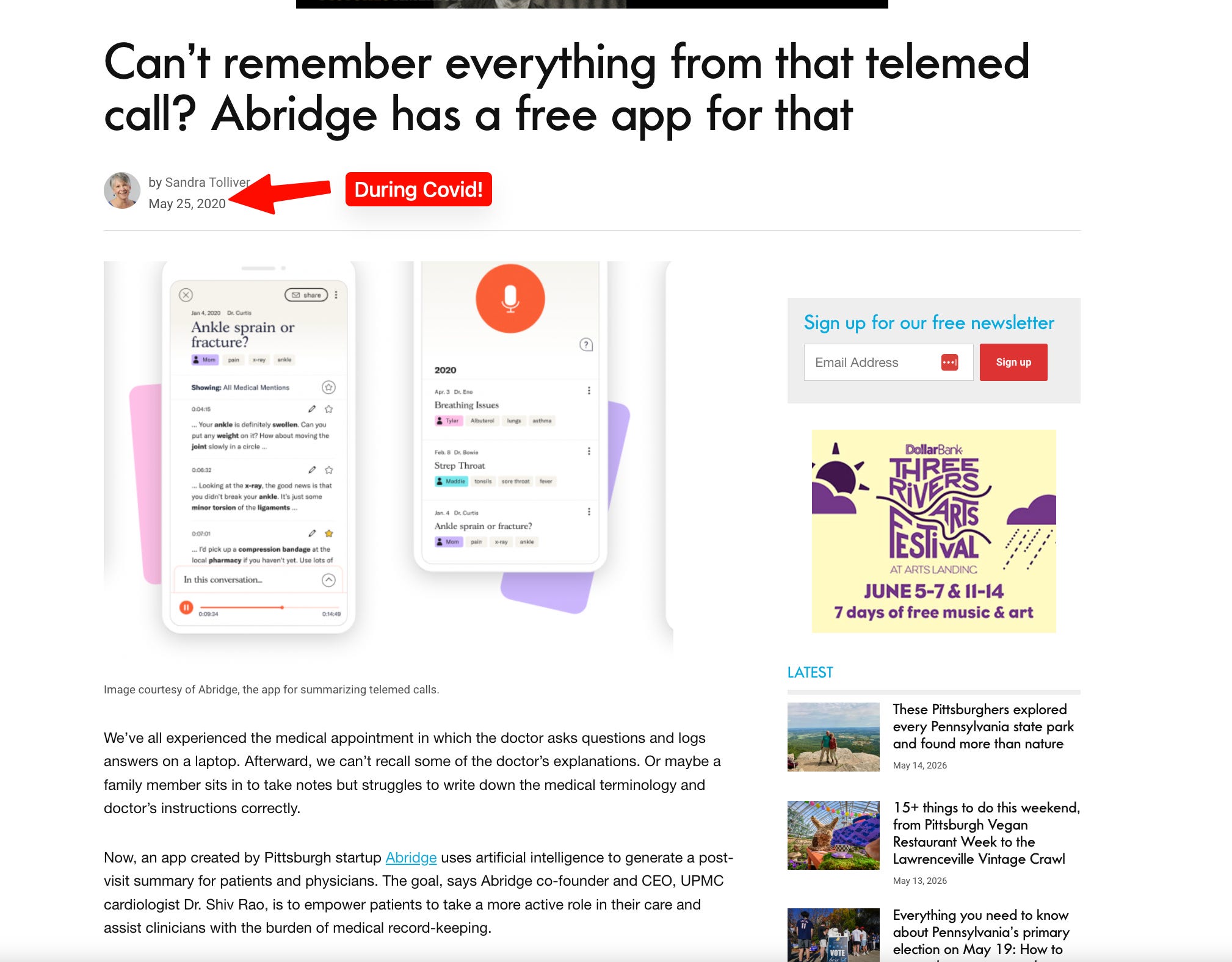
Abridge's secret weapon for building clinically relevant products is the "clinician scientist" role. These are team members with clinical backgrounds (e.g., MDs) who are also deeply technical. By embedding them in product teams, the company ensures that clinical usefulness and safety are baked into development and evaluation from day one.
Related Insights
Successful MedTech innovation starts by identifying a pressing, real-world clinical problem and then developing a solution. This 'problem-first' approach is more effective than creating a technology and searching for an application, a common pitfall for founders with academic backgrounds.
A key skill in building a deep tech team is identifying individuals who can bridge the gap between complex science and business reality. These "translators" can articulate highly technical concepts in plain English, clarifying clinical relevance and commercial viability for decision-makers.

In regulated spaces like healthcare, product managers must move beyond surface-level collaboration. They need to develop deep domain knowledge and partner with clinicians who are embedded in the product process, co-writing requirements and ideating on solutions, not just acting as consultants.

A former medic explains that hands-on patient care provides an irreplaceable perspective for executives. It grounds strategic decisions in the reality of the patient experience, which is crucial for communicating value to teams and investors and maintaining a patient-first culture.

Early-stage biotechs prioritize scientists to build the core platform. However, once a lead clinical program is identified, the critical hire becomes a Chief Medical Officer who can design the clinical strategy. This hire is timed to the program's maturation, not the company's age, reflecting a pivotal strategic shift.

The next wave of MedTech innovation won't just come from engineers. It will come from creating tools that allow surgeons and clinicians—those who see problems firsthand—to easily prototype and de-risk new device concepts, vastly expanding the market for innovation itself.

A successful research program requires deep integration with the clinical environment. By spending time with oncologists and nurses and joining tumor boards, scientists gain the necessary context to ask the most meaningful questions, bridging the gap between theoretical lab work and the reality of patient care.

The most critical role for a physician co-founder extends beyond the initial idea. They must act as the primary evangelist and validator, sharing the engineering progress with their peers to ensure the device's design and function align with the broader clinical community's needs and vision.
To avoid the "alert fatigue" common in medical software, Abridge's product philosophy is for its AI to be proactive, not reactive. It works seamlessly in the background to prepare clinicians before visits, rather than interrupting them with constant alerts during patient conversations, making the experience helpful but unobtrusive.
The most impactful medical advances come from 'clinical scientists' who both see patients and work in the lab. This dual perspective provides a deep understanding of disease mechanisms and how to translate research into treatments, a model that Dr. Abelson believes is now under threat due to economic pressures.