Get your free personalized podcast brief
We scan new podcasts and send you the top 5 insights daily.
Instead of interacting with SaaS GUIs (like Greenhouse for hiring), users will interact with AI agents. These agents will directly manipulate the underlying system-of-record data, managing entire workflows from a simple conversation and making the traditional SaaS application redundant.

Related Insights
The next generation of software may lack traditional user interfaces. Instead, they will be 'API-first' or 'agent-first,' integrating directly into existing workflows like Slack or email. Software will increasingly 'visit the user' rather than requiring the user to visit a dashboard.

The new generation of AI automates workflows, acting as "teammates" for employees. This creates entirely new, greenfield markets focused on productivity gains for every individual, representing a TAM potentially 10x larger than the previous SaaS era, which focused on replacing existing systems of record.

AI is becoming the new UI, allowing users to generate bespoke interfaces for specific workflows on the fly. This fundamentally threatens the core value proposition of many SaaS companies, which is essentially selling a complex UX built on a database. The entire ecosystem will need to adapt.

Turing's CEO claims SaaS is dead for two reasons. First, powerful foundation models drastically lower the cost of building custom software internally. Second, existing SaaS products are built for human interaction via GUIs, not for AI agents that will increasingly use APIs and tool-calling functions directly.
Legacy systems like CRMs will lose their central role. A new, dynamic 'agent layer' will sit above them, interpreting user intent and executing tasks across multiple tools. This layer, which collapses the distance between intent and action, will become the primary place where work gets done.

The future of software isn't just AI-powered features. It's a fundamental shift from tools that assist humans to autonomous agents that perform tasks. Human roles will evolve from *doing* the work to *orchestrating* thousands of these agents.
OpenAI's partnership with ServiceNow isn't about building a competing product; it's about embedding its "agentic" AI directly into established platforms. This strategy focuses on becoming the core intelligence layer for existing enterprise systems, allowing AI to act as an automated teammate within familiar workflows.
Instead of integrating with existing SaaS tools, AI agents can be instructed on a high-level goal (e.g., 'track my relationships'). The agent can then determine the need for a CRM, write the code for it, and deploy it itself.
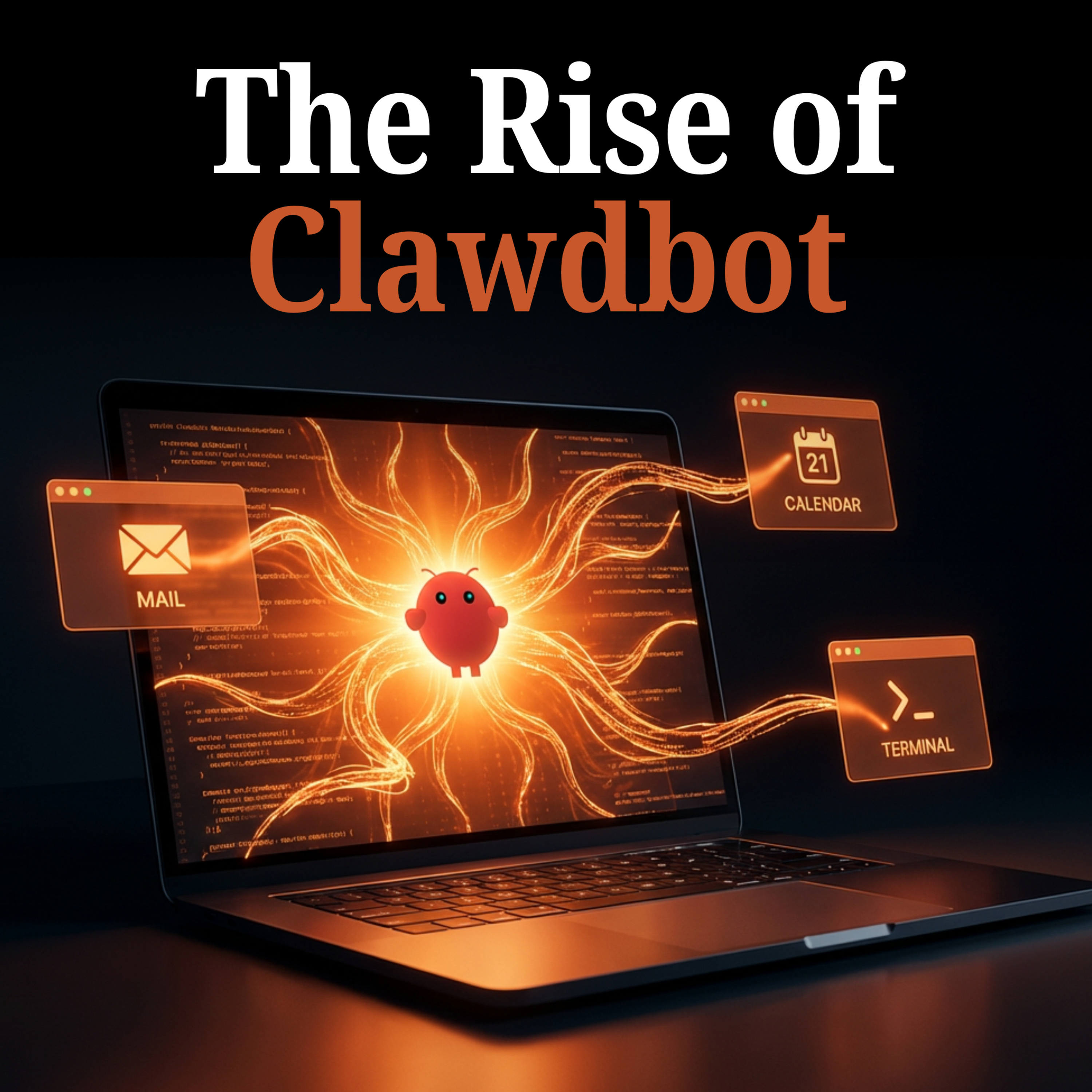
The hype around individuals building their own apps with AI misses the bigger picture. According to Sierra CEO Bret Taylor, the fundamental shift is from graphical interfaces to conversational agents, which will change software form factors, business models, and user interaction entirely.

The paradigm shift with AI agents is from "tools to click buttons in" (like CRMs) to autonomous systems that work for you in the background. This is a new form of productivity, akin to delegating tasks to a team member rather than just using a better tool yourself.