Get your free personalized podcast brief
We scan new podcasts and send you the top 5 insights daily.
Instinct's core strategy is to be an "experience, not a tool." It avoids building a new application, instead integrating with users' existing habits like texting, calling, and emailing. This removes the friction of learning a new interface and meets users where they already are.
![Noah Shinn - Building Instinct: The Personal Agent - [Invest Like the Best, EP.493] thumbnail](https://megaphone.imgix.net/podcasts/ef669774-cccd-11ed-889b-c36caad6646f/image/158efdddfb983d2678b3530d484e8aa2.jpg?ixlib=rails-4.3.1&max-w=3000&max-h=3000&fit=crop&auto=format,compress)
Related Insights
Users rarely seek out separate AI functionality. Adoption becomes natural when AI assistance appears contextually within existing workflows, addressing friction points directly where the user is already working. This embedded approach is far more effective than adding AI as a separate, layered-on tool.
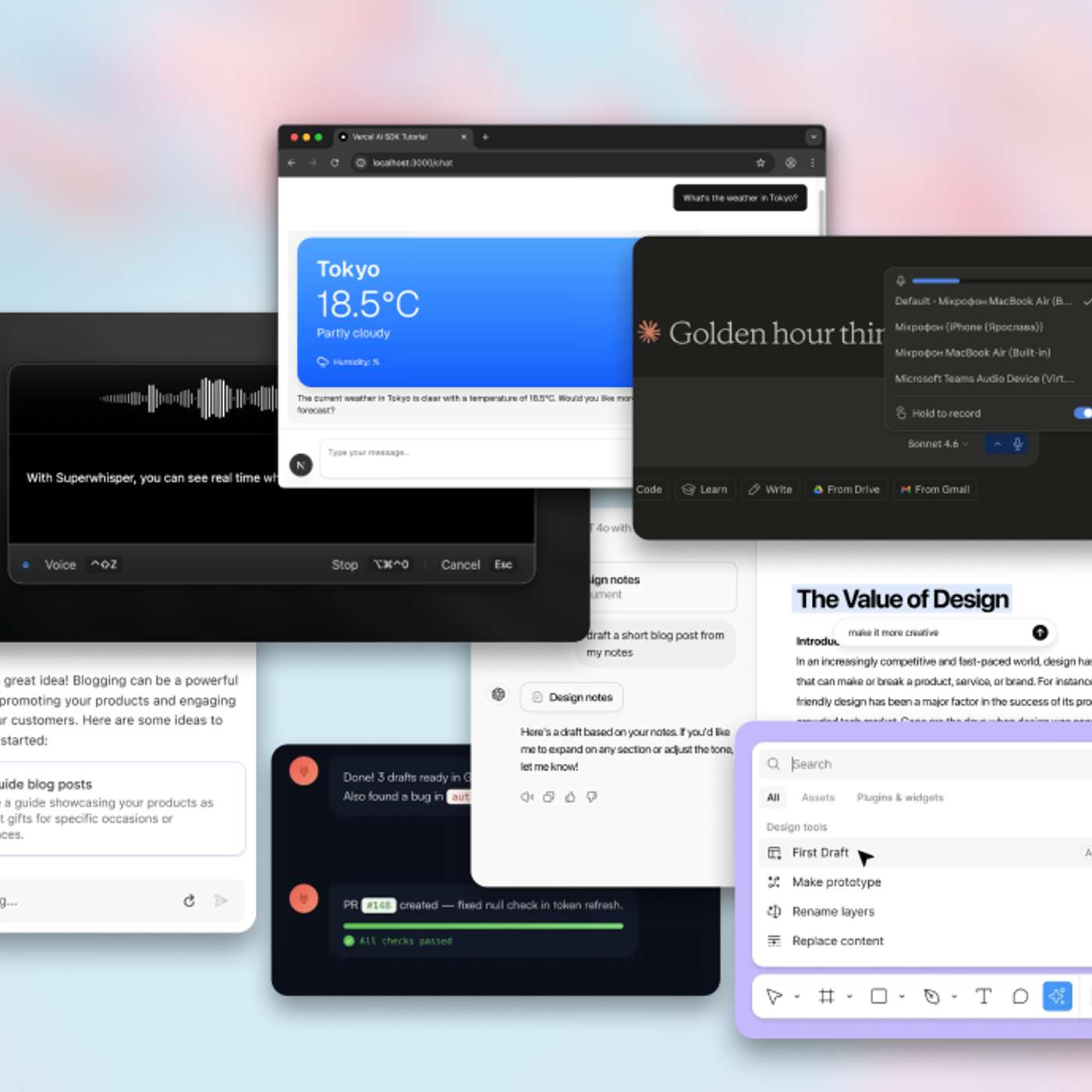
While advanced AI agents like Hermes and OpenClaw cater to power users with increasing complexity, Instinct wins the mass market by focusing on radical simplicity. Its 'agent for everyone' approach proves that accessibility trumps feature-richness for broad adoption by non-technical users.

Most customers don't know they need an "agentic product." The key to adoption is not marketing the agent itself but solving a user's problem within existing workflows they already understand, such as text messaging or email. This avoids the high friction of teaching users a completely new paradigm.
Instead of confining users to its app, Linear's first homegrown agent was built for Slack's interface. This user-centric strategy embeds workflows into existing habits—like summarizing a long Slack thread into tickets—acknowledging that work happens across an ecosystem of tools.

The most effective application of AI isn't a visible chatbot feature. It's an invisible layer that intelligently removes friction from existing user workflows. Instead of creating new work for users (like prompt engineering), AI should simplify experiences, like automatically surfacing a 'pay bill' link without the user ever consciously 'using AI.'

AI tools see massive user uptake when integrated into existing platforms like WhatsApp. This convenience factor and presence in the user's existing workflow often outweighs the need for the most advanced AI model, proving that distribution can be a more powerful moat than technology.

By choosing familiar, conversational interfaces like SMS and Slack over a dedicated app, Gusto is making its AI agent feel like a real team member. This reduces friction and makes delegation feel more natural for entrepreneurs who are used to texting or slacking an assistant to get tasks done.

A chatbot is a necessary interface for multi-turn interactions but shouldn't be the primary entry point. The most effective domain-specific agents are accessible from natural "on-ramps" within a user's existing workflow, such as a Slack conversation or a meeting summary.

Furcon designed his AI agent platform, Nebula, to look and feel like Slack. This familiar messaging interface makes it easier for non-technical users to delegate complex tasks to AI agents, lowering the barrier to entry for powerful automation.
To drive adoption of AI agents, don't force users into a new application. Instead, integrate the agent directly into their existing collaboration tools like Slack. This approach reduces friction and makes the agent feel like a natural part of the team, leading to higher engagement and user satisfaction.
