Get your free personalized podcast brief
We scan new podcasts and send you the top 5 insights daily.
AI tools see massive user uptake when integrated into existing platforms like WhatsApp. This convenience factor and presence in the user's existing workflow often outweighs the need for the most advanced AI model, proving that distribution can be a more powerful moat than technology.

Related Insights
Users rarely seek out separate AI functionality. Adoption becomes natural when AI assistance appears contextually within existing workflows, addressing friction points directly where the user is already working. This embedded approach is far more effective than adding AI as a separate, layered-on tool.
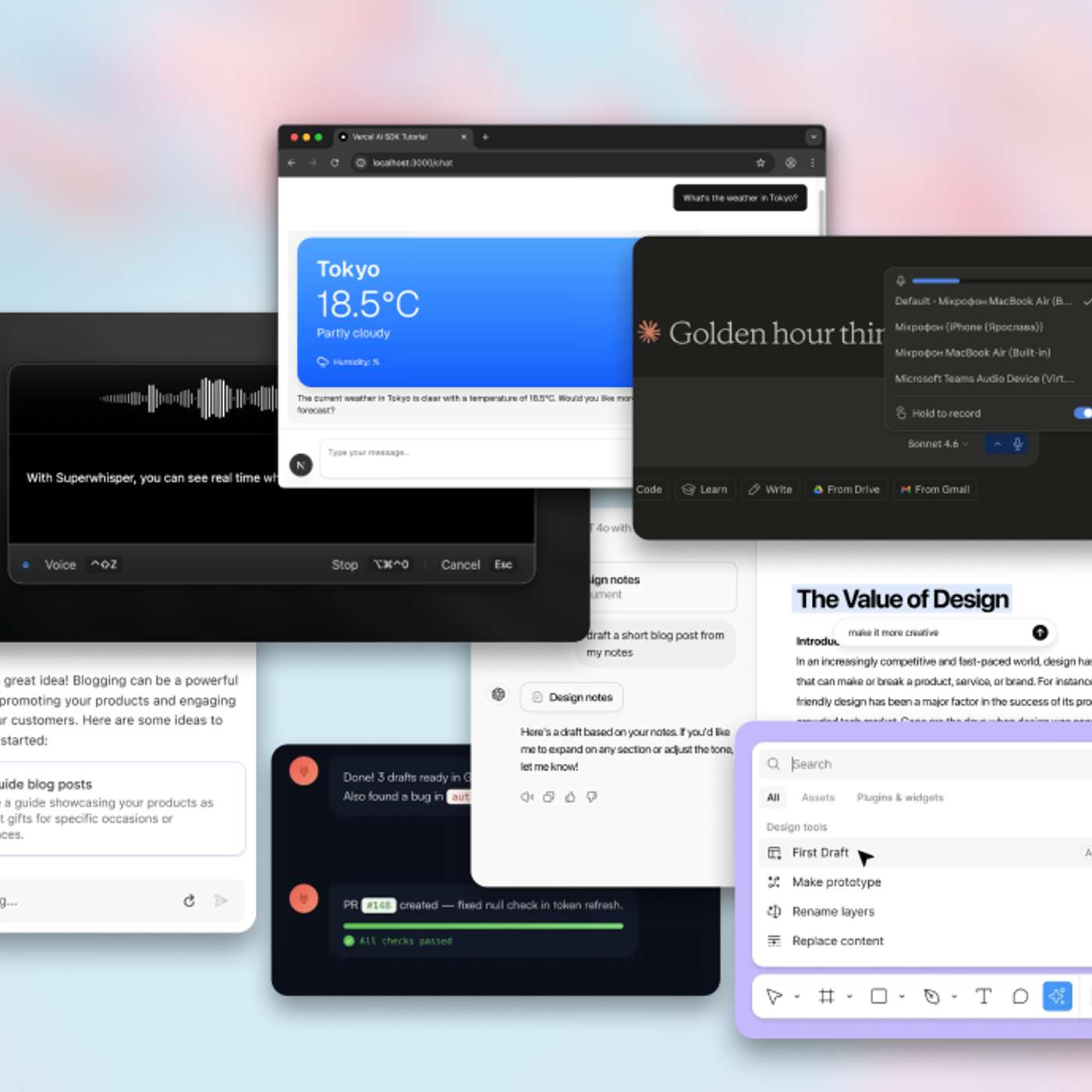
Most customers don't know they need an "agentic product." The key to adoption is not marketing the agent itself but solving a user's problem within existing workflows they already understand, such as text messaging or email. This avoids the high friction of teaching users a completely new paradigm.

The primary barrier to widespread AI adoption is not the power of the models, but the difficulty of embedding them into users' existing habits. Meeting users where they already are—like their email inbox—is more effective than forcing them to adopt new applications or behaviors.

Judging consumer AI's success by chatbot user growth is misleading. The real adoption is happening 'invisibly' as generative AI enhances existing popular experiences, like Instagram's recommendation engine and Amazon's product search, rather than in standalone chat apps.

The primary barrier for useful AI agents is not the underlying model but the complex task of 'data wiring'—connecting to a user's real-world context like emails, local files, and support tickets. Products that solve this difficult integration challenge, where most agents currently fail, will gain a significant competitive advantage.

Despite headlines using "enterprise" language, Meta's new business agent is strategically aimed at the massive global market of small businesses (e.g., bakeries, local shops) already using WhatsApp. The value proposition is not complex integration but iPhone-like simplicity for business owners too busy to become AI experts.
To get mainstream users to adopt AI, you can't ask them to learn a new workflow. The key is to integrate AI capabilities directly into the tools and processes they already use. AI should augment their current job, not feel like a separate, new task they have to perform.
A chatbot is a necessary interface for multi-turn interactions but shouldn't be the primary entry point. The most effective domain-specific agents are accessible from natural "on-ramps" within a user's existing workflow, such as a Slack conversation or a meeting summary.

The debate over whether "normal people" will use AI agents is misleading. Widespread adoption won't come from standalone agent apps but from agents being seamlessly integrated into the background of existing platforms, making their use completely invisible to the end-user.

To drive adoption of AI agents, don't force users into a new application. Instead, integrate the agent directly into their existing collaboration tools like Slack. This approach reduces friction and makes the agent feel like a natural part of the team, leading to higher engagement and user satisfaction.
