Get your free personalized podcast brief
We scan new podcasts and send you the top 5 insights daily.
AI is debated as a powerful tool for discrete, functional tasks like analyzing ancient texts or creating podcast chapter markers. However, its role in creative fields and education is viewed as contentious and potentially destructive, suggesting its true value is in utility, not artistry.

Related Insights
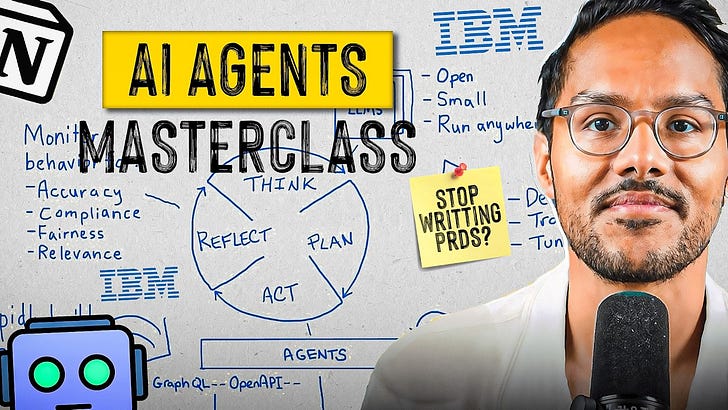
While AI tools once gave creators an edge, they now risk producing democratized, undifferentiated output. IBM's AI VP, who grew to 200k followers, now uses AI less. The new edge is spending more time on unique human thinking and using AI only for initial ideation, not final writing.
Users despise AI "slop" but admire the "farmer" who creates. This paradox highlights a tension: is an AI content creator still a noble artisan, or just a purveyor of low-quality feed for the masses? The value of "craft" is being re-evaluated.

AI excels where success is quantifiable (e.g., code generation). Its greatest challenge lies in subjective domains like mental health or education. Progress requires a messy, societal conversation to define 'success,' not just a developer-built technical leaderboard.
The "generative" label on AI is misleading. Its true power for daily knowledge work lies not in creating artifacts, but in its superhuman ability to read, comprehend, and synthesize vast amounts of information—a far more frequent and fundamental task than writing.

True creative mastery emerges from an unpredictable human process. AI can generate options quickly but bypasses this journey, losing the potential for inexplicable, last-minute genius that defines truly great work. It optimizes for speed at the cost of brilliance.

The common metaphor of AI as an artificial being is wrong. It's better understood as a 'cultural technology,' like print or libraries. Its function is to aggregate, summarize, and transmit existing human knowledge at scale, not to create new, independent understanding of the world.
While AI can accelerate tasks like writing, the real learning happens during the creative process itself. By outsourcing the 'doing' to AI, we risk losing the ability to think critically and synthesize information. Research shows our brains are physically remapping, reducing our ability to think on our feet.

AI will commoditize the *act* of creating content (the 'doing'). The value will shift entirely to the *idea* behind the content (the 'thinking'), making strategic creativity the most valuable skill.

The debate over AI's 'true' creativity is misplaced. Most human innovation isn't a singular breakthrough but a remix of prior work. Since generational geniuses are exceptionally rare, AI only needs to match the innovative capacity of the other 99.9% of humanity to be transformative.

The value of human-created work comes from its origin in a unique individual's lived experience. AI can mimic emotions like love or grief, but it cannot truly feel them. This inability to have an authentic emotional experience makes its creations replicable and fundamentally less valuable than true human expression.
