Get your free personalized podcast brief
We scan new podcasts and send you the top 5 insights daily.
Granolah's founder isn't worried about competitors copying his AI meeting notes. He believes the industry is in the early stages of a computing revolution where the real prize is defining the next interface for work. Today's feature-level battles are insignificant compared to that opportunity.

Related Insights
Atlassian's CEO argues that as AI makes software creation cheaper, the key differentiator becomes design—how a product feels and works. This is a scarce resource that is much harder to copy than features, making it the new source of competitive advantage.
Long-term success in the AI race will be determined by superior user experience (UX) and seamless integration into daily workflows, not just raw model performance on technical benchmarks. The most valuable AI will be the one people use every day, making UX the key competitive differentiator.

As foundational AI models become more accessible, the key to winning the market is shifting from having the most advanced model to creating the best user experience. This "age of productization" means skilled product managers who can effectively package AI capabilities are becoming as crucial as the researchers themselves.

OpenAI CEO Sam Altman now publicly hedges that winning requires the best models, product, *and* infrastructure. This marks a significant industry-wide shift away from the earlier belief that a sufficiently advanced model would make product differentiation irrelevant. The focus is now on the complete, cohesive user experience.

Former OpenAI VP Peter Deng argues that as AI models become commoditized, differentiation will shift to product taste and intuitive workflows. He contends that success will hinge on a deep understanding of consumer desires, making the model itself less important than the user experience it enables.

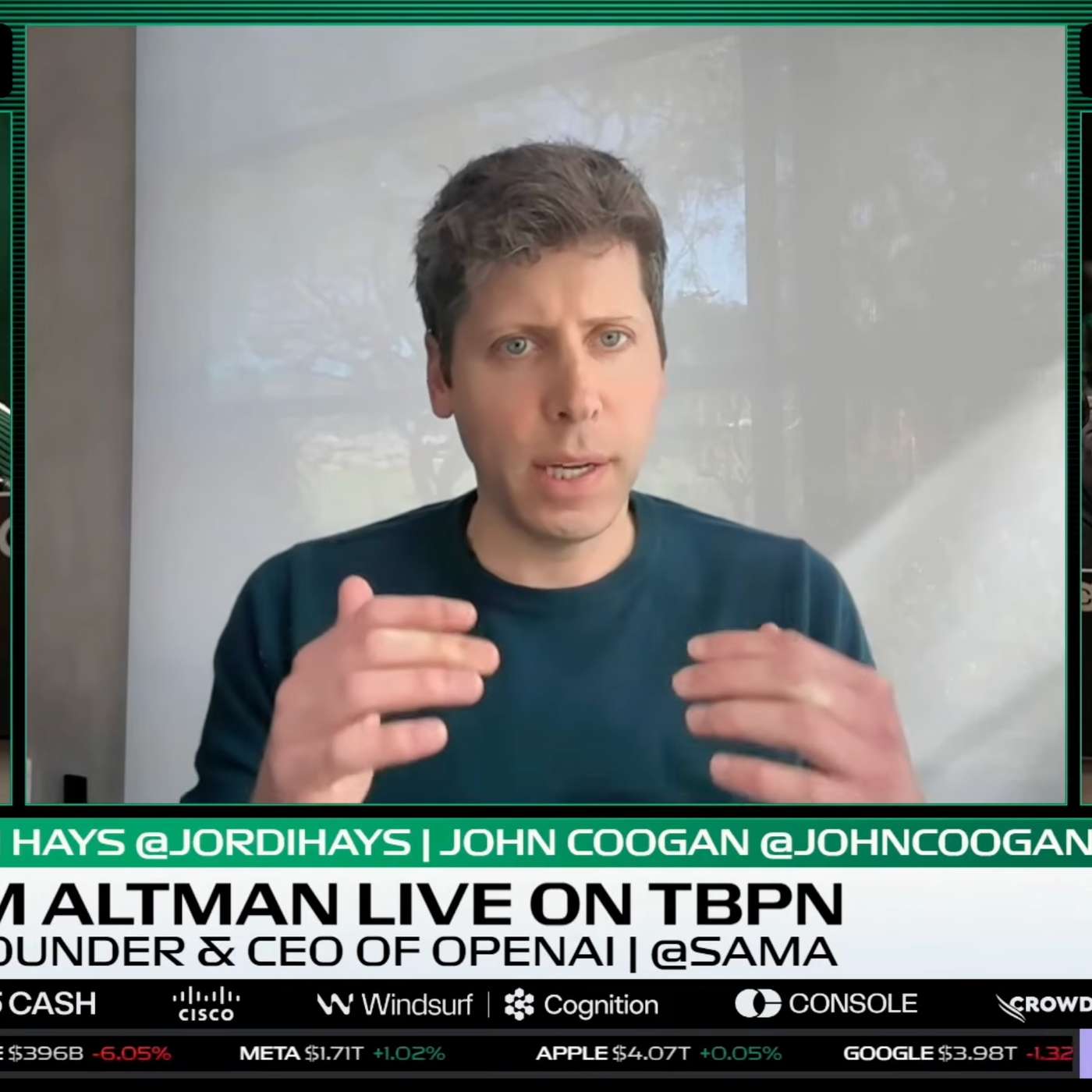
Sam Altman argues there is a massive "capability overhang" where models are far more powerful than current tools allow users to leverage. He believes the biggest gains will come from improving user interfaces and workflows, not just from increasing raw AI intelligence.
The novelty of new AI model capabilities is wearing off for consumers. The next competitive frontier is not about marginal gains in model performance but about creating superior products. The consensus is that current models are "good enough" for most applications, making product differentiation key.
Sam Altman argues that the key to winning is not a single feature but the ability to repeatedly innovate first. Competitors who copy often replicate design mistakes and are always a step behind, making cloning a poor long-term strategy for them.

As foundational AI models become commoditized, the key differentiator is shifting from marginal improvements in model capability to superior user experience and productization. Companies that focus on polish, ease of use, and thoughtful integration will win, making product managers the new heroes of the AI race.

With top models reaching comparable performance, differentiation is moving to the "harness"—the user interface, tool integrations, and agentic workflows. OpenAI's ChatGPT Work, an extension of its Codecs interface to general knowledge work, shows that the system surrounding the model is now as crucial as the model itself for user adoption and value.
