Get your free personalized podcast brief
We scan new podcasts and send you the top 5 insights daily.
Sam Altman argues that the key to winning is not a single feature but the ability to repeatedly innovate first. Competitors who copy often replicate design mistakes and are always a step behind, making cloning a poor long-term strategy for them.

Related Insights
The historical advantage of being first to market has evaporated. It once took years for large companies to clone a successful startup, but AI development tools now enable clones to be built in weeks. This accelerates commoditization, meaning a company's competitive edge is now measured in months, not years, demanding a much faster pace of innovation.

Startups often fail by making a slightly better version of an incumbent's product. This is a losing strategy because the incumbent can easily adapt. The key is to build something so fundamentally different in structure that competitors have a very hard time copying it, ensuring a durable advantage.
![Palmer Luckey - Inventing the Future of Defense - [Invest Like the Best, CLASSICS] thumbnail](https://megaphone.imgix.net/podcasts/f7c9aa8e-cb8d-11f0-828e-0b281809c10a/image/cc07f91ec47f95abbde771a4956b37b7.jpg?ixlib=rails-4.3.1&max-w=3000&max-h=3000&fit=crop&auto=format,compress)
OpenAI, the initial leader in generative AI, is now on the defensive as competitors like Google and Anthropic copy and improve upon its core features. This race demonstrates that being first offers no lasting moat; in fact, it provides a roadmap for followers to surpass the leader, creating a first-mover disadvantage.

The AI industry is not a winner-take-all market. Instead, it's a dynamic "leapfrogging" race where competitors like OpenAI, Google, and Anthropic constantly surpass each other with new models. This prevents a single monopoly and encourages specialization, with different models excelling in areas like coding or current events.
Incumbents face the innovator's dilemma; they can't afford to scrap existing infrastructure for AI. Startups can build "AI-native" from a clean sheet, creating a fundamental advantage that legacy players can't replicate by just bolting on features.

Companies like OpenAI and Anthropic are not just building better models; their strategic goal is an "automated AI researcher." The ability for an AI to accelerate its own development is viewed as the key to getting so far ahead that no competitor can catch up.

In a rapidly evolving space like AI, being the first mover can be a disadvantage if you bet on the wrong technical approach (e.g., fine-tuning vs. application logic). Second movers can win by observing the market, identifying the first mover's flawed strategy, and building a superior product on the correct technical foundation.
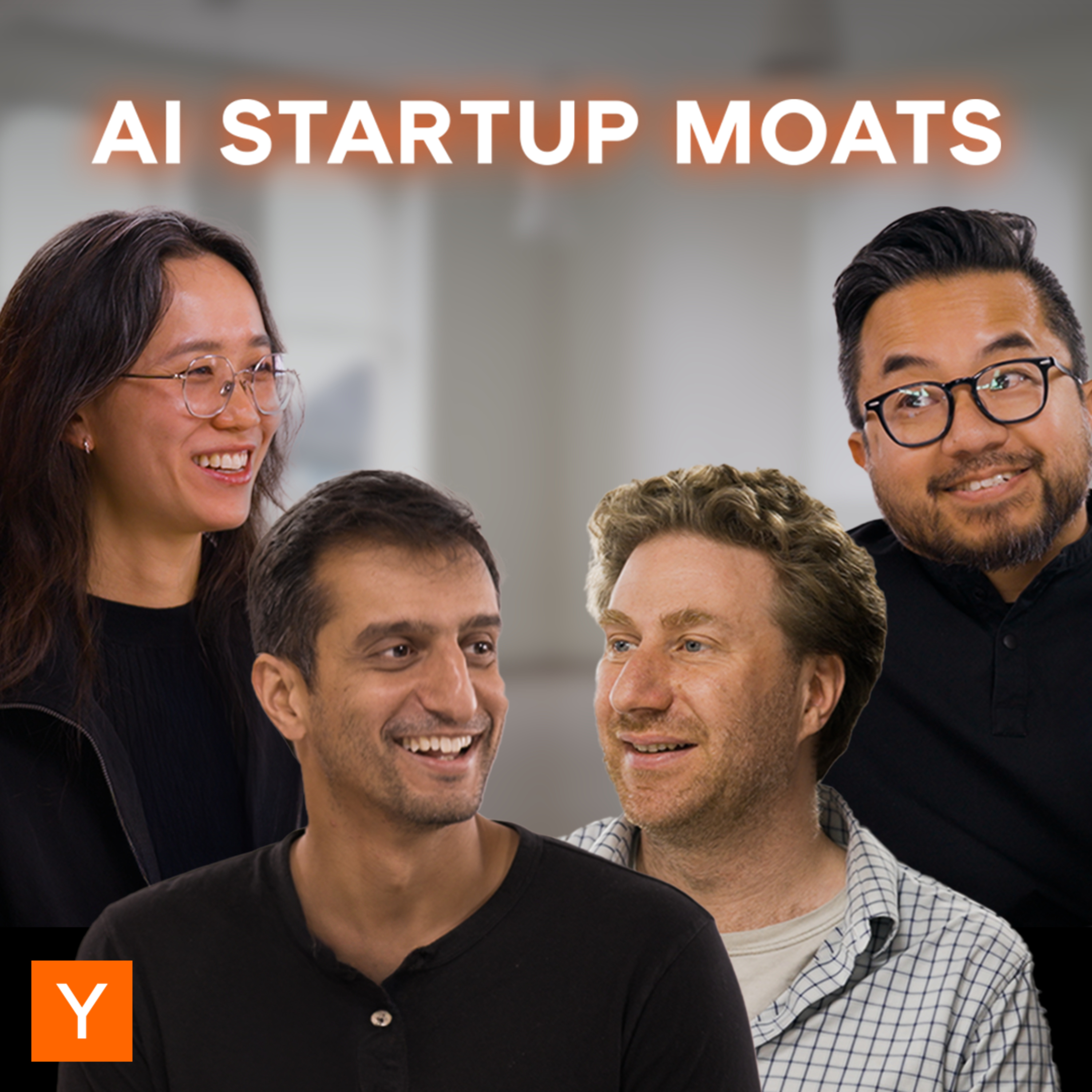
AI drastically accelerates the ability of incumbents and competitors to clone new products, making early traction and features less defensible. For seed investors, this means the traditional "first-mover advantage" is fragile, shifting the investment thesis heavily towards the quality and adaptability of the founding team.

Despite its early dominance, OpenAI's internal "Code Red" in response to competitors like Google's Gemini and Anthropic demonstrates a critical business lesson. An early market lead is not a guarantee of long-term success, especially in a rapidly evolving field like artificial intelligence.
The business race isn't about humans versus AI, but about your company versus competitors who integrate AI more quickly and effectively. The sustainable competitive advantage comes from shrinking the cycle time from a new AI breakthrough to its implementation within your business processes and culture.
