Get your free personalized podcast brief
We scan new podcasts and send you the top 5 insights daily.
A costly error is to stop optimizing a video once it performs well. Continuously testing new thumbnails and titles on successful content, even if it feels superstitious to touch it, can unlock millions of additional views by further improving its click-through rate.

Related Insights
Before publishing, ClickUp tests three variations of every video in "Trial Reels." This allows them to identify the highest-performing hook and headline without affecting their main account's reach. This process has led to videos performing 100x better than the originally preferred version.

Stop treating content as a purely artistic endeavor. The most successful creators apply rigorous scientific testing and investment to creative elements like thumbnails. They understand 'the science of the art,' using data to ensure creative work performs, rather than relying on trends or intuition.

Once a YouTube channel is established, the biggest audience growth improvements often come from optimizing thumbnails, headlines, and scripted introductions—the content's "packaging." This is a higher-leverage activity for experienced creators than simply increasing production volume.

Top creators like Mr. Beast relentlessly A/B test thumbnails and video intros to maximize views. AI video platforms now bring this data-driven experimentation to SMBs, allowing them to rapidly test variations of spokespeople, demographics, and creative elements to optimize ad performance.

Dhar Mann believes a video idea isn't viable until a compelling title and thumbnail ("packaging") exist. He frames this not as 80% of success, but as the initial gatekeeper that requires the most effort. If the packaging fails to capture attention, the quality of the video content itself becomes irrelevant because no one will click.
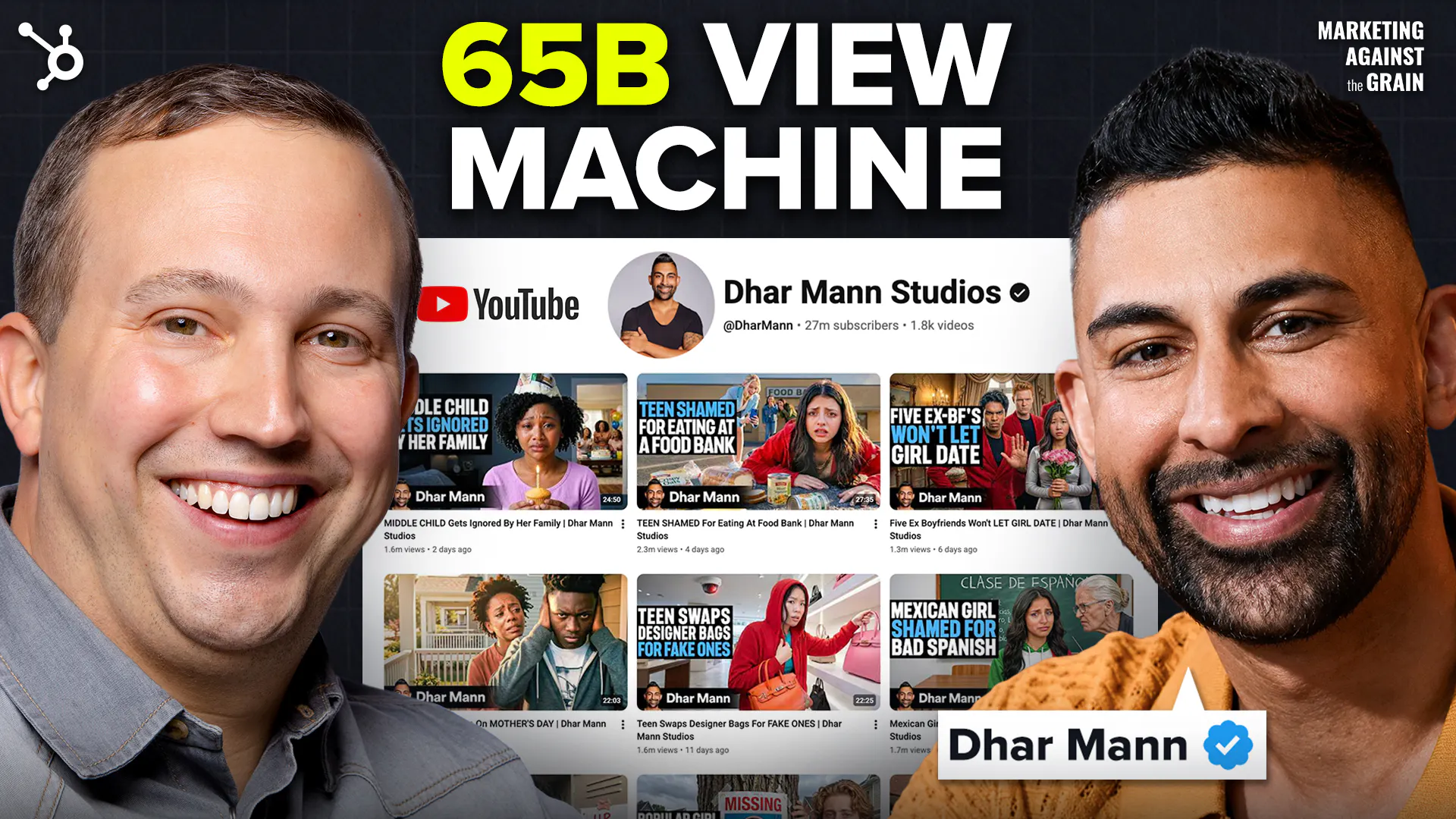
In A/B testing, a simple, low-resolution, untouched screenshot from a video performed better than a polished, professionally designed thumbnail. The raw aesthetic signals authenticity and humanity, which cuts through the noise of AI-perfected content.

The thumbnail and title must work together as a package. Instead of restating the title's text, the thumbnail should add context, create a visual question, or generate an information gap. This makes the viewer curious to read the title and ultimately click the video.
Marketers often focus on optimizing creative, landing pages, or automation. However, simply A/B testing the name or title of a content piece, sale, or offer can have the most significant impact on conversions with the least effort.

For channels without massive viewership, testing titles and thumbnails simultaneously creates too many variables for statistically relevant results. A YouTube liaison advises testing wildly different concepts for either the title *or* the thumbnail, but not both at once, to get clear, actionable data.
Contrary to the idea that you always need new creative, iterating on your winners is a powerful strategy. Creating slight variations—like changing the headline or background on a proven ad format—can significantly extend its effective lifespan.
