Get your free personalized podcast brief
We scan new podcasts and send you the top 5 insights daily.
Even without dedicated products, farmers are adopting public LLMs like ChatGPT to process farm data and challenge their own decision-making. This grassroots adoption signals a huge opportunity for companies to build natural language interfaces for agricultural data analysis and operations.
Related Insights
Generative AI can be used as a conversational expert to quickly gain deep domain knowledge in new industries. By engaging in long dialogues about market trends, regulations, and business models (e.g., value-based medicine), a leader can compress months of research into a single afternoon.

The narrative that AI agents are only for power users appears wrong. High engagement from non-technical people with complex tools suggests a massive, underestimated consumer appetite for agentic AI beyond simple work tasks, indicating the total market is far larger than assumed.

While pharmaceutical companies plan to build their own siloed AI chatbots, physicians and patients are already adopting public tools like ChatGPT for clinical communication. This creates a risk of developing redundant solutions that ignore established user behavior.

The fastest way for smaller tech companies to leverage AI is not by building complex proprietary models, but by training employees to master existing consumer-grade tools like Claude and ChatGPT. This treats AI adoption as a skill to be developed through practice and experimentation, yielding immediate productivity gains.

Advanced management techniques, like using AI to suggest team improvements, no longer require specialized software or data science teams. A manager can use an off-the-shelf tool like ChatGPT, feed it a simple spreadsheet of performance data, and ask it to run the analysis, democratizing access to managerial 'superpowers'.

AI agents are not just chatbots; they are powerful orchestrators that connect to various underlying tools (e.g., portfolio analyzers, databases). This allows non-technical users to perform complex data analysis and execute subsequent actions using simple natural language commands.

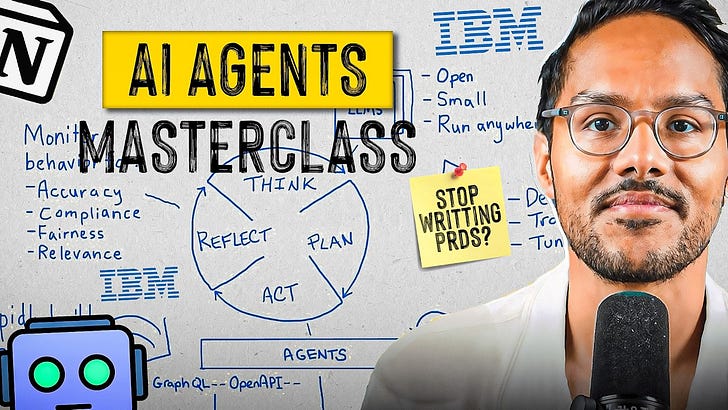
According to IBM's AI Platform VP, Retrieval-Augmented Generation (RAG) was the killer app for enterprises in the first year after ChatGPT's release. RAG allows companies to connect LLMs to their proprietary structured and unstructured data, unlocking immense value from existing knowledge bases and proving to be the most powerful initial methodology.
The idea that AI has no learning curve is a myth. Users faced with a blank 'type anything' box are often paralyzed. Showcasing unconventional applications, like a broccoli farmer using GPT-5.6, helps people understand the tool's potential beyond obvious tasks.

For companies given a broad "AI mandate," the most tactical and immediate starting point is to create a private, internalized version of a large language model like ChatGPT. This provides a quick win by enabling employees to leverage generative AI for productivity without exposing sensitive intellectual property or code to public models.

LLMs dramatically accelerate market research but are non-deterministic and lack real-world grounding. Their true value is preparing for customer conversations—crafting questions, understanding market history, and practicing listening. They augment human judgment, they don't replace it.
