Get your free personalized podcast brief
We scan new podcasts and send you the top 5 insights daily.
Reusable instruction files (like skill.md) that teach an AI a specific task are not proprietary to one platform. These "skills" can be created in one system (e.g., Claude) and used in another (e.g., Manus), making them a crucial, portable asset for leveraging AI across different models.

Related Insights
Instead of complex SDKs or custom code, users can extend tools like Cowork by writing simple Markdown files called "Skills." These files guide the AI's behavior, making customization accessible to a broader audience and proving highly effective with powerful models.

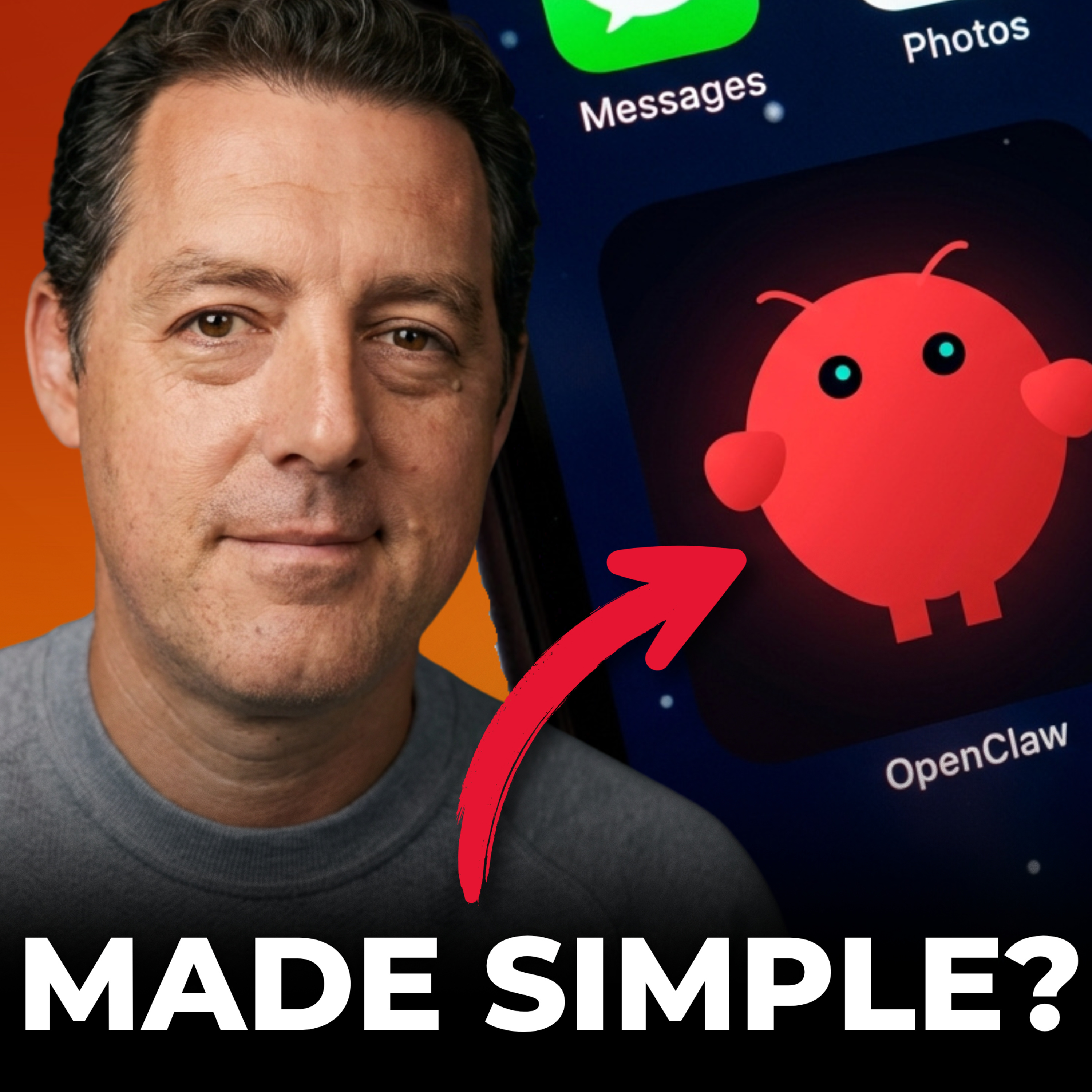
Agentic frameworks like OpenClaw are pioneering a new software paradigm where 'skills' act as lightweight replacements for entire applications. These skills are essentially instruction manuals or recipes in simple markdown files, combining natural language prompts with calls to deterministic code ('tools'), condensing complex functionality into a tiny, efficient format.
The paradigm is shifting from using AI as a general chatbot to building a team of 'digital employees.' Claude Skills allow users to encapsulate a specific, repeatable workflow—like drafting a newsletter from tweets—into a tool that can be executed on demand, creating a specialized agent for that job.

OpenAI has quietly launched "skills" for its models, following the same open standard as Anthropic's Claude. This suggests a future where AI agent capabilities are reusable and interoperable across different platforms, making them significantly more powerful and easier to develop for.
Users can now upload instructional files to teach Claude AI specific abilities. This allows the AI to perform complex, branded tasks like creating presentations or designing posters according to a company's unique style guide, effectively turning it into a personalized expert assistant.
Unlike Claude Projects where the LLM decides how to use tools, Skills execute predefined scripts. This gives users precise control over data analysis and repeatable tasks, ensuring consistent, accurate results and overcoming the common issue of non-deterministic AI outputs.
The tangible asset for a Claude Skill is surprisingly low-tech: a folder containing a 'skills.md' file and other optional resources. This folder is either referenced by Claude in a local directory or zipped and uploaded to the web UI, demystifying the creation process for non-engineers.
Instead of uploading brand guides for every new AI task, use Claude's "Skills" feature to create a persistent knowledge base. This allows the AI to access core business information like brand voice or design kits across all projects, saving time and ensuring consistency.

Treat AI skills not just as prompts, but as instruction manuals embodying deep domain expertise. An expert can 'download their brain' into a skill, providing the final 10-20% of nuance that generic AI outputs lack, leading to superior results.
Unlike Claude Projects or OpenAI's Custom GPTs which apply a general context to all chats, Claude Skills are task-specific instruction sets that can be dynamically called upon within any conversation. This allows for reusable, on-demand workflows without being locked into a specific project's context.