Get your free personalized podcast brief
We scan new podcasts and send you the top 5 insights daily.
It is now feasible to create a fully autonomous enterprise, such as a news aggregation website, using AI agents. These agents can handle all operational tasks from development and content sourcing to SEO and article cross-linking, without any human coding required.

Related Insights
Platforms like Nebula allow founders to move beyond simple automation. By providing a high-level directive and connecting services, AI agents can run entire business functions, like a content blog that researches, writes, and publishes daily with minimal human intervention.

Unlike co-pilots that assist developers, Factory's “droids” are designed to be autonomous. This reframes the developer's job from writing code to mastering delegation—clearly defining tasks and success criteria for an AI agent to execute independently.

A crew of four specialized AI agents—a front-end developer, back-end developer, tester, and project manager—successfully built a robust, sophisticated stock trading platform in just 90 minutes. This demonstrates that multi-agent systems can now autonomously handle complex software development from start to finish.

The exponential growth in AI agent capabilities creates a plausible scenario where a single entrepreneur can manage a vast array of automated tasks, from development to operations. This raises the possibility of a "solopreneur" achieving a billion-dollar valuation without a traditional human workforce.

Claude Code can take a high-level goal, ask clarifying questions, and then independently work for over an hour to generate code and deploy a working website. This signals a shift from AI as a simple tool to AI as an autonomous agent capable of complex, multi-step projects.

A new software paradigm, "agent-native architecture," treats AI as a core component, not an add-on. This progresses in levels: the agent can do any UI action, trigger any backend code, and finally, perform any developer task like writing and deploying new code, enabling user-driven app customization.

Clawdbot can autonomously identify market trends (like X's new article feature), propose new product features, and even write the code for them, acting more like a chief of staff than a simple task-doer.
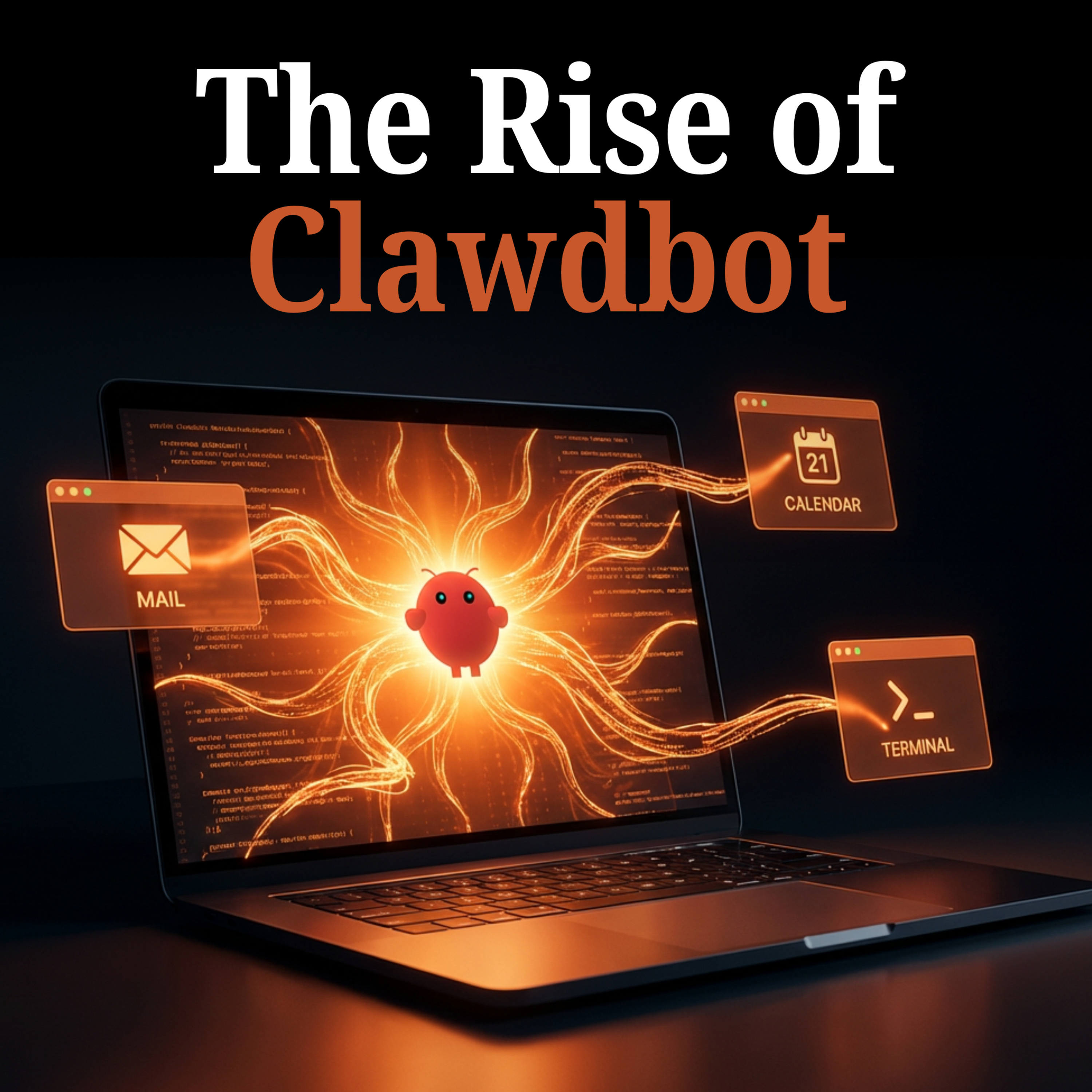
A single person can direct AI agents to conceptualize, code, and operate an entire business. This represents a new paradigm of a "fully autonomous enterprise," where AI handles everything from development to strategic planning, potentially creating a one-person, six-figure company.
The next evolution of enterprise AI isn't conversational chatbots but "agentic" systems that act as augmented digital labor. These agents perform complex, multi-step tasks from natural language commands, such as creating a training quiz from a 700-page technical document.

A founder set up an AI agent on a cron job to proactively scan the web twice daily for relevant industry news. The agent surfaces interesting studies and, upon request, immediately drafts a blog post, turning a passive tool into an active, automated content engine.