Get your free personalized podcast brief
We scan new podcasts and send you the top 5 insights daily.
Josh Gao says Mecka's data engine is far more painful than people expect: it had to design custom hardware, distribute it to thousands of homes and businesses, install 100-gigabyte upload lines, and process hundreds of petabytes while enforcing quality gates.

Related Insights
Unlike LLMs that train on the existing internet, robotics lacks a pre-training dataset for the physical world. This forces companies like Encore to build a full-stack solution combining a software platform for data management with human-led operations for data collection, annotation, and even real-time remote robot piloting for exception handling.

Josh Gao expects Mecka to look different as robots deploy: not just egocentric data, but a platform that collects domain data, post-trains models, and white-gloves enterprises. He compares the future role to a modern robotics systems integrator whose installed bot keeps improving with data.
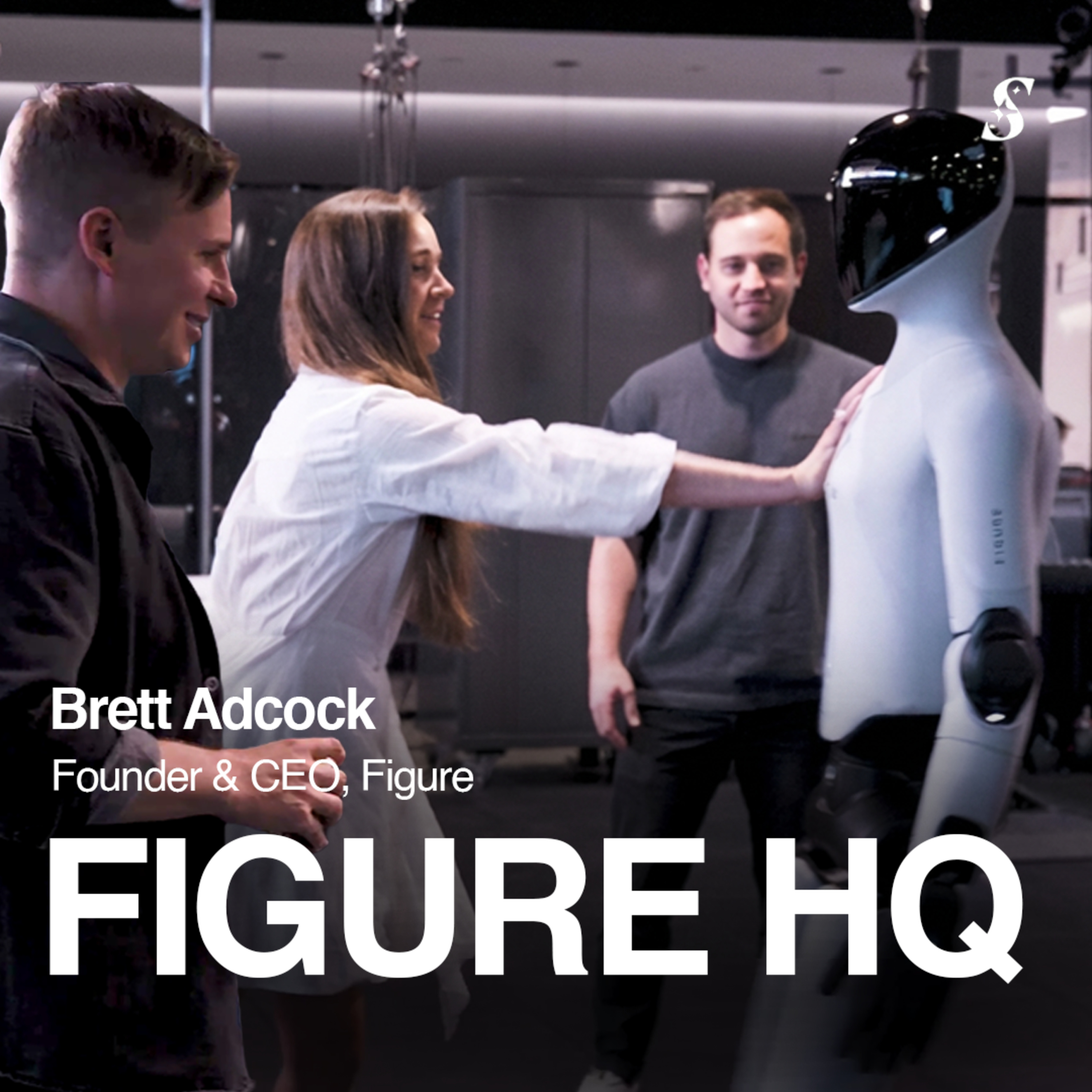
According to Figure's CEO, the company's biggest challenge is no longer hardware reliability but acquiring enormous amounts of diverse, high-quality data. This data is essential for pre-training their Helix AI model to generalize and handle countless real-world scenarios in homes and commercial settings.
Josh Gao says LLM pre-training data was driven by labs through web crawlers and never became a large market. In robotics, he says pre-training is already a large market because there is no free internet corpus; Mecka must create, process, and license physical-world data.
A useful mental model for AI data providers is to view them as infrastructure companies, analogous to fiber optic or CPU manufacturers. They capture real-world information and provide the foundational raw material for AI labs. Like compute, high-quality data is a primary bottleneck for achieving AGI.

The true constraint on scaling AI is not silicon or power, but "time to compute"—the physical reality of construction. Sourcing thousands of tradespeople for remote sites and managing complex supply chains for building materials is the primary hurdle limiting the speed of AI infrastructure growth.

When automating lab processes, the primary challenge is not adapting to new scientific methods but scaling the infrastructure to handle the massive, 24/7 flow of data from instruments and process logs. This requires a robust data management strategy from the outset.

At founding, Josh Gao says robot data was mostly teleoperation, which was hard to scale. He bet that first-person human video could close the vision gap and that humans and humanoids look alike, letting ordinary people contribute like a Tesla-style data fleet.
Josh Gao says large-scale robot factories doing repetitive warehouse tasks revealed a threshold of diversity. Beyond some point, adding more robot data of the same kind oversaturates the need, so Mecka tracks job and industry heat maps and adapts quality heuristics as edge cases emerge.
Historically, data centers were designed and built like unique architectural projects. Now, the need for rapid, global scale is forcing the industry to adopt a manufacturing mindset, treating data centers like cars or planes produced on an assembly line. This shift creates a new market for production orchestration software beyond traditional factories.