Get your free personalized podcast brief
We scan new podcasts and send you the top 5 insights daily.
Josh Gao says LLM pre-training data was driven by labs through web crawlers and never became a large market. In robotics, he says pre-training is already a large market because there is no free internet corpus; Mecka must create, process, and license physical-world data.

Related Insights
Unlike LLMs that train on the existing internet, robotics lacks a pre-training dataset for the physical world. This forces companies like Encore to build a full-stack solution combining a software platform for data management with human-led operations for data collection, annotation, and even real-time remote robot piloting for exception handling.

Josh Gao expects Mecka to look different as robots deploy: not just egocentric data, but a platform that collects domain data, post-trains models, and white-gloves enterprises. He compares the future role to a modern robotics systems integrator whose installed bot keeps improving with data.
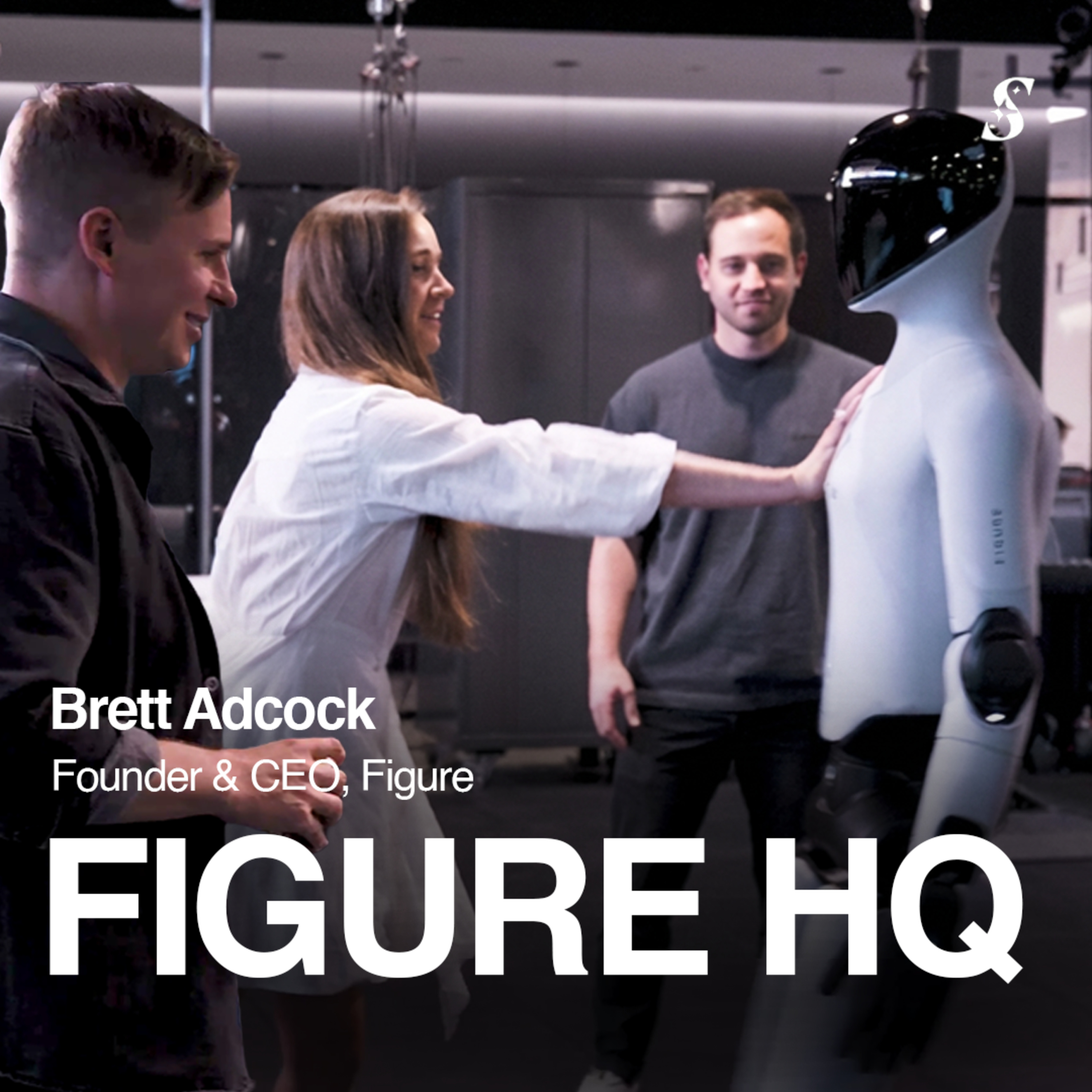
According to Figure's CEO, the company's biggest challenge is no longer hardware reliability but acquiring enormous amounts of diverse, high-quality data. This data is essential for pre-training their Helix AI model to generalize and handle countless real-world scenarios in homes and commercial settings.
Specialized data labeling vendors are growing rapidly from venture-backed AI labs desperate for physical-world sensor data. However, sustaining revenue beyond initial training deals depends on whether enterprise humanoid proofs-of-concept transition into commercial industrial rollouts.

The rapid progress of many LLMs was possible because they could leverage the same massive public dataset: the internet. In robotics, no such public corpus of robot interaction data exists. This “data void” means progress is tied to a company's ability to generate its own proprietary data.

Unlike consumer AI trained on public internet data, industrial AI requires vast, proprietary datasets from the physical world (e.g., sensor readings from a submarine hull). Gecko Robotics is building this data corpus via its robots, creating an advantage that's difficult to replicate.

The future of valuable AI lies not in models trained on the abundant public internet, but in those built on scarce, proprietary data. For fields like robotics and biology, this data doesn't exist to be scraped; it must be actively created, making the data generation process itself the key competitive moat.

Ken Goldberg quantifies the challenge: the text data used to train LLMs would take a human 100,000 years to read. Equivalent data for robot manipulation (vision-to-control signals) doesn't exist online and must be generated from scratch, explaining the slower progress in physical AI.

According to Agility Robotics' co-founder, perception is now a largely solved problem. The new frontier is generating training data for robot control—the specific torque commands and sensor inputs for actions. Unlike text or images for LLMs, this data does not exist on the internet and must be painstakingly created.

Brett Adcock states that Figure AI's "Helix 2" neural net provides the right technical stack for general robotics. The biggest remaining obstacle is not hardware but the immense data required to train the robot for a wide distribution of tasks. The company plans to spend nine figures on data acquisition in 2026 to solve this.
