Get your free personalized podcast brief
We scan new podcasts and send you the top 5 insights daily.
The project's vision intentionally separates its industrial and residential philosophies. While manufacturing and shipbuilding will leverage cutting-edge AI, the city itself will be inspired by classic, human-scale American neighborhoods, prioritizing walkability and community over futuristic aesthetics.

Related Insights
Founders are breaking down complex societal challenges like construction and energy into modular, repeatable parts. This "factory-first mindset" uses AI and autonomy to apply assembly line logic to industries far beyond traditional manufacturing, reframing the factory as a problem-solving methodology.

While LLMs dominate headlines, Dr. Fei-Fei Li argues that "spatial intelligence"—the ability to understand and interact with the 3D world—is the critical, underappreciated next step for AI. This capability is the linchpin for unlocking meaningful advances in robotics, design, and manufacturing.

For NVIDIA's headquarters, Gensler went beyond traditional design by using the client's own AI technology in the creative process. This co-design approach allowed them to optimize everything from walking distances to natural light, creating a physical space that is a true embodiment of NVIDIA's technological identity.

To compete with China in manufacturing, the US can't rely on labor volume but on productivity from AI and robotics. This requires eliminating the friction of distance between R&D talent (in the Bay Area) and factory floors, making talent-proximate manufacturing parks a strategic necessity.
AI-generated design falls short because it cannot integrate the myriad of constraints top designers handle: business goals, cultural context, brand emotion, and system-wide consistency. AI will eliminate drudgery, freeing designers to focus on this higher-level, holistic, and creative work.

The project frames its West Coast location as a strategic asset, arguing a new deepwater shipyard is critical for any Pacific conflict given the US's reliance on East Coast yards and the vulnerability of the Panama Canal. This elevates the project from urban development to a national defense priority.
The unprecedented speed and standardized scale of data center construction provides a unique proving ground to deploy and refine new automation, AI, and robotics technologies. Learnings from these fast-moving projects will then "spin out" to other large-scale industrial sectors like mining and manufacturing.
Instead of creating a tech sector from scratch, the most effective path is to identify and invest in tech niches adjacent to a city's existing industries (e.g., Energy Tech for an oil town). This leverages existing talent, infrastructure, and supply chains, making the transition more natural and sustainable.

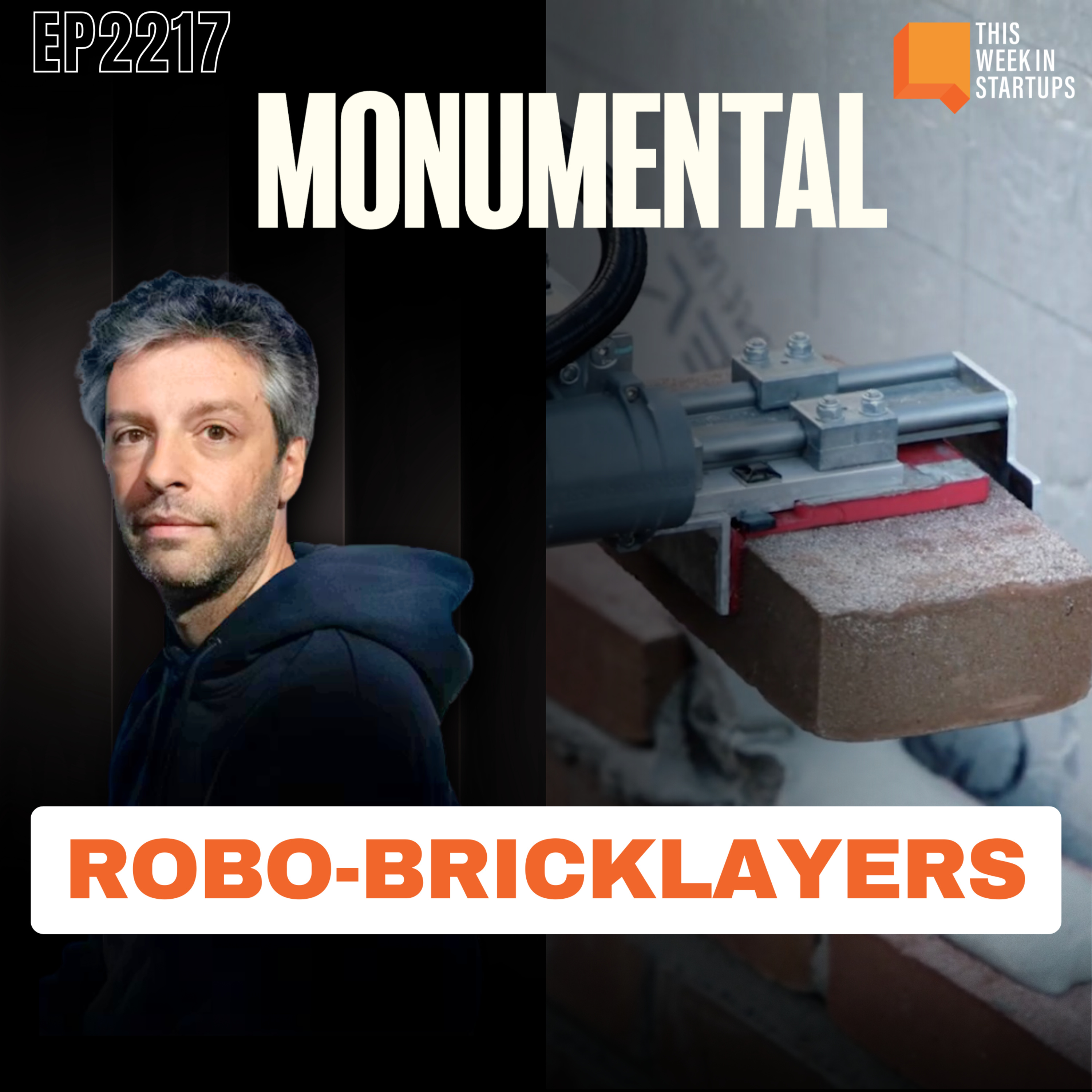
Automation in construction can do more than just lower costs for basic structures. Monumental's robots can create complex, artistic brick patterns and designs at the same speed and cost as a standard wall, potentially democratizing access to beautiful and diverse housing aesthetics.
The current AI boom is uniquely concentrated within the city of San Francisco itself, rather than spread across the broader "Bay Area" or "Silicon Valley" like previous tech waves. This geographical clustering in a dense urban core has profound implications for the city's real estate, economy, and culture.
