Get your free personalized podcast brief
We scan new podcasts and send you the top 5 insights daily.
The cautious and sometimes slow nature of current driverless AI makes it unsuitable for passengers in a hurry. This technological limitation has created a specific market: users who prioritize a calm, private experience over speed, such as for a relaxed evening out rather than a time-sensitive commute.

Related Insights
As autonomous vehicles drop the per-mile cost of ride-sharing to under $1, it will become cheaper than owning a car. This price drop will induce massive demand, shifting most transportation to these networks and creating a market exponentially larger than the current industry.
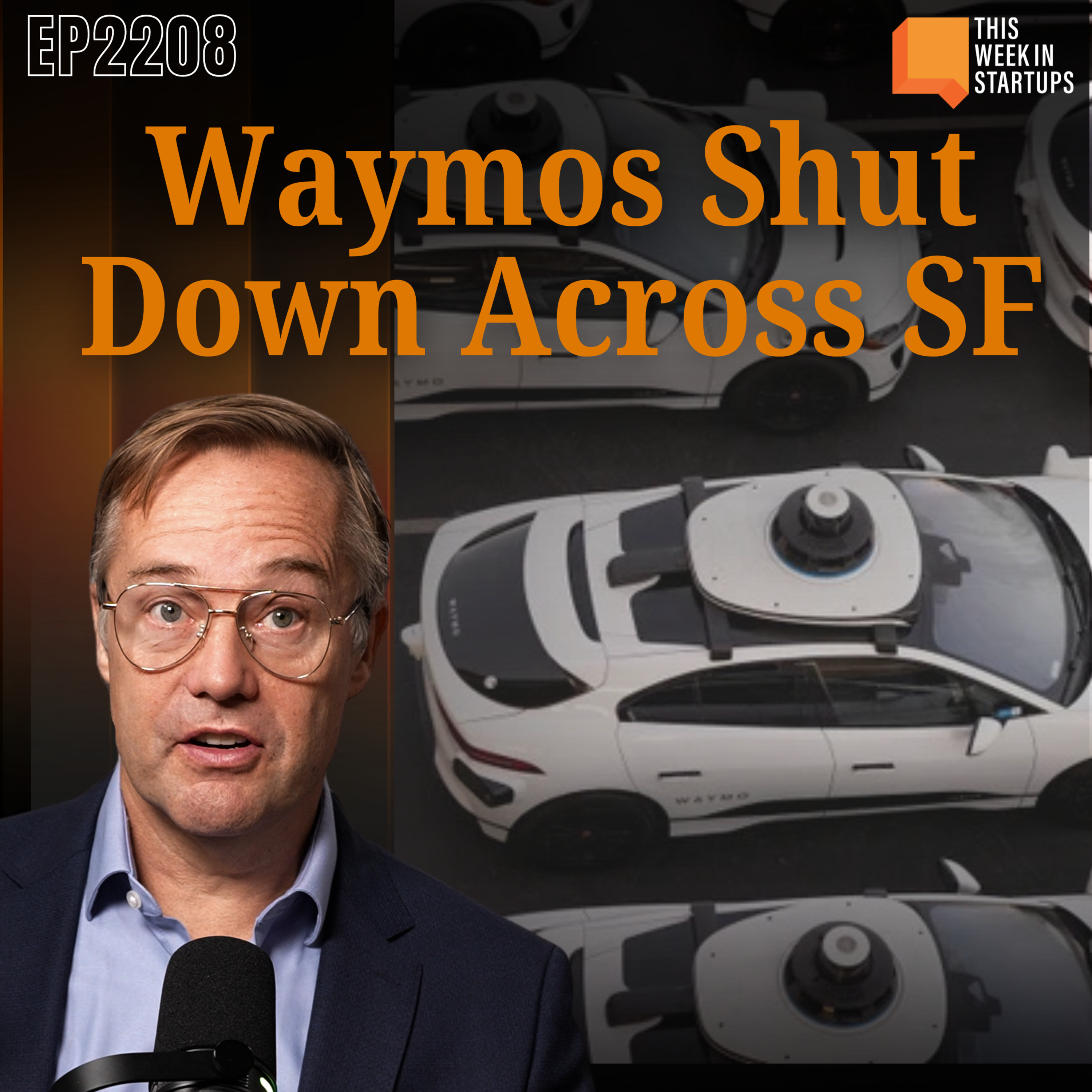
After proving its robo-taxis are 90% safer than human drivers, Waymo is now making them more "confidently assertive" to better navigate real-world traffic. This counter-intuitive shift from passive safety to calculated aggression is a necessary step to improve efficiency and reduce delays, highlighting the trade-offs required for autonomous vehicle integration.

Early self-driving cars were too cautious, becoming hazards on the road. By strictly adhering to the speed limit or being too polite at intersections, they disrupted traffic flow. Waymo learned its cars must drive assertively, even "aggressively," to safely integrate with human drivers.
The future of autonomous vehicles (AVs) will be defined by their interior configuration, creating distinct "apps" for different social contexts. A vehicle like Zoox with face-to-face seating becomes a space for meetings or family time, suggesting the AV market will segment based on the desired in-car experience.

Contrary to displacement fears, driverless taxis like Waymo are carving out a new, expensive market segment. They cater to a different customer base—likely former private car users—thereby increasing overall demand for ride services rather than just cannibalizing the traditional taxi market.
ARK Invest projects an $8-10 trillion market for autonomous ride-hailing, dwarfing the current ~$60B market of Uber and Lyft. This isn't just about replacing drivers; it's about a 4x cost reduction per mile (from ~$1.10 to $0.25). This dramatic price drop will absorb the entire transportation market, not just the existing ride-hailing segment.

The transition to AVs won't be a sudden replacement of human drivers. Uber's CEO argues that for the next two decades, a hybrid network where humans and AVs coexist will be a more efficient and effective solution, allowing for a responsible transition while serving diverse customer preferences.

The classic "trolley problem" will become a product differentiator for autonomous vehicles. Car manufacturers will have to encode specific values—such as prioritizing passenger versus pedestrian safety—into their AI, creating a competitive market where consumers choose a vehicle based on its moral code.

A key learning from working with auto manufacturers is the desire for brand differentiation through driving personality. Waive can tailor its AI's behavior—from "helpfully assertive" to comfortably cautious—to match a brand's specific identity. This transforms the AI from a utility into a core part of the product experience.

CEO David Risher claims data refutes the idea that AVs displace human drivers. Instead, Lyft's growth is faster in cities with AVs like San Francisco and Phoenix. He suggests AVs "oxygenate the market," expanding overall demand for ridesharing rather than just cannibalizing existing rides.
