Get your free personalized podcast brief
We scan new podcasts and send you the top 5 insights daily.
Choosing between pixels, vectors, 3D scenes, or other representations isn't a purely technical decision. The best representation is the one that best facilitates the specific type of control a user needs. If they need to change text, a pixel-level representation is wrong. The control layer should define the representation layer.

Related Insights
Anthropic strategically focuses on "vision in" (AI understanding visual information) over "vision out" (image generation). This mimics a real developer who needs to interpret a user interface to fix it, but can delegate image creation to other tools or people. The core bet is that the primary bottleneck is reasoning, not media generation.

Figma's Loredana Crisan argues that relying solely on text prompts for design is inefficient for refinement, comparing it to "dictating a painting over the phone." While AI can generate a starting point, true creative control requires direct manipulation tools for tweaking details like organic shapes or precise colors.
AI apps that require users to select a mode like 'image' or 'text' before a query are revealing their underlying technical limitations. A truly intelligent, multimodal system should infer user intent directly from the prompt within a single conversational flow, rather than relying on a clumsy UI to route the request.
AI models are already incredibly powerful, but their creative potential is limited by simple text prompts. The next breakthrough will be the development of sophisticated user interfaces that allow creators to edit scenes, control characters, and direct AI with precision, unlocking widespread adoption.

Early AI tools forced a frustrating 'regenerate' loop. Modern UX patterns succeed by making AI output interactive and editable within the same workflow. This shifts the user's expectation from a perfect final answer to a workable starting point, fostering a more collaborative process.
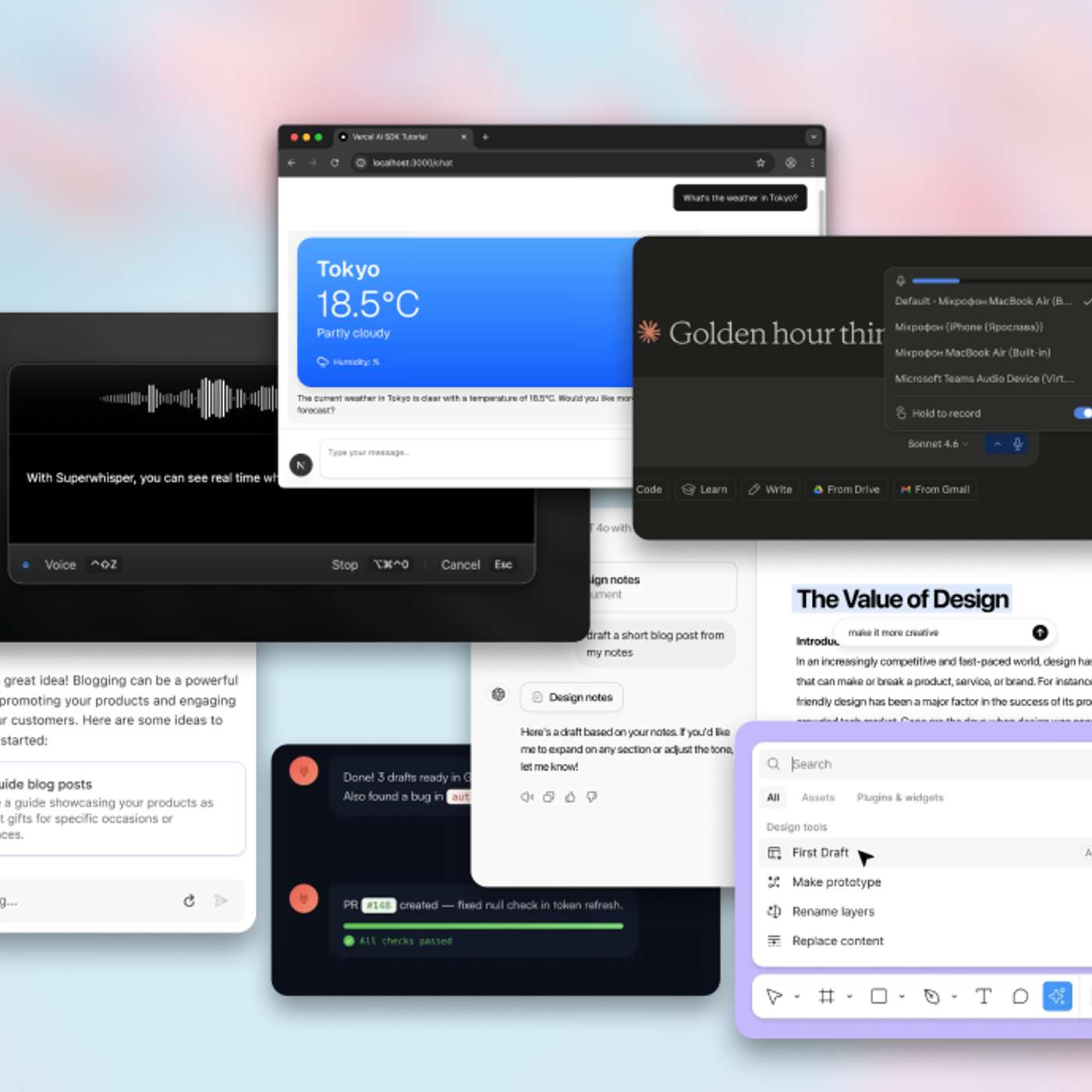
The current user experience for AI tools is too complex, forcing users to make choices like which model or mode to use. The next major step is a unified, consolidated interface where the AI intelligently handles resource allocation behind the scenes, simply delivering 'intelligence'.

Instead of AI writing code that then gets rendered, future interfaces will be generated directly by diffusion models. This "intention-to-pixel" paradigm allows for hyper-personalized, real-time UIs, effectively making the diffusion model the new front-end.
At OpenAI, the first question is "Can we solve this with the model (tokens) instead of pixels?" This treats the AI as the primary design material, pushing designers to think about interaction and behavior before creating bespoke user interfaces.
Don't accept the false choice between AI generation and professional editing tools. The best workflows integrate both, allowing for high-level generation and fine-grained manual adjustments without giving up critical creative control.

For professional design and marketing workflows, a static, unchangeable image is insufficient. The true value for these users lies in generating outputs with discrete, editable elements like text layers and layout components. This accommodates the iterative nature of professional creative work.