Get your free personalized podcast brief
We scan new podcasts and send you the top 5 insights daily.
Figma's Loredana Crisan argues that relying solely on text prompts for design is inefficient for refinement, comparing it to "dictating a painting over the phone." While AI can generate a starting point, true creative control requires direct manipulation tools for tweaking details like organic shapes or precise colors.

Related Insights
Contrary to traditional digital design, the modern AI-assisted workflow involves broad, conceptual exploration on canvas-like tools (e.g., Paper) and sweating the final visual details directly in code. Pixel-nudging in design software like Figma is becoming obsolete for last-mile fit and finish.

Figma CEO Dylan Field predicts we will look back at current text prompting for AI as a primitive, command-line interface, similar to MS-DOS. The next major opportunity is to create intuitive, use-case-specific interfaces—like a compass for AI's latent space—that allow for more precise control beyond text.
Current text-based prompting for AI is a primitive, temporary phase, similar to MS-DOS. The future lies in more intuitive, constrained, and creative interfaces that allow for richer, more visual exploration of a model's latent space, moving beyond just natural language.

The handoff between AI generation and manual refinement is a major friction point. Tools like Subframe solve this by allowing users to seamlessly switch between an 'Ask AI' mode for generative tasks and a 'Design' mode for manual, Figma-like adjustments on the same canvas.

While AI can rapidly generate refined outputs, it risks bypassing the crucial process of exploratory tinkering. The "happy accidents" and unexpected creative leaps often occur when a designer is manually moving elements around, discovering novel ideas that a direct prompt would have missed.

While AI tools excel at generating initial drafts of code or designs, their editing capabilities are poor. The difficulty of making specific changes often forces creators to discard the AI output and start over, as editing is where the "magic" breaks down.

When using AI for development, designers can bypass the traditional Figma-to-code workflow. Figma becomes a specialized tool for the final 20% of the project, used to generate CSS for complex visual details that are difficult to articulate in a text prompt.

AI is incredibly fast for generating the initial version of a feature. However, for small, precise changes like altering a color or text, using a direct visual editor is much faster and more efficient than prompting the AI again. An effective workflow blends both approaches.

Figma's CEO likens current text prompts to MS-DOS: functional but primitive. He sees a massive opportunity in designing intuitive, use-case-specific interfaces that move beyond language to help users 'steer the spaceship' of complex AI models more effectively.
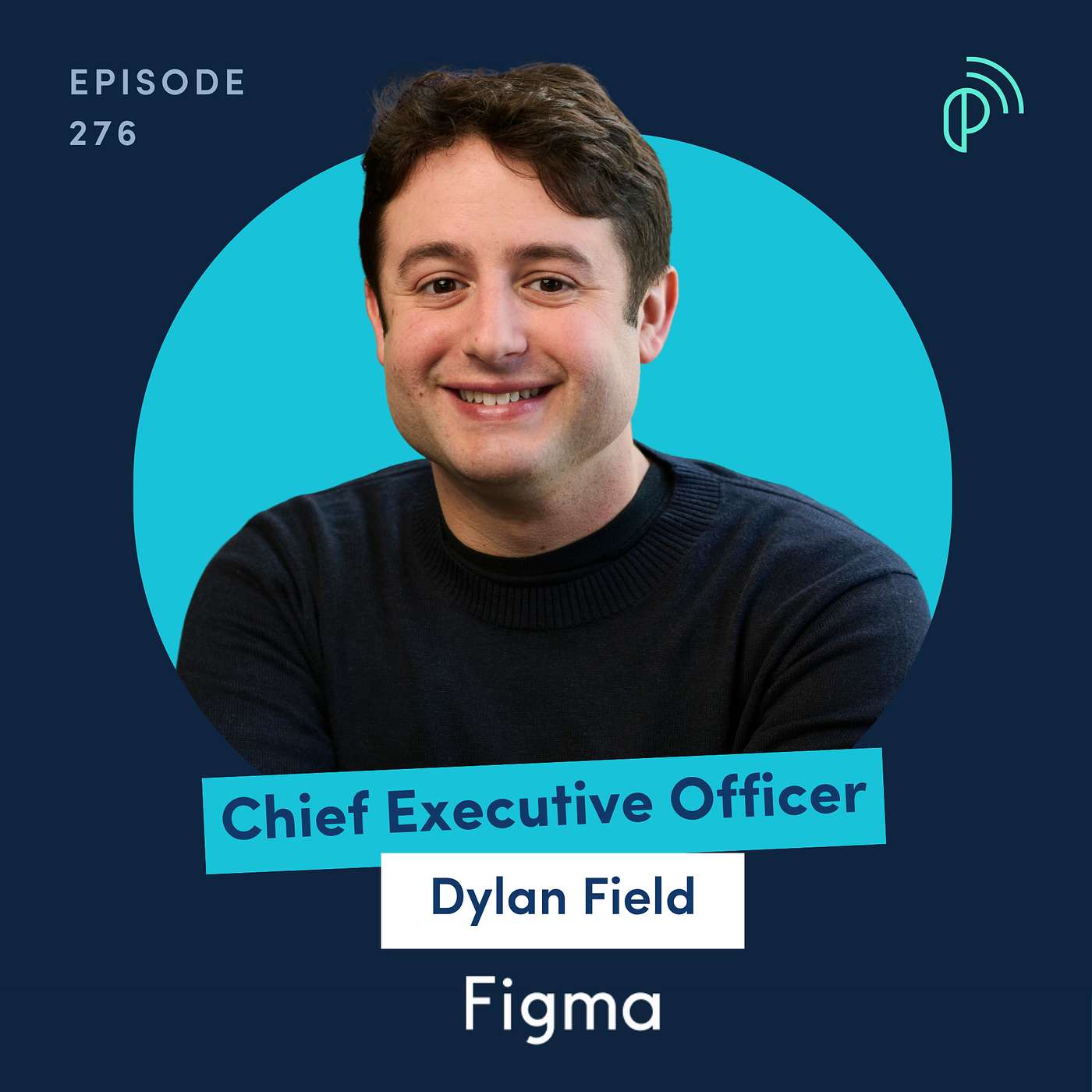
Figma's Chief Design Officer, Loredana Crisan, views AI's primary role as a tool to broaden designers' creative horizons, much like writing evolved from accounting to literature. The goal is to change what designers are able to imagine and dream up, not just improve efficiency.