Get your free personalized podcast brief
We scan new podcasts and send you the top 5 insights daily.
The OpenAI team believes generative video won't just create traditional feature films more easily. It will give rise to entirely new mediums and creator classes, much like the film camera created cinema, a medium distinct from the recorded stage plays it was first used for.

Related Insights
While solo creators can wear all hats, scaling professional AI video production requires specialization. The most effective agencies use dedicated writers, directors, and a distinct role of "AI cinematographer" to focus on generating and refining the visual assets based on the director's treatment.

Don't view generative AI video as just a way to make traditional films more efficiently. Ben Horowitz sees it as a fundamentally new creative medium, much like movies were to theater. It enables entirely new forms of storytelling by making visuals that once required massive budgets accessible to anyone.

Synthesia initially targeted Hollywood with AI dubbing—a "vitamin" for experts. They found a much larger, "house-on-fire" problem by building a platform for the billions of people who couldn't create video at all, democratizing the medium instead of just improving it for existing professionals.

Upcoming tools like Sora automate the script-to-video workflow, commoditizing the technical production process. This forces creative agencies to evolve. Their value will no longer be in execution but in their ability to generate a high volume of brilliant, brand-aligned ideas and manage creative strategy.
While today's focus is on text-based LLMs, the true, defensible AI battleground will be in complex modalities like video. Generating video requires multiple interacting models and unique architectures, creating far greater potential for differentiation and a wider competitive moat than text-based interfaces, which will become commoditized.

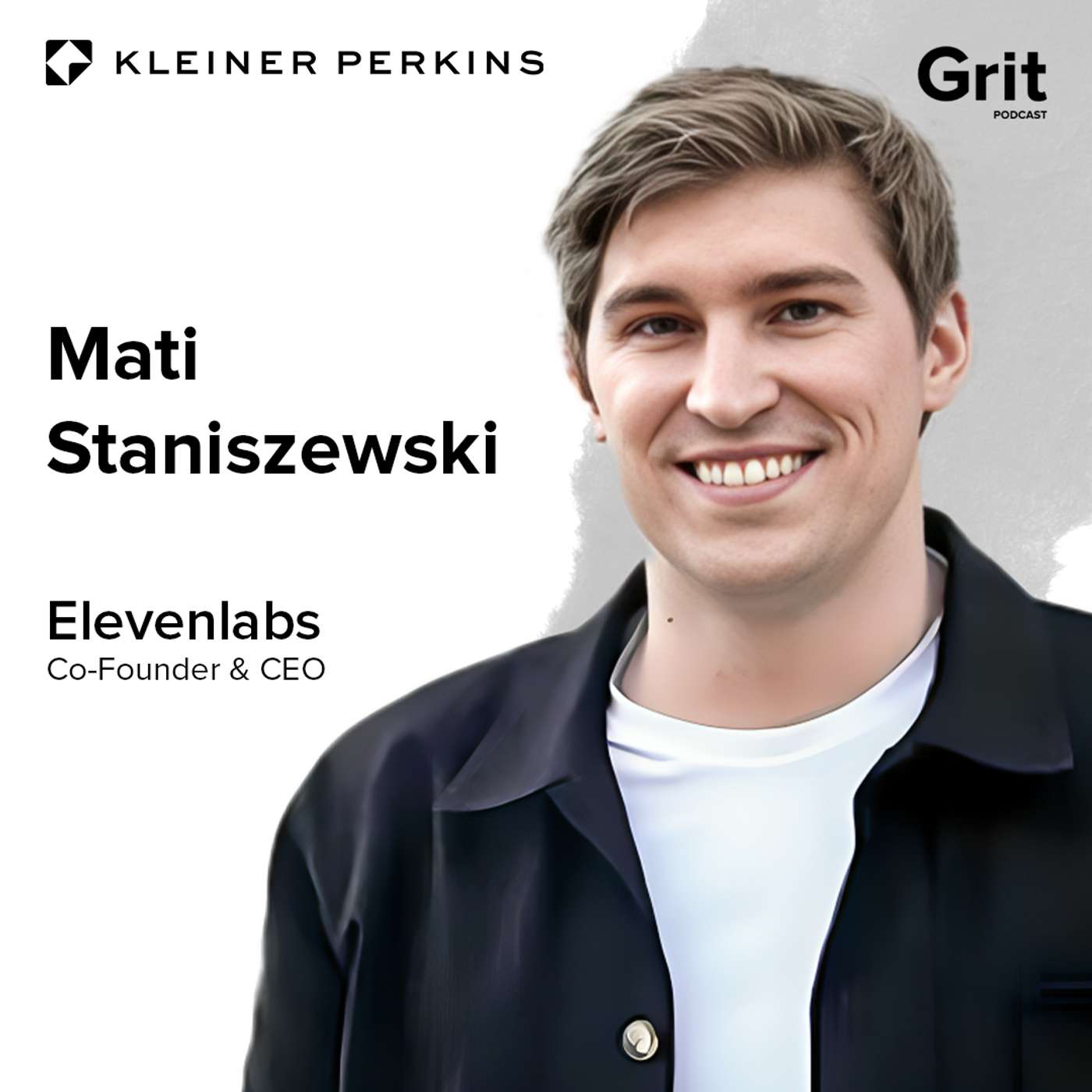
ElevenLabs' CEO predicts AI won't enable a single prompt-to-movie process soon. Instead, it will create a collaborative "middle-to-middle" workflow, where AI assists with specific stages like drafting scripts or generating voice options, which humans then refine in an iterative loop.
The real economic value of generative video lies in advertising, not filmmaking. Unlike movies with finite consumption, there is unlimited demand for personalized, diverse ad content. This makes advertising a perfect fit for the technology's scalable content creation capabilities.

Human communication is returning to its oral and visual roots. Text, a low-dimensional medium, was a temporary necessity for scalable knowledge storage—a 'parenthesis' in history. As AI makes creating rich media as easy as writing, society will default back to more natural, higher-bandwidth formats like audio and video.
While photorealism is a common goal, the first fully AI-generated films will likely be animated or fantasy. This is because traditional filmmaking is already cheap and effective at capturing reality. AI's true economic and creative advantage lies in generating complex, non-photorealistic visuals that are currently expensive to produce.

When analyzing video, new generative models can create entirely new images that illustrate a described scene, rather than just pulling a direct screenshot. This allows AI to generate its own 'B-roll' or conceptual art that captures the essence of the source material.
