Get your free personalized podcast brief
We scan new podcasts and send you the top 5 insights daily.
The firm distinguishes between speed (magnitude) and velocity (magnitude plus direction). Founders are encouraged to focus on velocity, ensuring the entire team is moving quickly *in the right direction*. This prevents wasted effort where mere motion is mistaken for progress, a common trap in turbulent markets.

Related Insights
The fastest-growing founders achieve outlier results not by working more hours, but by operating differently. They identify the single biggest bottleneck (e.g., low sales close rate), generate high-volume opportunities to test it (e.g., five sales calls a day), and then iterate on their process with extreme speed (e.g., reviewing and shipping changes every two days).

As startups hire and add structure, they create a natural pull towards slower, more organized processes—a 'slowness gravity'. This is the default state. Founders must consciously and continuously fight this tendency to maintain the high-velocity iteration that led to their initial success.

Alfred Lin's framework for board members is to be supportive 'shock absorbers' during hardships, helping founders pick up the pieces. When the company is succeeding, they become 'sparring partners' to challenge founders, prevent complacency, and push the business to the next level.

VCs at the highest level don't just write checks; they fundamentally reset a founder's aspirations. By placing a startup in the lineage of giants like Google and Oracle, they shift the goal from building a big business to creating a generational company.
Venture capital returns materialize over a decade, making short-term outputs like markups unreliable 'mirages.' Sequoia instead measures partners on tangible inputs. They are reviewed semi-annually on the quality of their decision-making process (e.g., investment memos) and their adherence to core team values, not on premature financial metrics.

Since startups lack infinite time and money, an investor's key diligence question is whether the team can learn and iterate fast enough to find a valuable solution before resources run out. This 'learning velocity' is more important than initial traction or a perfect starting plan.

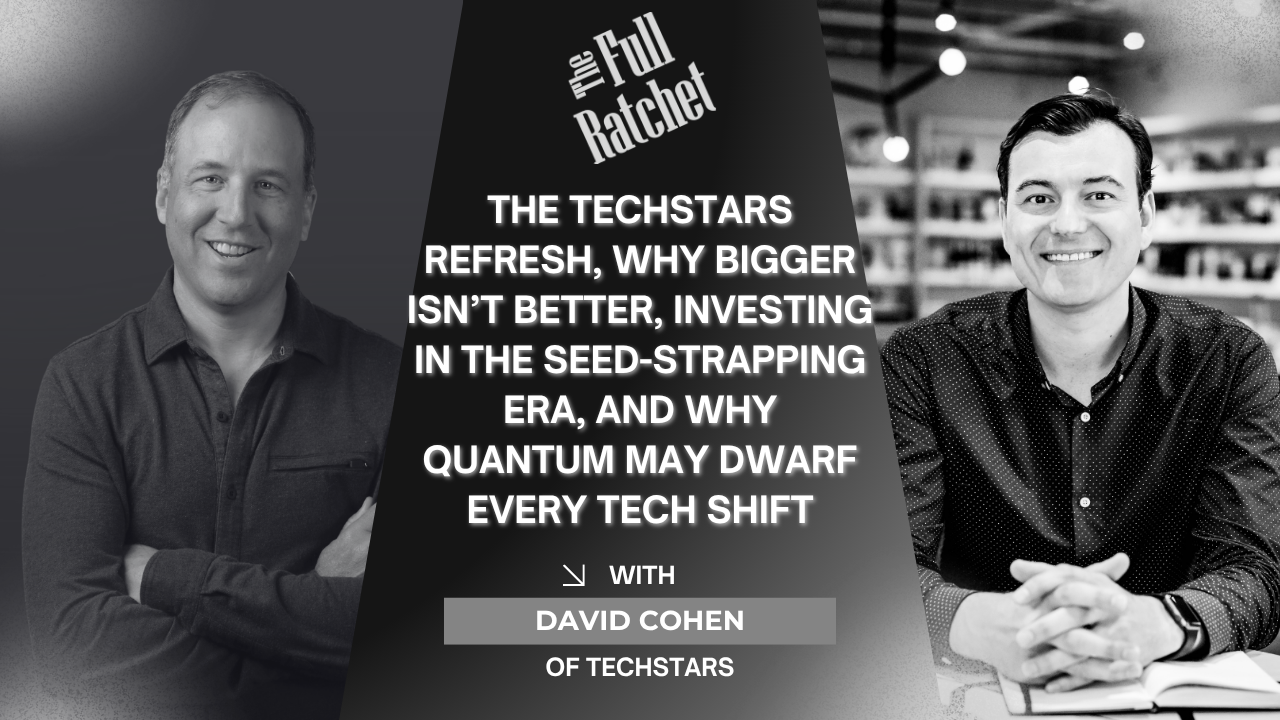
Upon returning as CEO, David Cohen implemented a 'better is better, not bigger is better' philosophy at Techstars. This strategic shift prioritizes improving the quality of the investment offer, selection process, and founder experience over simply increasing the number of companies funded. It's a crucial lesson for any organization that risks mistaking sheer growth for progress.
To instill extreme speed, Sequoia's Doug Leone challenges founders by asking why their growth plan isn't 3x more ambitious. This forces an honest discussion about the true bottlenecks—the "rocks in the river" like funding or hiring. The board's job then becomes helping the CEO remove those specific obstacles.

In dynamic markets like AI, where technology and business models evolve rapidly, the founding team's quality ('the jockey') becomes more critical than the initial business plan ('the horse'). The ability of a small, talented team to pivot and execute on new opportunities is the key determinant of success.

While moats like network effects and brand develop over time, the only sustainable advantage an early-stage startup has is its iteration speed. The ability to quickly cycle through ideas, build MVPs, and gather feedback is the fundamental driver of success before achieving scale.