Get your free personalized podcast brief
We scan new podcasts and send you the top 5 insights daily.
The era of the US holding a decisive military edge through exclusive, exquisite technologies like stealth is finished. Future advantages are contested because key innovations like drones and AI derive from the global commercial sector, making them cheap, accessible, and rapidly proliferating to adversaries.

Related Insights
The conflict in Ukraine exposed the vulnerability of expensive, "exquisite" military platforms (like tanks) to inexpensive technologies (like drones). This has shifted defense priorities toward cheap, mass-producible, "attritable" systems. This fundamental change in product and economics creates a massive opportunity for startups to innovate outside the traditional defense prime model.

Unlike stealth technology developed in secret defense labs, AI is an imported commercial product. This fundamental difference means the military must contend with the values, ethical debates, and employee activism of the commercial tech sector, creating friction and power dynamics that are novel in the history of the military-industrial complex.

A new category of agile tech companies is winning major defense contracts by offering cheaper, software-driven, and nimbler solutions like drones and AI, directly challenging established giants like Lockheed Martin.
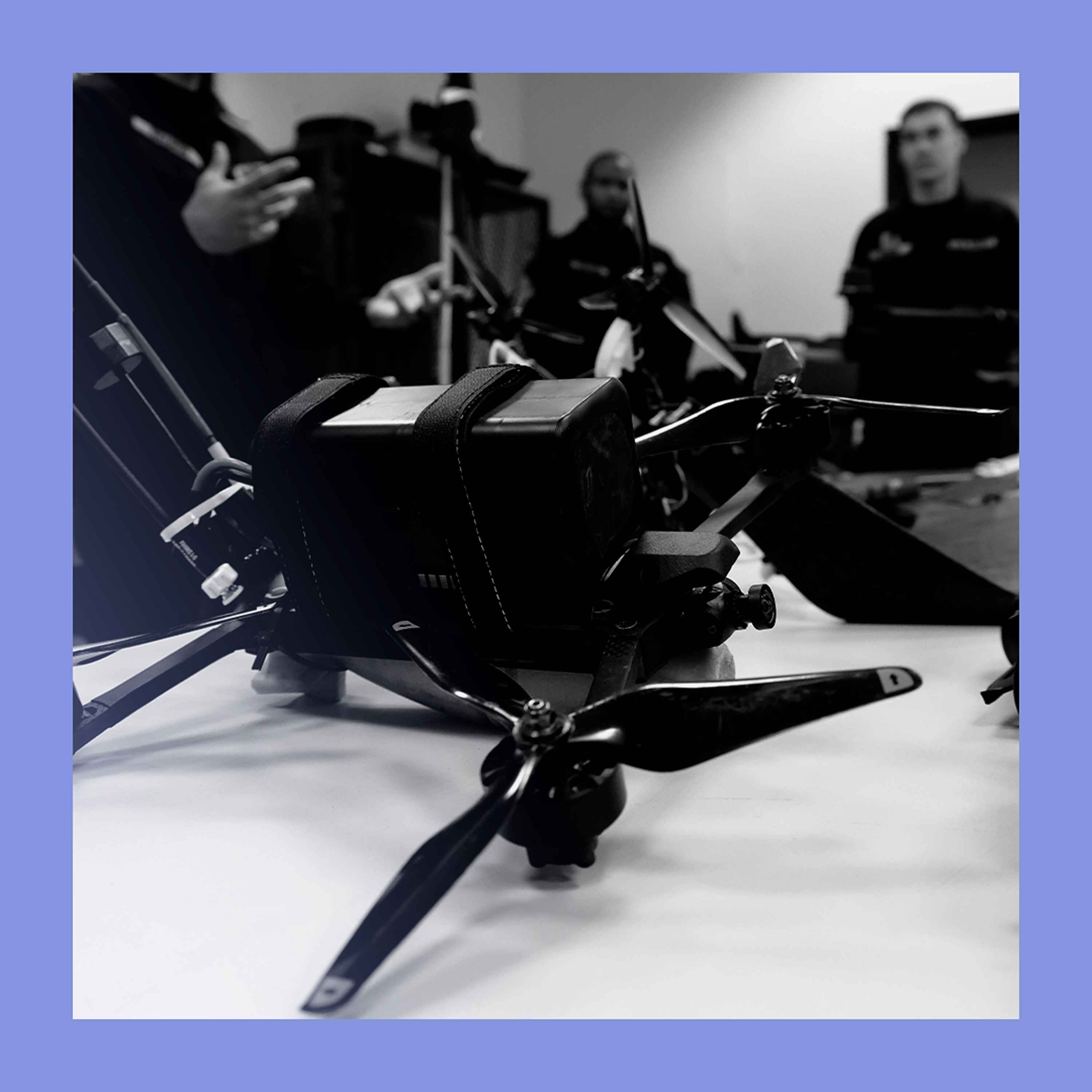
The rise of inexpensive, attributable drones has fundamentally altered modern warfare. A small swarm can overwhelm a multi-billion-dollar destroyer's defenses, making it nearly impossible for traditional naval superpowers to project force and keep strategic waterways like the Strait of Hormuz open.

The Hormuz crisis, like the war in Ukraine, demonstrates that cheap, numerous drones can effectively challenge even the most powerful militaries. This technology acts as a "beta test" for a new era of warfare, empowering smaller nations to control strategic chokepoints and permanently altering global energy security calculations.
The rapid evolution of drones in Ukraine demonstrates that commercially viable, inexpensive products are now central to modern warfare. The ability to iterate quickly using commercial supply chains provides a mass-producible advantage over traditional, slow-moving defense procurement for certain capabilities.
![Darren Farber on Iran, China, and the Rise of Neoprimes - [Invest Like the Best, EP.474] thumbnail](https://megaphone.imgix.net/podcasts/ef669774-cccd-11ed-889b-c36caad6646f/image/158efdddfb983d2678b3530d484e8aa2.jpg?ixlib=rails-4.3.1&max-w=3000&max-h=3000&fit=crop&auto=format,compress)
The most significant strategic shift from AI is not its role in nuclear weapons, but its ability to give many nations mass precision-strike capabilities with conventional drones and missiles. This proliferation erodes the US's conventional military advantage and could create widespread global instability.

The U.S. government cannot develop leading AI in-house primarily because it lacks the technical talent. Crucially, it also cannot compete with the massive private capital mobilized for building data centers and training models. The commercial applications are so vast that they dwarf the defense sector's budget and influence.
The conflict with Iran highlights a new reality in warfare. Inexpensive, easily produced drones create an asymmetrical threat, as defense systems are vastly more expensive to deploy per incident, making traditional defense economically unsustainable.

Modern warfare has shifted. A $25,000 drone can neutralize a multi-million dollar missile system or threaten a billion-dollar warship. This asymmetry allows less powerful nations or groups to create massive disruption against sophisticated militaries, changing the calculus of global power.