Get your free personalized podcast brief
We scan new podcasts and send you the top 5 insights daily.
The rapid evolution of drones in Ukraine demonstrates that commercially viable, inexpensive products are now central to modern warfare. The ability to iterate quickly using commercial supply chains provides a mass-producible advantage over traditional, slow-moving defense procurement for certain capabilities.
![Darren Farber on Iran, China, and the Rise of Neoprimes - [Invest Like the Best, EP.474] thumbnail](https://megaphone.imgix.net/podcasts/ef669774-cccd-11ed-889b-c36caad6646f/image/158efdddfb983d2678b3530d484e8aa2.jpg?ixlib=rails-4.3.1&max-w=3000&max-h=3000&fit=crop&auto=format,compress)
Related Insights
The Ukrainian conflict demonstrates the power of a fast, iterative cycle: deploy technology, see if it works, and adapt quickly. This agile approach, common in startups but alien to traditional defense, is essential for the U.S. to maintain its technological edge and avoid being outpaced.

The conflict in Ukraine exposed the vulnerability of expensive, "exquisite" military platforms (like tanks) to inexpensive technologies (like drones). This has shifted defense priorities toward cheap, mass-producible, "attritable" systems. This fundamental change in product and economics creates a massive opportunity for startups to innovate outside the traditional defense prime model.
Ukraine's use of cheap drones to destroy a significant portion of Russia's bomber fleet exemplifies modern, asymmetric conflict. The new paradigm favors low-cost, high-volume assets that inflict disproportionate damage on expensive, traditional military hardware, a domain where the U.S. lags.

Modern conflicts demonstrate that low-cost drones can effectively neutralize multi-million dollar missiles. This economic imbalance creates a massive market opportunity for tech companies that can produce cheaper, high-volume, and effective weapons systems.
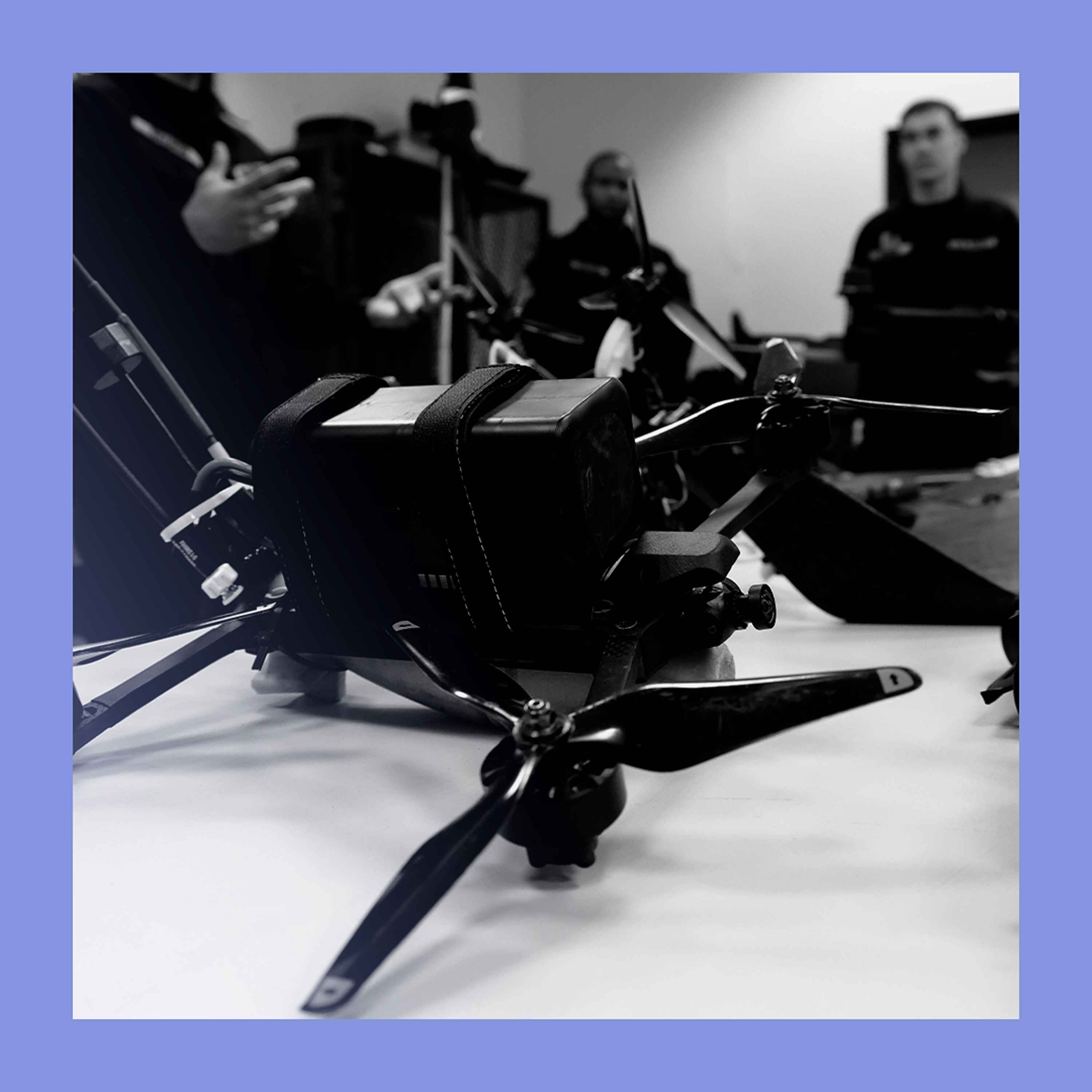
The conflict in Ukraine demonstrates that modern warfare is rapidly changing due to AI, which enables fast, iterative development of low-cost drones. Investing in swarms of intelligent drones is now more strategically important than traditional, expensive military assets like aircraft carriers.

The Pentagon is moving away from decades-long, multi-billion dollar projects like aircraft carriers. The new focus is on mass-produced, attributable, low-cost systems like drones, which allows for faster innovation and deployment from new defense tech startups, not just the old primes.

The key takeaway from conflicts in Ukraine and Iran is the severe cost imbalance created by drones. Cheap, disposable drones can threaten multi-million dollar assets, forcing a strategic shift toward developing low-cost, mass-produced "attributable weapons" to level the economic playing field.

The effectiveness of Ukrainian defense technology comes from its ability to dramatically lower the 'cost per shot' by orders of magnitude compared to legacy systems. This demonstrates that financial efficiency and adaptability, not just advanced features, are decisive on the modern battlefield.

Drones like the Hornet (sub-$5k) use AI to automatically identify targets. This allows Ukraine to send swarms of cheap drones for operational-level strikes, achieving results that previously required expensive missiles. This fundamentally changes the cost-benefit analysis of deep attacks and attritional warfare.

A Ukrainian drone maker claims the drones they produce in one day could destroy all the tanks German defense giant Rheinmetall manufactures in a year. This highlights the massive cost-asymmetry between cheap, mass-produced drones and expensive, traditional military hardware.