Get your free personalized podcast brief
We scan new podcasts and send you the top 5 insights daily.
The Hormuz crisis, like the war in Ukraine, demonstrates that cheap, numerous drones can effectively challenge even the most powerful militaries. This technology acts as a "beta test" for a new era of warfare, empowering smaller nations to control strategic chokepoints and permanently altering global energy security calculations.

Related Insights
The conflict highlights a critical economic vulnerability in US defense strategy. The US is forced to use multi-million dollar missiles to counter Iranian drones that cost only $20,000. This massive cost imbalance demonstrates the power of asymmetric warfare and a significant strategic inefficiency for the US military.

Iran doesn't need a naval blockade to close the Strait of Hormuz. The mere threat of drone and missile attacks is enough to deter shippers and insurers, creating a "de facto closure." This asymmetrical strategy highlights how psychological warfare can be as effective as direct military action in disrupting global trade.
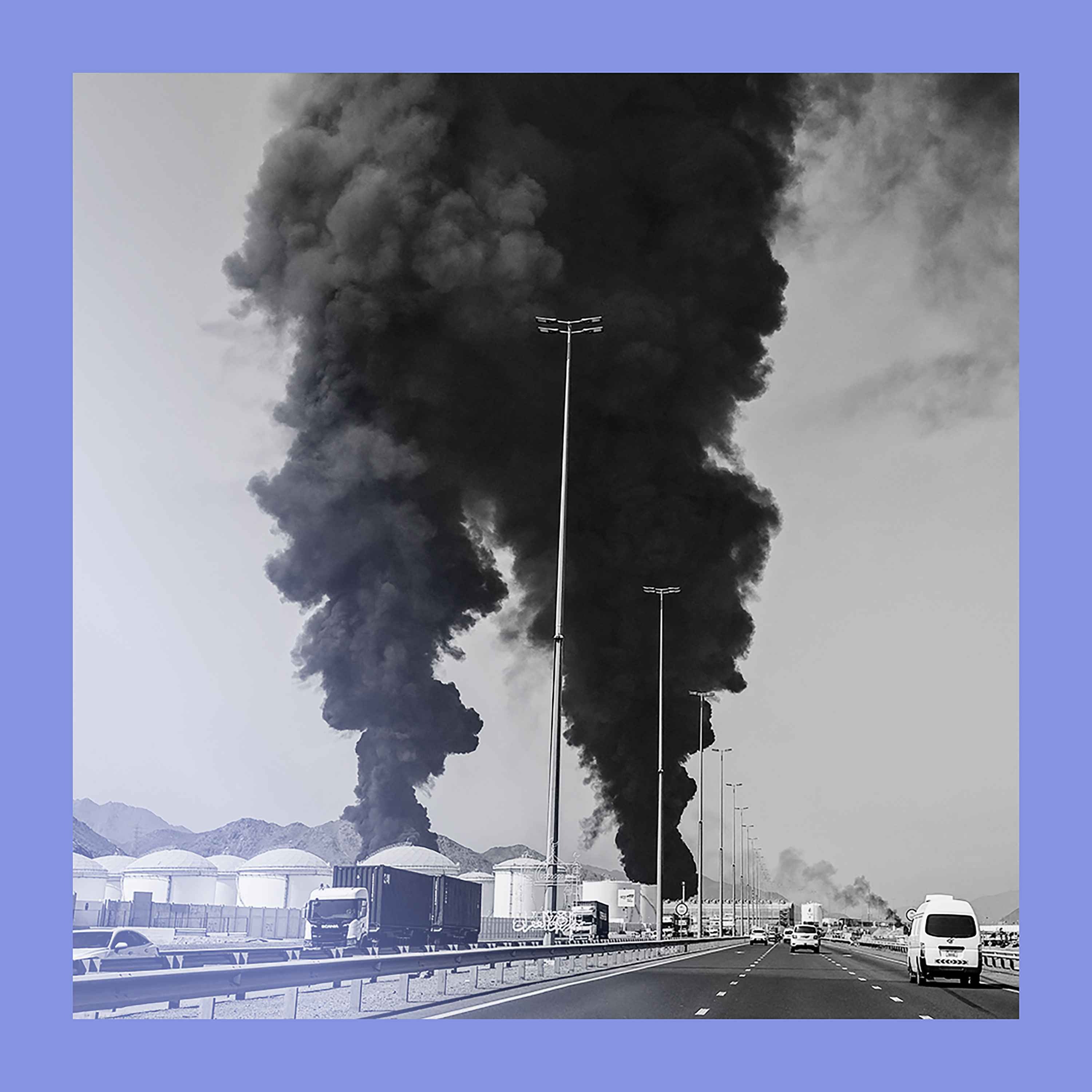
Low-cost, mass-produced drones create strategic advantage by forcing a disproportionately expensive defensive response ($4M missiles for $20K drones). This 'weaponized financial asymmetry' can extend conflicts by draining an opponent's budget, even if the drones are successfully intercepted.

Iran's victory condition isn't military dominance but strategic disruption. By using asymmetric warfare—mines, drones, and missiles—to create chaos in the Strait of Hormuz, it can halt the flow of oil. This cracks the petrodollar system and achieves its primary geopolitical objective without needing to defeat the US Navy in a conventional battle.

The key takeaway from conflicts in Ukraine and Iran is the severe cost imbalance created by drones. Cheap, disposable drones can threaten multi-million dollar assets, forcing a strategic shift toward developing low-cost, mass-produced "attributable weapons" to level the economic playing field.

Iran employs inexpensive weapons against shipping in the Strait of Hormuz. This asymmetric strategy avoids direct military confrontation while making the risk too high for insured commercial vessels, effectively closing the strait without a formal blockade.

The conflict with Iran highlights a new reality in warfare. Inexpensive, easily produced drones create an asymmetrical threat, as defense systems are vastly more expensive to deploy per incident, making traditional defense economically unsustainable.

The primary threat to securing oil tankers is no longer just mines or fixed missile sites. It is the asymmetric threat of cheap, long-range drones that can be launched from the back of a truck, making them incredibly difficult and costly to defend against with traditional military systems.

Modern warfare has shifted. A $25,000 drone can neutralize a multi-million dollar missile system or threaten a billion-dollar warship. This asymmetry allows less powerful nations or groups to create massive disruption against sophisticated militaries, changing the calculus of global power.
Iran can produce cheap Shahed drones weekly, while the US produces expensive PAC-3 interceptors annually. This massive production disparity means defense systems can be quickly depleted, leaving critical infrastructure like oil fields vulnerable.