Get your free personalized podcast brief
We scan new podcasts and send you the top 5 insights daily.
The long-standing platinum doublet backbone for frontline SCLC may soon be challenged. The high efficacy of novel agents like antibody-drug conjugates and bispecific antibodies in later lines is prompting trials that consider moving them into the first-line setting, a strategy previously considered "unthinkable."

Related Insights
While platinum chemotherapy is considered the standard treatment after a patient progresses on a first-line ADC-IO combination, experts admit this is a standard "based on nothing." There is no clinical trial data to prove its efficacy in this specific setting; it serves only as a placeholder for new clinical trials.

Unlike traditional cytotoxic agents, the DLL3-targeting T-cell engager tarlatumab demonstrates consistent overall survival benefits in third-line SCLC regardless of the patient's chemotherapy-free interval from first-line therapy. This indicates it works via a distinct mechanism that bypasses conventional chemoresistance pathways, representing a new treatment paradigm.
Lurbinectedin's effectiveness in second-line SCLC is highly dependent on the chemotherapy-free interval after first-line treatment. Patients with a longer interval (>90 days) show significantly better response rates and disease control, reinforcing that "platinum sensitivity" acts as a proxy for broader cytotoxic drug sensitivity.
Real-world data suggests that using one antibody-drug conjugate (ADC) immediately after another is often ineffective. A potential strategy to overcome this resistance is to administer a different class of chemotherapy before starting the second ADC.
After standard immunotherapy biomarkers like PD-L1 and TMB proved ineffective in SCLC, the field shifted to a more direct approach. Novel therapies like the bispecific antibody tarlatumab target surface proteins such as DLL3, physically bridging immune cells to cancer cells without relying on predictive biomarkers.
Rather than moving through distinct lines of therapy, a future strategy could involve an "ADC switch." When a patient progresses on an ADC-IO combination, the IO backbone would remain while the ADC is swapped for one with a different, non-cross-resistant mechanism, adapting the treatment in real-time.
The regimen's profound success in relapsed/refractory patients is not an endpoint, but a launchpad. It provides the rationale for the ongoing Epcor FL2 trial, which directly challenges standard chemoimmunotherapy and could establish a chemotherapy-free, bispecific-based combination as the new first-line standard of care.
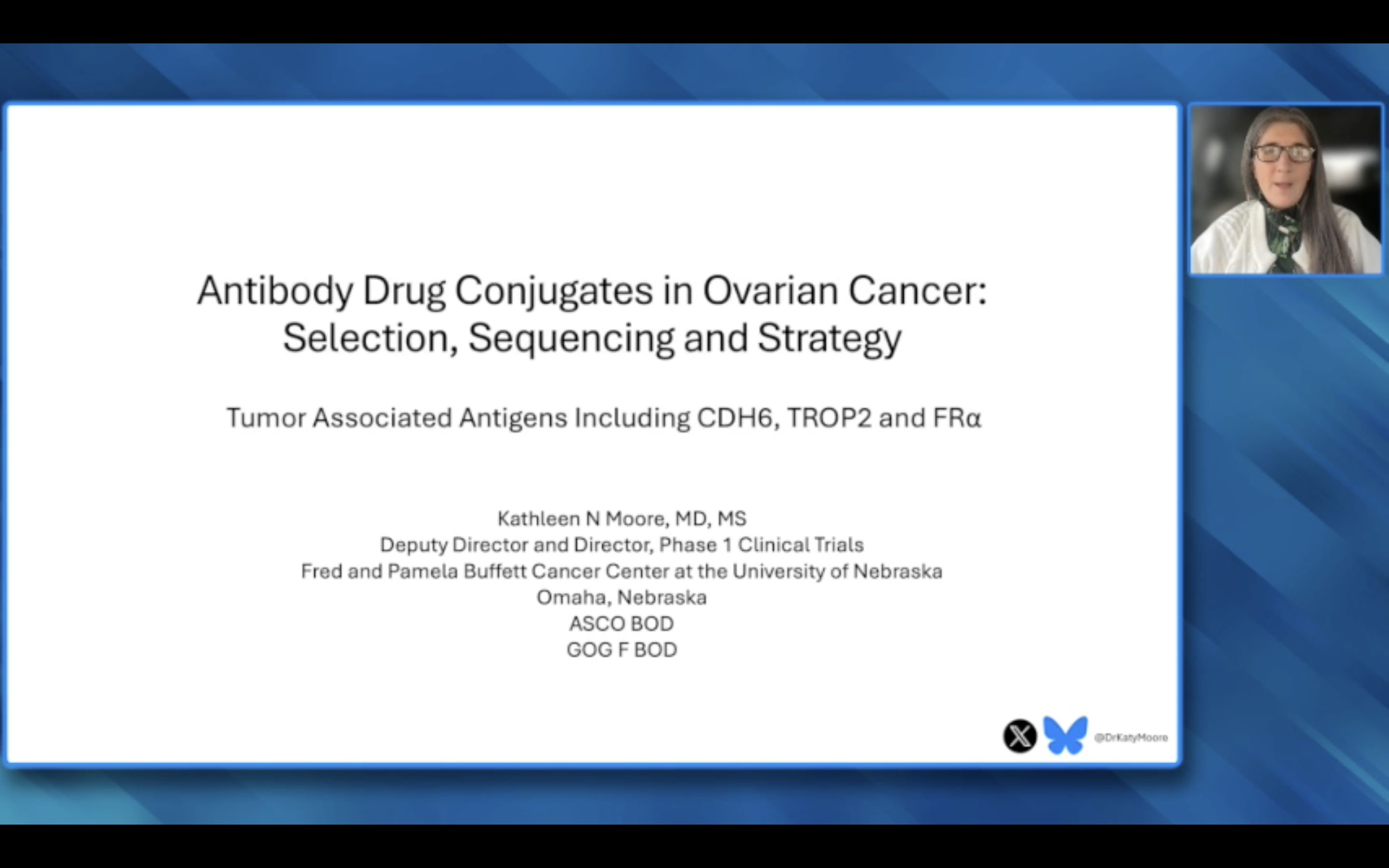
As multiple effective Antibody-Drug Conjugates (ADCs) become available, the primary clinical challenge is no longer *if* they work, but *how* to use them best. Key unanswered questions involve optimal sequencing, dosing for treatment versus maintenance, and overall length of therapy, mirroring issues already seen in breast cancer.
The ongoing Phase III trial for Sigvotatug Vedotin compares it against docetaxel, the current standard for second-line NSCLC. Docetaxel is known for modest efficacy and significant side effects, creating a major opportunity for the new drug to demonstrate superiority and rapidly become the new clinical standard.

The dramatic efficacy boost from adding epcoritamab suggests it's the primary driver of patient benefit, not just an adjunct. This shifts the conceptual framework, positioning the bispecific antibody as the new therapeutic backbone, with rituximab and lenalidomide as supportive agents.