Get your free personalized podcast brief
We scan new podcasts and send you the top 5 insights daily.
The famously ornate manhole covers in Japan weren't just for aesthetics. A government bureaucrat initiated the project in the 1980s as a clever public relations campaign to raise awareness and appreciation for municipal sewer systems, aiming to garner public support for higher taxes to fund infrastructure improvements.

Related Insights
Many see Japan as a value play. The real opportunity is its high number of quality companies (250+ with >40% gross margins) that were historically mismanaged. Ongoing governance reforms are now unlocking the potential of these high-margin franchises.

Traditional economics often repels people with complex math. Economist Kate Raworth intentionally used the simple, non-threatening metaphor of a "donut" for her alternative economic model. This disarmed common fears around the subject and encouraged broader, more accessible engagement.

For years, Japan was a value trap: cheap companies with poor governance hoarded cash. The game changed when Prime Minister Shinzo Abe introduced stewardship and governance codes, creating a top-down, government-backed catalyst for companies to finally improve capital allocation and unlock shareholder value.
The show deliberately modeled a healthy, walkable, mixed-use neighborhood based on urbanist Jane Jacobs' principles. It taught millions of children to value vibrant city life during an era of white flight and anti-urban sentiment, subtly shaping their future preferences for community.
‘Form follows function’ is often misinterpreted as prioritizing utility above all. An object’s true function extends to its emotional and aesthetic impact on its environment. A drain pipe's job is not just to move water, but to also avoid making the world more boring or, ideally, to add charm.

Urban features like decorative knobs on walls are designed to prevent loitering. By disguising their hostile purpose as aesthetics, property owners avoid public conversations about homelessness and the use of public space, effectively shuffling problems around without addressing them.
Research shows people prefer architecture that mimics natural patterns like fractals and curved edges (e.g., Gothic cathedrals). These buildings are perceived as more natural and likable than rectilinear, 'brutalist' structures. This suggests built environments can offer some of nature's cognitive benefits by incorporating its design principles.

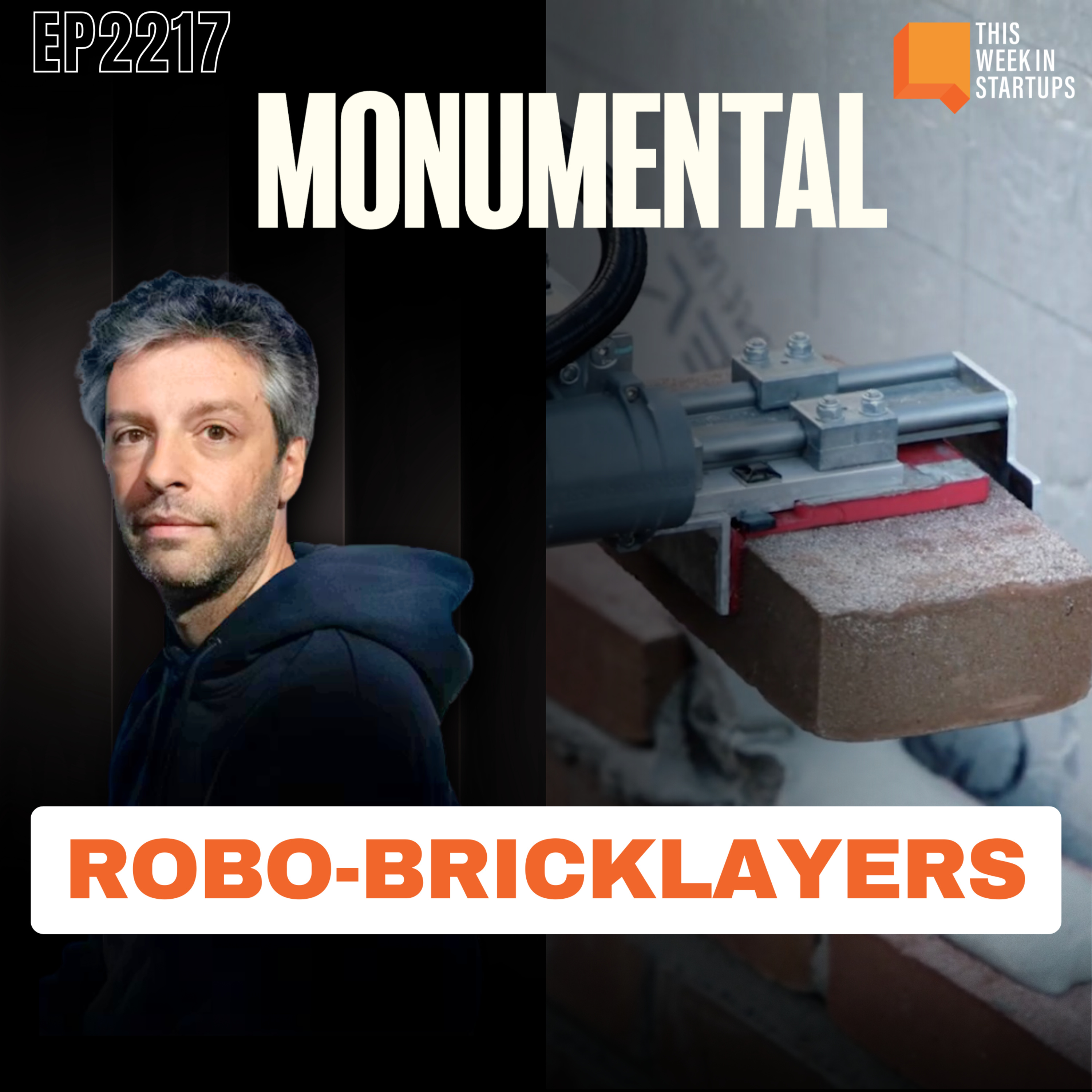
Automation in construction can do more than just lower costs for basic structures. Monumental's robots can create complex, artistic brick patterns and designs at the same speed and cost as a standard wall, potentially democratizing access to beautiful and diverse housing aesthetics.
Creator John Stone's epiphany to set the show on a city street came from a "Give a Damn" campaign ad showing children in Harlem gutters. Instead of replicating the despair, he chose to create a positive, harmonious counter-narrative set in a familiar but idealized urban environment.
A country's cultural distinctiveness can be a direct result of prolonged isolation. Japan's 300-year period of closed borders prevented external influence, forcing it to develop unique social norms and solutions internally, much like a homeschooled child developing in a bubble.