Get your free personalized podcast brief
We scan new podcasts and send you the top 5 insights daily.
Despite platforms getting better at identifying AI-generated images, simple workarounds are still effective. Taking an AI image, modifying it in a tool like Canva, or even just screenshotting and resizing it can strip the metadata and prevent it from being flagged as AI, a tactic the speaker found works despite online claims to the contrary.

Related Insights
Unlike many AI tools that produce a final, unchangeable output, Canva's AI generates a standard, multi-layered file. This lets users treat the AI's output as a first draft that they can refine using familiar drag-and-drop tools, bridging the gap between generation and creation.

Instead of guessing prompts, take a screenshot of a viral ad. Feed the image into an AI tool like Gemini and ask it to write a detailed prompt to create a similar person or scene. This allows you to recreate the style and vibe of high-performing creative without illegally copying someone's likeness.

As AI models improve, detecting AI-generated content will become increasingly difficult. A more sustainable long-term strategy may be to focus on verifying and labeling authentic, camera-captured content. This flips the problem from an arms race of detection to a system of verification.

Creating reliable AI detectors is an endless arms race against ever-improving generative models, which often have detectors built into their training process (like GANs). A better approach is using algorithmic feeds to filter out low-quality "slop" content, regardless of its origin, based on user behavior.

To maximize efficiency and control costs, treat AI ad generators as a starting point, not a final solution. Use them to create initial concepts and copy. Once an ad is "close enough," export it and perform final visual edits in a dedicated design tool like Canva, avoiding expensive AI credit usage for minor tweaks.

The introduction of watermarks on AI-generated content, like images from Claude, makes it easily identifiable. This creates a clear distinction and potential premium for original, human-created designs, giving an advantage to graphic designers and other creative professionals who can produce unique work.
Initiatives like Google's Synth ID aim to standardize detection of AI-generated content. However, these systems are vulnerable. Simple user actions like screenshotting can strip metadata, and blending AI-generated assets with real footage can easily confuse detection algorithms, limiting their effectiveness.
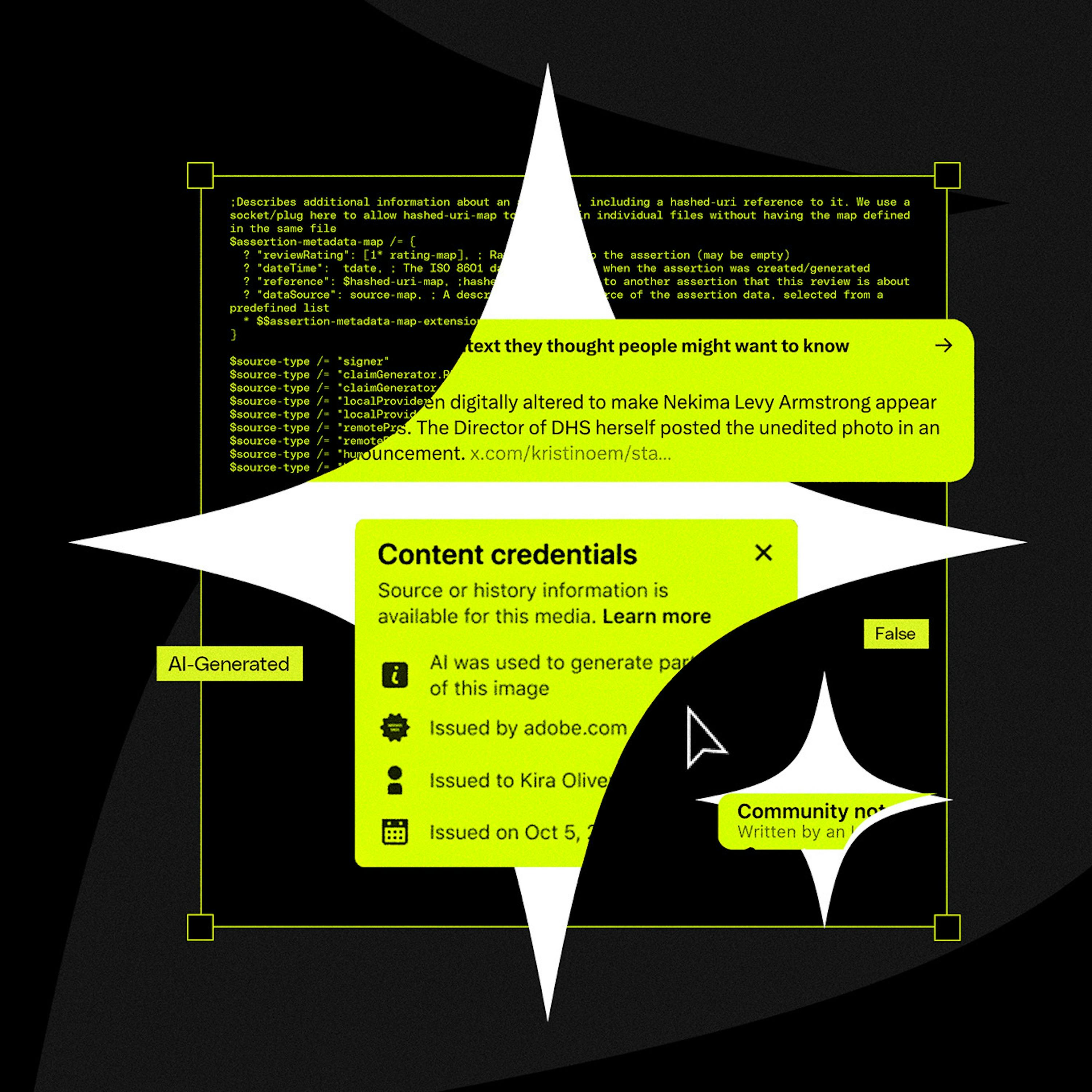
C2PA was designed to track a file's provenance (creation, edits), not specifically to detect AI. This fundamental mismatch in purpose is why it's an ineffective solution for the current deepfake crisis, as it wasn't built to be a simple binary validator of reality.
A major side effect of mandatory AI watermarking is the potential devaluation of human creativity. When authors use AI for minor tasks like proofreading, their entire work risks being labeled "AI-generated." This could wrongly attribute the core creative effort to the tool, not the person.

Attempts to label "AI content" fail because AI is integrated into countless basic editing tools, not just generative ones. It's impossible to draw a clear line for what constitutes an "AI edit," leading to creator frustration and rendering binary labels meaningless and confusing for users.