Get your free personalized podcast brief
We scan new podcasts and send you the top 5 insights daily.
The Industrial Revolution shifted economic power from land to labor. AI is poised for an equally massive transition, making capital, not labor, the primary driver and limiting factor of production. As AI increasingly substitutes for human labor, access to capital for machines and computation will determine economic output.

Related Insights
The standard economic production function based on Capital and Labor is becoming obsolete. In an economy dominated by AI and robotics, a more useful model distinguishes between Hardware (physical labor, robotics) and Software (cognitive tasks, AI). This new framework better captures the value contributed by both humans and machines.
The true disruption from AI is not a single bot replacing a single worker. It's the immense leverage granted to individuals who can deploy thousands of autonomous AI agents. This creates a massive multiplication of productivity and economic power for a select few, fundamentally altering labor market dynamics from one-to-one replacement to one-to-many amplification.
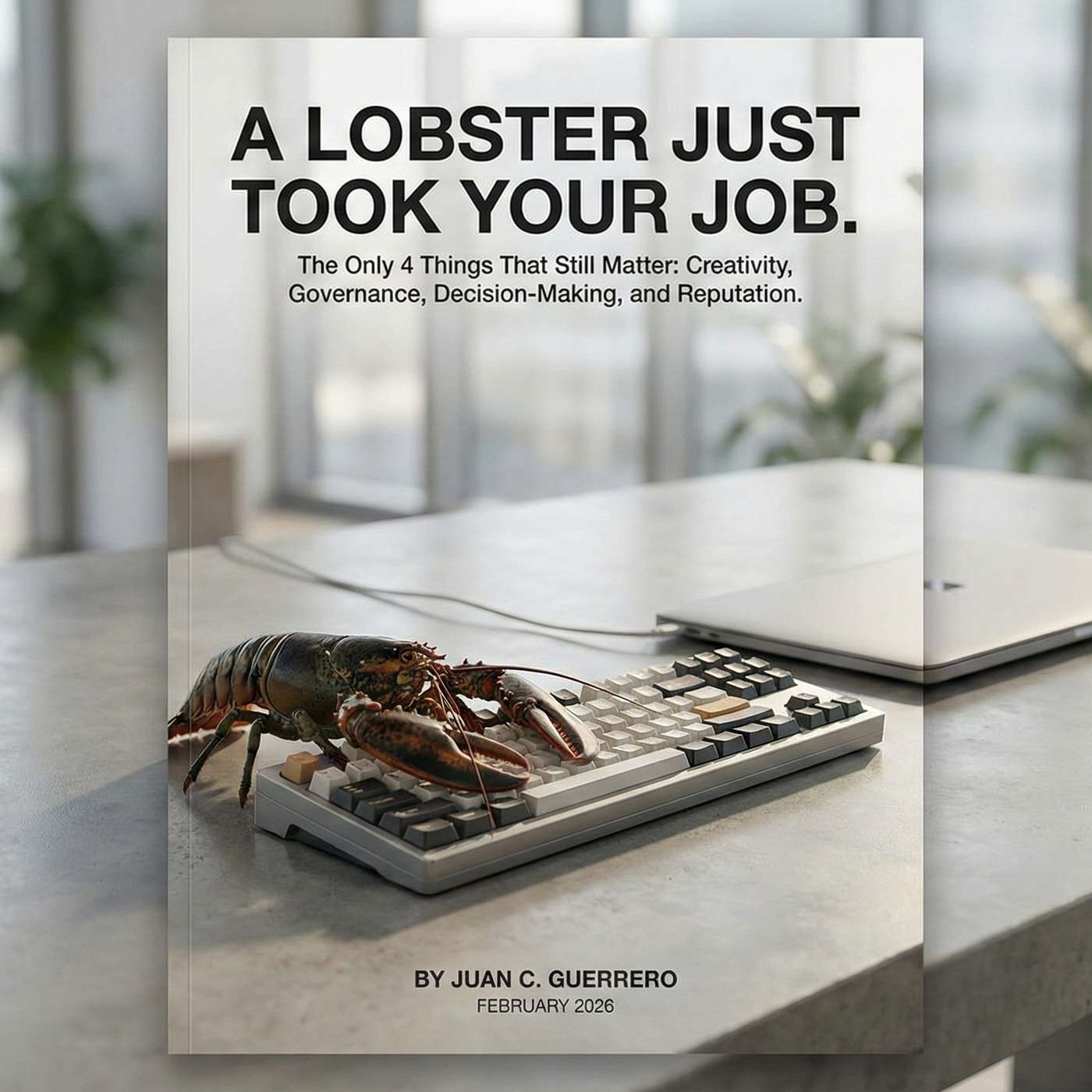
The narrative of AI destroying jobs misses a key point: AI allows companies to 'hire software for a dollar' for tasks that were never economical to assign to humans. This will unlock new services and expand the economy, creating demand in areas that previously didn't exist.

The tangible economic effect of the AI boom is currently concentrated in physical capital investment, such as data centers and software, rather than widespread changes in labor productivity or employment. A potential market correction would thus directly threaten this investment-led growth.

Unlike past technologies that automated specific tasks, AI threatens to automate all economically valuable human labor. This removes the fundamental, non-seizable leverage that the general populace holds, creating a power vacuum that can be filled by capital owners.

The fundamental economic shift is not just job automation but an inversion of roles. AI, as pure intelligence, will become the employer, hiring humans as contractors for physical tasks it cannot perform, like visiting a warehouse or collecting brochures. Intelligence becomes a cloud commodity, while physical presence becomes the service.
AI accelerates capitalism's natural tendency to compress margins to zero. By automating tasks and replicating solutions cheaply, AI makes it difficult to sustain profits, benefiting only those who own scarce, non-digitizable assets like data, trust, or real estate.

Unlike prior technological inputs like energy, which required machinery to be useful, AI compute can be added directly to the economy to strengthen it. Simply increasing compute improves product quality and expands user access simultaneously, acting as a direct economic force multiplier without traditional bottlenecks.

Capitalism values scarcity. AI's core disruption is not just automating tasks, but making human-like intellectual labor so abundant that its market value approaches zero. This breaks the fundamental economic loop of trading scarce labor for wages.

Beyond automating tasks, Emad Mostaque's "Intelligence Theory" suggests AI's deepest impact is shifting the foundational axiom of economics. Instead of scarcity, the new core principle is persistence: how complex systems (like firms or AIs) maintain themselves by accurately modeling and predicting reality.