Get your free personalized podcast brief
We scan new podcasts and send you the top 5 insights daily.
The wisdom of treating servers as disposable 'cattle' is a workaround for the difficulty of managing state. If you can instantly and cheaply snapshot and clone a stateful 'pet' server, the distinction disappears. The new frontier is perfect state replication, not state avoidance.

Related Insights
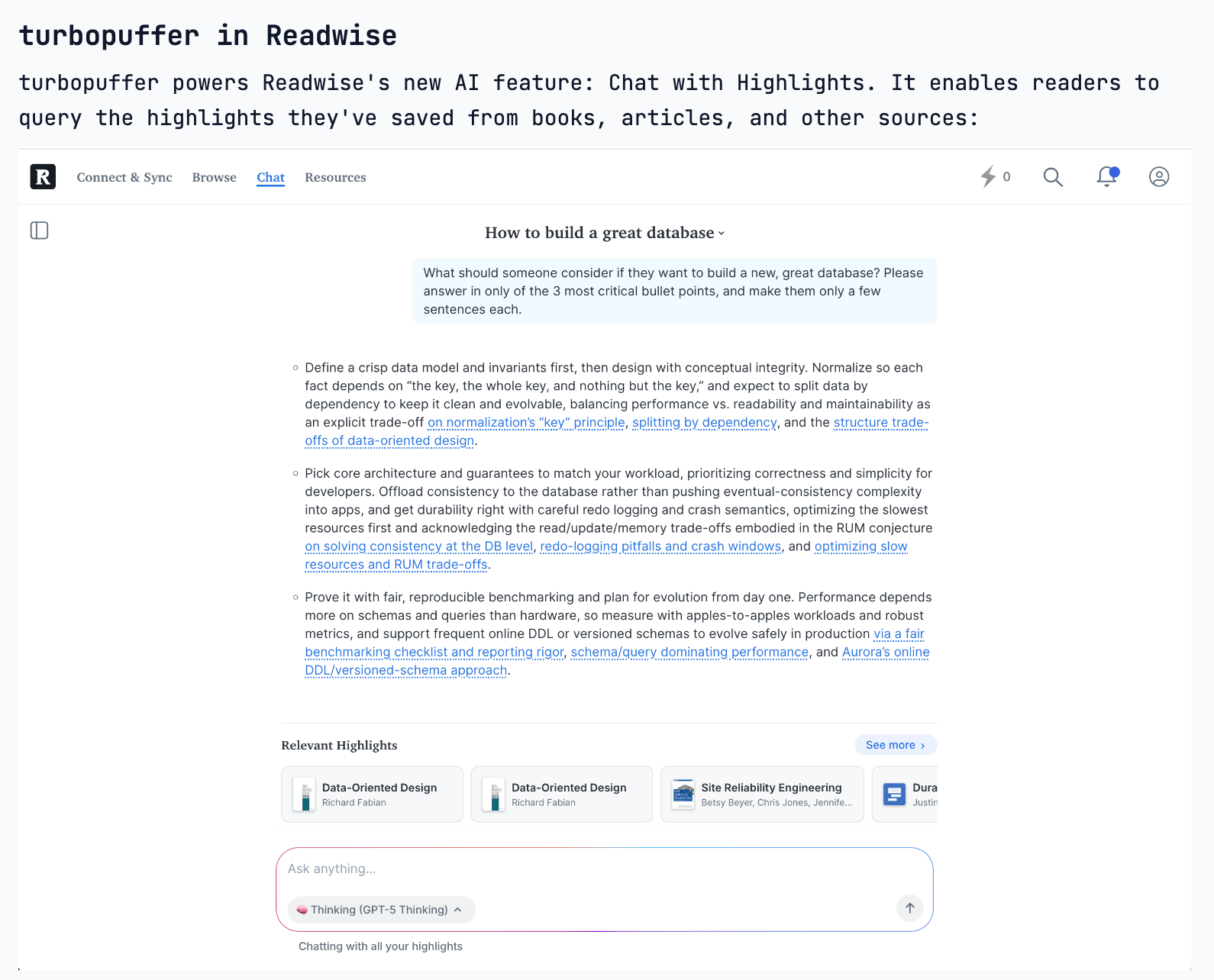
Turbopuffer's design avoids a complex consensus layer (like Zookeeper) by relying on two recent cloud primitive upgrades: S3's strong consistency (post-2020) and a compare-and-swap feature for metadata updates. This creates a simpler, more robust, and stateless system.
The internet's next chapter moves beyond serving pages to executing complex, long-duration AI agent workflows. This paradigm shift, as articulated by Vercel's CEO, necessitates a new "AI Cloud" built to handle persistent, stateful processes that "think" for extended periods.

The evolution from physical servers to virtualization and containers adds layers of abstraction. These layers don't make the lower levels obsolete; they create a richer stack with more places to innovate and add value. Whether it's developer tools at the top or kernel optimization at the bottom, each layer presents a distinct business opportunity.
While AI can easily replicate simple SaaS features (e.g., a server alert), it poses little threat to deeply embedded enterprise systems. The complexity, integrations, and "dark matter" of these platforms create a "hostage" dynamic where ripping them out is impractical, regardless of cloning capabilities.
A powerful capability of autonomous agents is self-replication. A user can instruct an agent to set up a new virtual private server (VPS), transfer its own code, and teach the new instance all of its learned skills and context, effectively cloning itself to scale its operations.

Simply "scaling up" (adding more GPUs to one model instance) hits a performance ceiling due to hardware and algorithmic limits. True large-scale inference requires "scaling out" (duplicating instances), creating a new systems problem of managing and optimizing across a distributed fleet.
In systems like Kubernetes, most components like API servers and schedulers can be scaled out by adding more instances. The true bottleneck preventing an order-of-magnitude scale increase is the consistent storage layer (e.g., etcd). All major scaling efforts eventually focus on optimizing or replacing this single, critical component.

An 'AI SRE' will inevitably destroy a production database without the right primitives. The crucial missing piece isn't better AI, but infrastructure that can safely and cheaply clone production environments for the AI to test its changes before applying them.
Unlike imperative commands, a declarative approach (like Kubernetes YAML) writes down the desired final state of the system. This is powerful because it allows the system to automatically self-heal and correct any deviations. It also enables treating infrastructure as code, applying practices like version control and code review to system configurations.
A powerful loop is created by giving an agent running on Railway access to the Railway CLI. The agent can then dynamically provision new resources (like a database) or modify its own environment, deploying updated versions of itself to complete its task.