Get your free personalized podcast brief
We scan new podcasts and send you the top 5 insights daily.
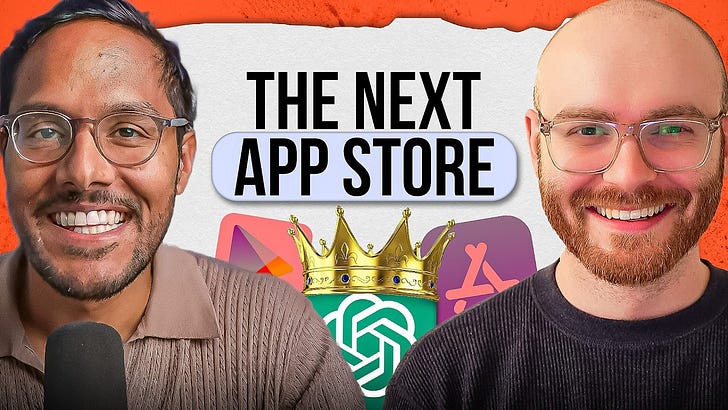
A key distribution advantage of ChatGPT Apps is implicit discovery. The model can automatically surface your app in a conversation if it deems it relevant to a user's request, even if the user has never installed or heard of it. This creates a powerful, intent-driven channel for organic user acquisition.
Related Insights
Large brands like Target are using ChatGPT apps as high-intent lead generators rather than for full-funnel transactions. The app helps users build a shopping cart within the chat interface and then hands them off to the main website to complete the purchase. This reduces integration complexity while capturing high-value users.
Advertising within LLMs like ChatGPT can be a win-win. For discovery queries (e.g., "what's the best tool for X?"), a relevant ad acts as an additional, valuable suggestion rather than an interruption. This improves the user's discovery process while creating a high-intent channel for advertisers.
To onboard the next billion users, ChatGPT's image generation feature avoids forcing users to invent prompts from a blank canvas. It offers pre-canned ideas and styles like "turn yourself into a bobblehead," lowering the barrier to creation and encouraging sharing via links, which in turn drives app installs and new user acquisition.

Users originating from an AI source like ChatGPT convert at a 26% higher rate. While the traffic volume is lower than traditional SEO, the intent is much higher because users have already refined their needs through conversation. This makes integrating with AI platforms a highly effective user acquisition channel.
The ChatGPT app's blank start screen represented wasted real estate. The "Pulse" feature transforms this into a personalized feed based on user history. This creates a highly valuable, monetizable surface for ads placed *between* prompts, avoiding the conflict of serving ads within direct AI responses.

Unlike the failed GPT Store which required users to actively search for apps, the new model contextually surfaces relevant apps based on user prompts. This passive discovery mechanism is a massive opportunity for developers, as users don't need to leave their natural workflow to find and use new tools.

The most effective application of AI isn't a visible chatbot feature. It's an invisible layer that intelligently removes friction from existing user workflows. Instead of creating new work for users (like prompt engineering), AI should simplify experiences, like automatically surfacing a 'pay bill' link without the user ever consciously 'using AI.'

Beyond its technical capabilities, OpenAI's app ecosystem within ChatGPT functions as a new distribution platform. For founders, this creates a strategic opportunity to build apps that serve as an interface layer to their product, opening a novel and potentially powerful channel for user acquisition and growth.

Developing a ChatGPT app involves an iterative evaluation ('eval') process. This is akin to SEO, where you must test and refine your app's metadata and tool descriptions. The goal is to ensure ChatGPT's model correctly interprets user prompts and triggers your app for relevant queries, which is critical for discovery and usability.
Similar to how mobile gave rise to the App Store, AI platforms like OpenAI and Perplexity will create their own ecosystems for discovering and using services. The next wave of winning startups will be those built to distribute through these new agent-based channels, while incumbents may be slow to adapt.