Get your free personalized podcast brief
We scan new podcasts and send you the top 5 insights daily.
To foster peace after its 1990s genocide, Rwanda created a popular fictional radio soap opera about two warring villages. The story, full of conflict and redemption, helped listeners develop more positive attitudes towards the 'other side' by allowing their imaginations to envision a path to peace, proving fiction can build real-world empathy.

Related Insights
Powerful stories bypass logic to connect on an emotional level. The goal is to make the audience feel a sense of shared experience, or "me too." According to guest Alexandra Galvitz, this deepens relatability, which is the foundation of trust and connection.

When we hear stories of how ancestors overcame challenges, we internalize them as "vicarious memories." These are not just tales but mental models of resilience that act as a psychological buffer against our own adversity. This has been observed in studies of children post-9/11 and military veterans.
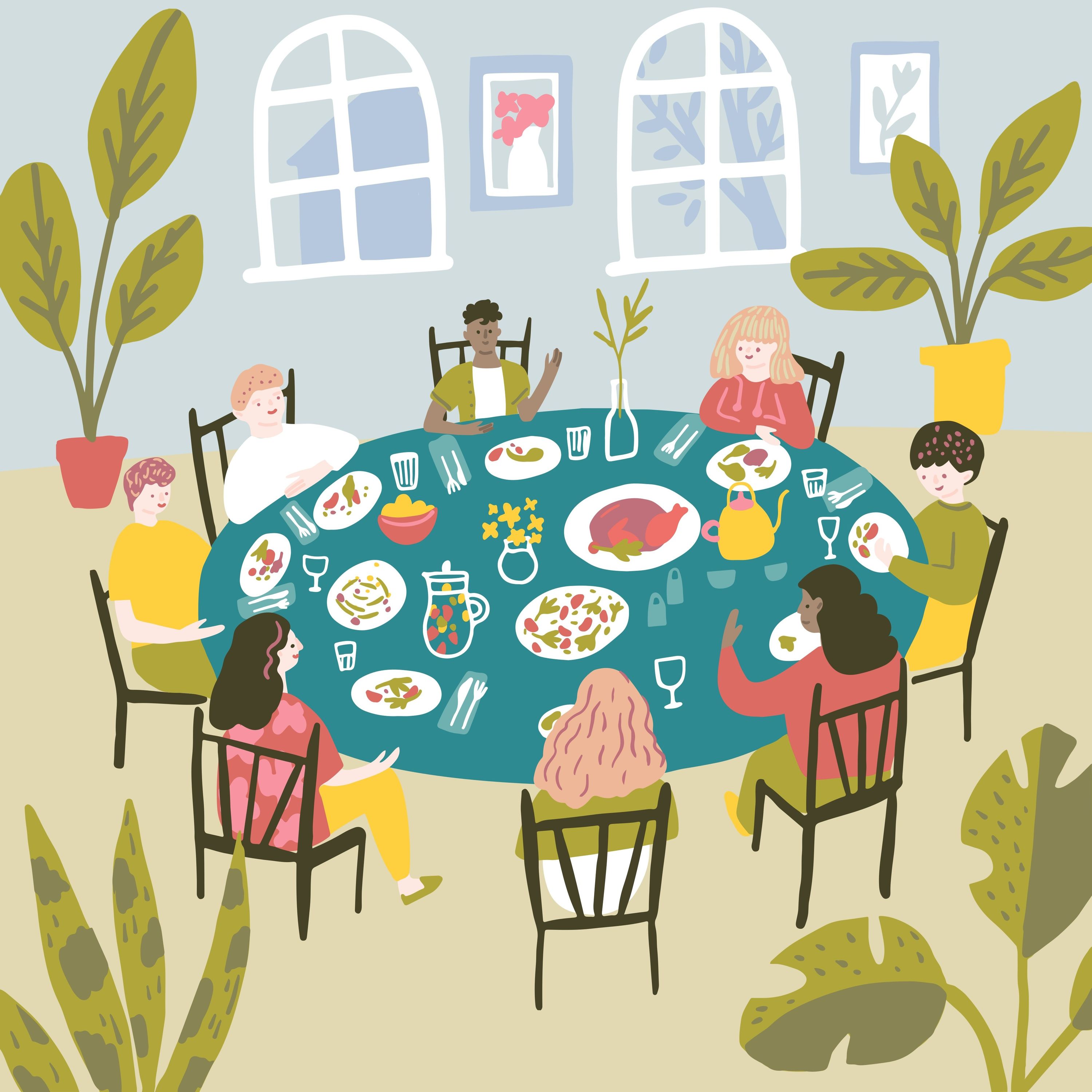
Hope is not just a personal suspension of disbelief. It is a communal resource built from small, everyday interactions—like giving someone your full attention or witnessing kindness between strangers. These moments are 'hope in action' and create the foundation for pursuing larger, more challenging collective goals.

Contrary to the belief that people seek escapism during turbulent times, research shows a surge of interest in scary entertainment following real-life traumatic events. For example, after a campus murder, students in the victim's dorm were most likely to choose to watch a violent movie, suggesting a need to process and understand the threat.
The *style* of family storytelling is critical. Parents who co-create stories with children using open-ended questions build higher self-esteem and emotional understanding. In contrast, a repetitive, "quiz" style focused on factual accuracy is less beneficial. The collaborative process matters more than the facts themselves.
People watched the movie 'Contagion' during the pandemic rather than reading scientific papers because the human brain is wired to learn through first-person stories, not lists of facts. Narratives provide a simulated, experiential perspective that taps into ancient brain mechanisms, making the information more memorable, understandable, and emotionally resonant.
By depicting a Black couple as property owners in the 1960s, Sesame Street's creators used its fantastical setting to present an idealistic social vision. This strategy aimed to shape children's perception of what is possible and normal, making aspirational concepts like Black homeownership feel attainable.

When presented with direct facts, our brains use effortful reasoning, which is prone to defensive reactions. Stories transport us, engaging different, more social brain systems. This allows us to analyze a situation objectively, as if observing others, making us more receptive to the underlying message.
Research conducted during the COVID-19 pandemic revealed that horror fans exhibited greater psychological resilience and less distress than non-fans. Regularly engaging with frightening fictional scenarios appears to serve as a form of emotional regulation practice, equipping individuals to better handle real-world stress and anxiety.
Former neo-Nazi Jeff Scoop remained resistant to logical arguments for years. The turning point came when Daryl Davis shared a personal story of being targeted with racism as a child. This human connection bypassed Jeff's ideological defenses and showed him the real-world pain his beliefs caused.
