Get your free personalized podcast brief
We scan new podcasts and send you the top 5 insights daily.
The TRANSFORM study quantifies the critical importance of therapy timing. DLBCL patients receiving Liso-cel CAR-T as a second-line treatment had a 95% two-year overall survival, which dropped significantly to 78% for patients who received it third-line after crossover from the standard-of-care arm.

Related Insights
In the Cartitude 1 trial, the strongest predictor of long-term remission with Siltacel was a lower burden of disease (measured by bone marrow percentage and soluble BCMA levels), rather than the number of prior treatments. This implies using CAR-T therapy earlier in the disease course is more effective.

Moving CAR T-cell therapy to earlier treatment lines is crucial. This approach targets cancer before it develops resistance and, more importantly, utilizes patient T-cells that are healthier and more effective, not having been damaged by extensive prior chemotherapy regimens.

For third-line follicular lymphoma, where both CAR-T and bispecifics are approved, experts are leaning towards CAR-T. The long-term follow-up data for CAR-T suggests a potential for cure, making it a more compelling option for eligible patients despite logistical challenges.
In follicular lymphoma, the treatment goal is durable remission with manageable toxicity, not necessarily a cure. Therefore, clinicians frequently prefer using a bispecific antibody first, reserving the more complex and toxic CAR-T cell therapy for transformed disease or after a bispecific fails.
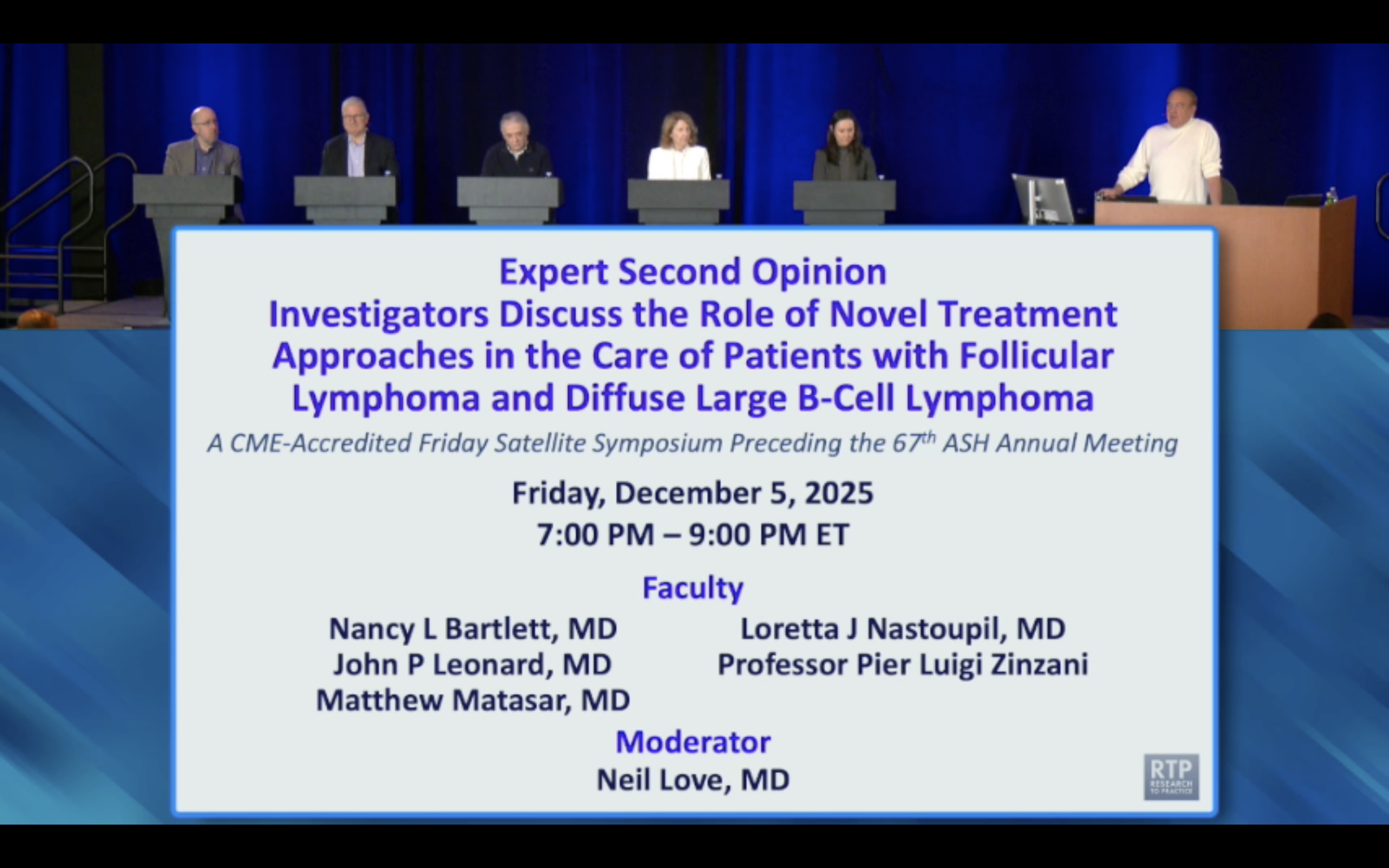
It's a myth that patients must have active disease to receive their manufactured CAR-T cells. Data from the TRANSFORM study shows that patients who achieved a complete response with bridging therapy while awaiting cell manufacturing still proceeded with the infusion and benefited.
As CAR-T cell therapies are increasingly adopted for second-line treatment of large cell lymphoma, epcoritamab is solidifying its role as a critical, potentially curative replacement option in the third-line setting. This establishes a clear sequential treatment pathway for patients who continue to relapse.
Contrary to typical findings where real-world data underperforms, liso-cel CAR T-cell therapy in CLL demonstrates significantly better outcomes in practice than in its approval trial (over 80% response rate vs. under 50%). This suggests that using the therapy earlier in healthier, less-refractory patients unlocks its true potential.
The next major shift for CAR T-cell therapy is its integration into frontline treatment. Instead of being reserved for relapse, it's being tested as a consolidation therapy that could replace the standard two to three years of maintenance chemotherapy, dramatically shortening treatment duration.
CARTITUDE-IV trial data challenges the idea of reserving CAR-T therapy for high-risk myeloma. In early relapse, standard-risk patients treated with siltacel had a longer progression-free survival than even high-risk patients on the same therapy. This suggests standard-risk patients may gain the most relative benefit from earlier CAR-T intervention compared to standard of care.
The success of CAR-T therapy hinges on the quality of the patient's own lymphocytes. Procuring T-cells earlier in the disease course, before they become exhausted from numerous prior therapies, results in a higher proportion of naive T-cells, leading to better CAR-T cell manufacturing and clinical outcomes.