Get your free personalized podcast brief
We scan new podcasts and send you the top 5 insights daily.
AI coding tools have surpassed simple assistance. Expert ML researchers now delegate debugging entirely, feeding an error log to the model and trusting its proposed fix without inspection. This signifies a shift towards AI as an autonomous problem-solver, not just a helper.

Related Insights
A cutting-edge pattern involves AI agents using a CLI to pull their own runtime failure traces from monitoring tools like Langsmith. The agent can then analyze these traces to diagnose errors and modify its own codebase or instructions to prevent future failures, creating a powerful, human-supervised self-improvement loop.
The workflow with an AI coding assistant is described as feeling like the human is the robot, not the programmer. The primary role shifts from writing code to shuttling information between different contexts and the AI model, which performs the heavy lifting of code generation and problem-solving.

AI coding has advanced so rapidly that tools like Claude Code are now responsible for their own development. This signals a fundamental shift in the software engineering profession, requiring programmers to master a new, higher level of abstraction to remain effective.

AI code editors can be tasked with high-level goals like "fix lint errors." The agent will then independently run necessary commands, interpret the output, apply code changes, and re-run the commands to verify the fix, all without direct human intervention or step-by-step instructions.

Unlike previous models that frequently failed, Opus 4.5 allows for a fluid, uninterrupted coding process. The AI can build complex applications from a simple prompt and autonomously fix its own errors, representing a significant leap in capability and reliability for developers.

Despite sophisticated AI debugging tools that monitor logs and browsers, the most efficient solution is often the simplest. Highlighting an error message, copying it, and pasting it directly into an AI agent's chat window is a fast and reliable way to get a fix without over-engineering your workflow.

The next major advance for AI in software development is not just completing tasks, but deeply understanding entire codebases. This capability aims to "mind meld" the human with the AI, enabling them to collaboratively tackle problems that neither could solve alone.
Experienced programmers are urged to stop dismissing AI coding tools. The experience is described as "revolutionary," and even a one-hour trial on a toy project will reveal that it's the clear next evolution of programming, not a gimmick.

Despite creating code that could replace junior and senior developers, the author argues AI is a tool for enhancement. The key skills for future developers are not just coding, but the ability to effectively direct AI through prompting and validate its output via debugging. This mirrors how computers augmented, rather than eliminated, mathematicians.
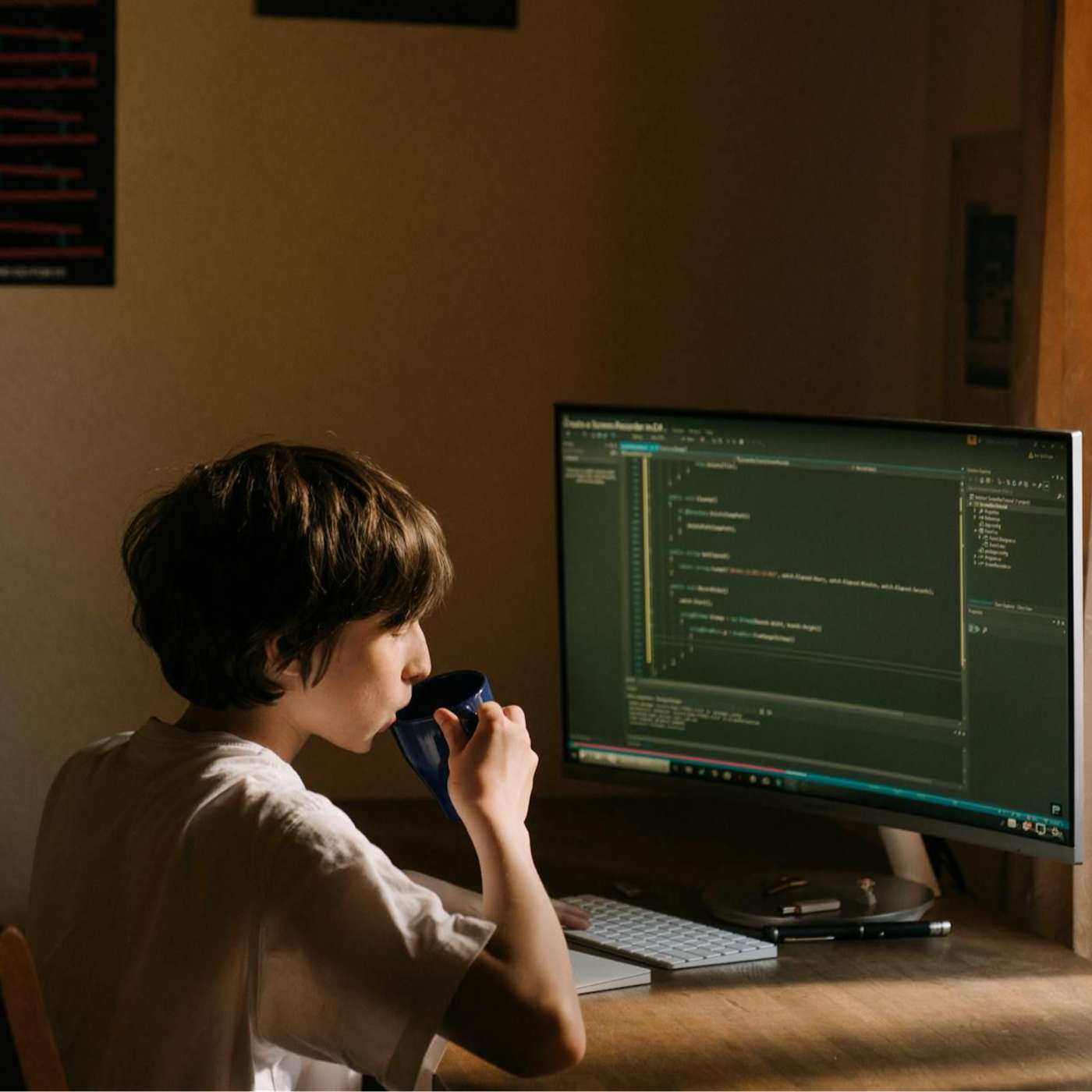
An emerging power-user pattern, especially among new grads, is to trust AI coding assistants like Codex with entire features, not just small snippets. This "full YOLO mode" approach, while sometimes failing, often "one-shots" complex tasks, forcing a recalibration of how developers should leverage AI for maximum effectiveness.