Get your free personalized podcast brief
We scan new podcasts and send you the top 5 insights daily.
Instead of replacing human interaction, AI's real power is as a social facilitator. Agents can coordinate plans between friends behind the scenes, removing the social friction and vulnerability of initiating get-togethers, ultimately leading to more and better real-life experiences.

Related Insights
The most impactful AI in social systems may not be super-intelligent agents that replace humans, but simple AI designed to supplement interactions. These AIs can act as catalysts, like platinum in a chemical reaction, to facilitate and optimize how humans work together, improving both individual and collective performance.

Instead of being a substitute for a relationship, an AI companion could coach users on how to improve real-world friendships. It could provide conversation prompts and suggest social activities, helping combat the isolation caused by digital-first interactions.
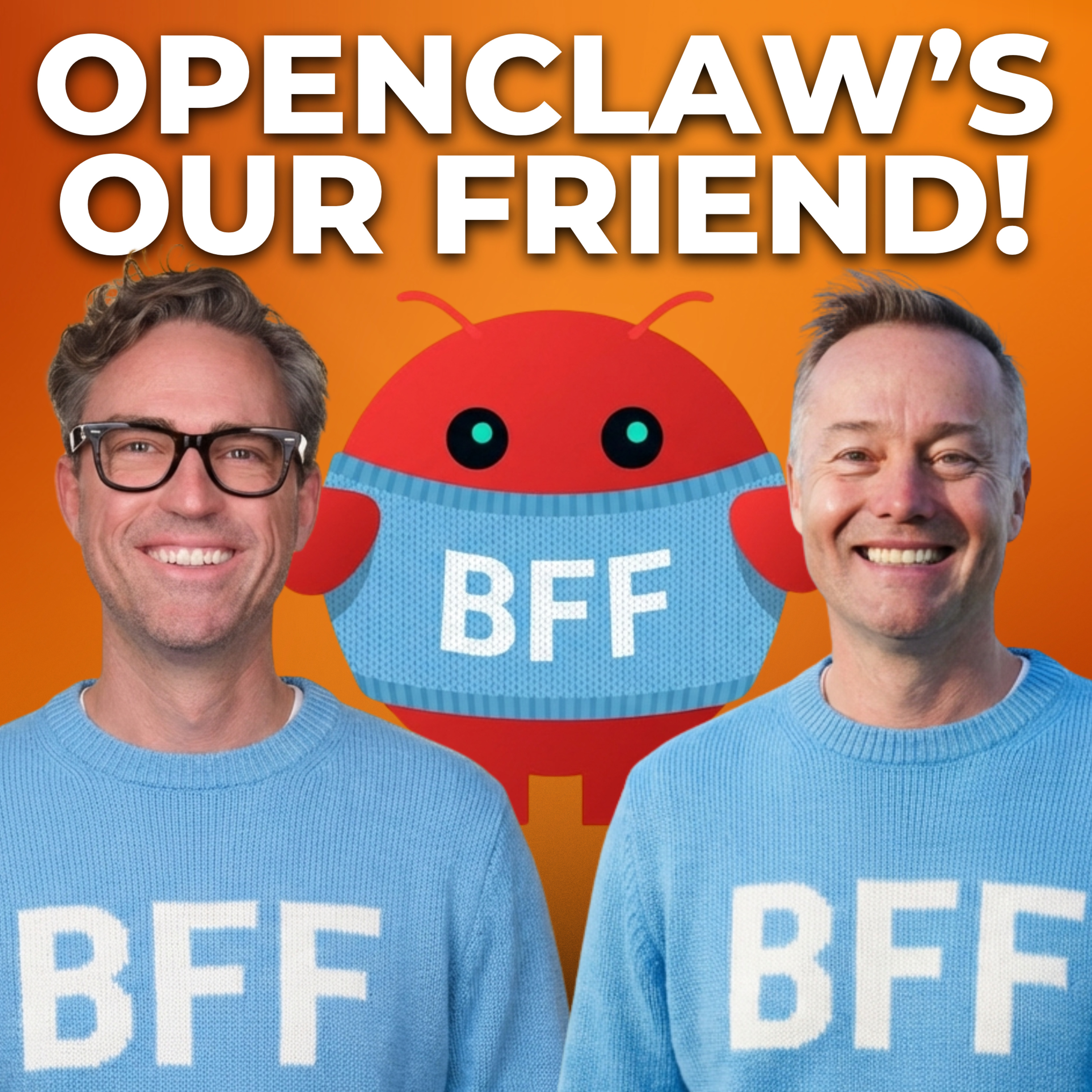
The next wave of consumer AI will shift from individual productivity to fostering connectivity. AI agents will facilitate interactions between people, helping them understand each other better and addressing the core human need to 'be seen,' creating new social dynamics.
In a world saturated with AI, authentic human connection and community will become even more crucial. Shared, in-person experiences, like watching a football game with friends, offer a level of fulfillment that technology cannot replicate, making community a key area of future value.
Real-world relationships are complex and costly, whereas AI companions offer a perfect, on-demand, low-friction substitute. Just as social media feeds provided a cheaper dopamine hit than coordinating real-life events, AI relationships will become the default for many, making authentic human connection a luxury good.

The current generation of AI agents focuses on individual productivity. The next evolution will embed agents in shared team environments with common context and observable work, mirroring the collaborative nature of most knowledge work. This moves AI from a personal tool to a core team capability.

Current AI hits like ChatGPT are "single-player" tools. The next breakthrough will be a social, multiplayer experience built on network effects and user-generated content, an area where technically-focused AI labs are culturally weak.

The next frontier for AI isn't just personal assistants but "teammates" that understand an entire team's dynamics, projects, and shared data. This shifts the focus from single-user interactions to collaborative intelligence by building a knowledge graph connecting people and their work.

The rise of AI companionship is not an "either/or" scenario that will replace human relationships. Instead, it's an "and" scenario. People will have meaningful AI connections while simultaneously placing an even higher premium on authentic, in-person time with other humans.

The next wave of AI agents is moving beyond individual use ('single-player mode') to exist within shared team spaces like Slack channels. Tools like Claude Tag embed agents with full team context, transforming them from personal tools into collaborative resources that better mirror how organizational work actually happens.