Get your free personalized podcast brief
We scan new podcasts and send you the top 5 insights daily.
Despite being the backbone for new combination therapies in trials like Matterhorn, the FLOT chemotherapy regimen has significant toxicity. Approximately 30% of patients discontinue treatment due to adverse events, and only half manage to complete the post-surgery adjuvant portion, posing a major clinical challenge in real-world settings.

Related Insights
A key hypothesis for why docetaxel showed better overall survival than lutetium in the PLUTO trial is that patients treated with lutetium upfront may become unfit for subsequent chemotherapy. This highlights a critical factor in trial design: the planned therapeutic sequence and a patient's ability to receive later-line treatments significantly impact survival outcomes.

An ADC may show better response rates than chemotherapy, but its true benefit is compromised if toxicities lead to treatment discontinuation. As seen with failed PARP/IO combinations, if patients cannot tolerate a drug long enough, the regimen's overall effectiveness can become inferior to standard therapy.
A patient's reminder that even clinically-graded "mild" side effects like grade 2 diarrhea can be debilitating highlights a disconnect between clinical assessment and patient experience. This underscores the need for oncologists to consider the real-world impact of toxicities, like the ability to leave the house, when choosing a treatment regimen.
The enzalutamide arms saw discontinuation rates of 20-25% due to adverse events. This high rate reflects a different risk calculation for patients who feel healthy and are asymptomatic. Unlike in advanced disease where patients tolerate more toxicity, this population has a very low threshold for side effects, making early intervention a significant trade-off.
While the feared side effect of severe lung inflammation (pneumonitis) did not increase, other immune-mediated adverse events did. This led to higher rates of treatment discontinuation in the experimental arm, potentially negating any benefits of the concurrent approach and contributing to the trial's failure.

The PR21 trial showed better overall survival for docetaxel followed by Lutetium, despite similar progression-free survival. The likely reason is not drug superiority but patient behavior: a higher percentage of patients complete the second therapy when starting with chemo, highlighting how treatment fatigue significantly impacts survival.
The TRILINX trial revealed Xevinapant's toxicity was so high that it forced reductions in standard, effective treatments like cisplatin and radiation. This compromised the foundational therapy, leading to worse patient outcomes and demonstrating a key risk in adding novel agents to established regimens.
While the avutometanib/defactinib combination is newly approved for KRAS-mutated ovarian cancer, its significant toxicity profile—causing up to a third of patients to stop treatment—creates a clear clinical need for agents like specific KRAS inhibitors that may offer similar efficacy with better tolerability.

For every 10 Stage III patients receiving adjuvant chemo, 5 are already cured by surgery and 2-3 will recur regardless. This means therapy only benefits 2-3 patients, leading to significant overtreatment for the majority who endure toxicity without benefit.

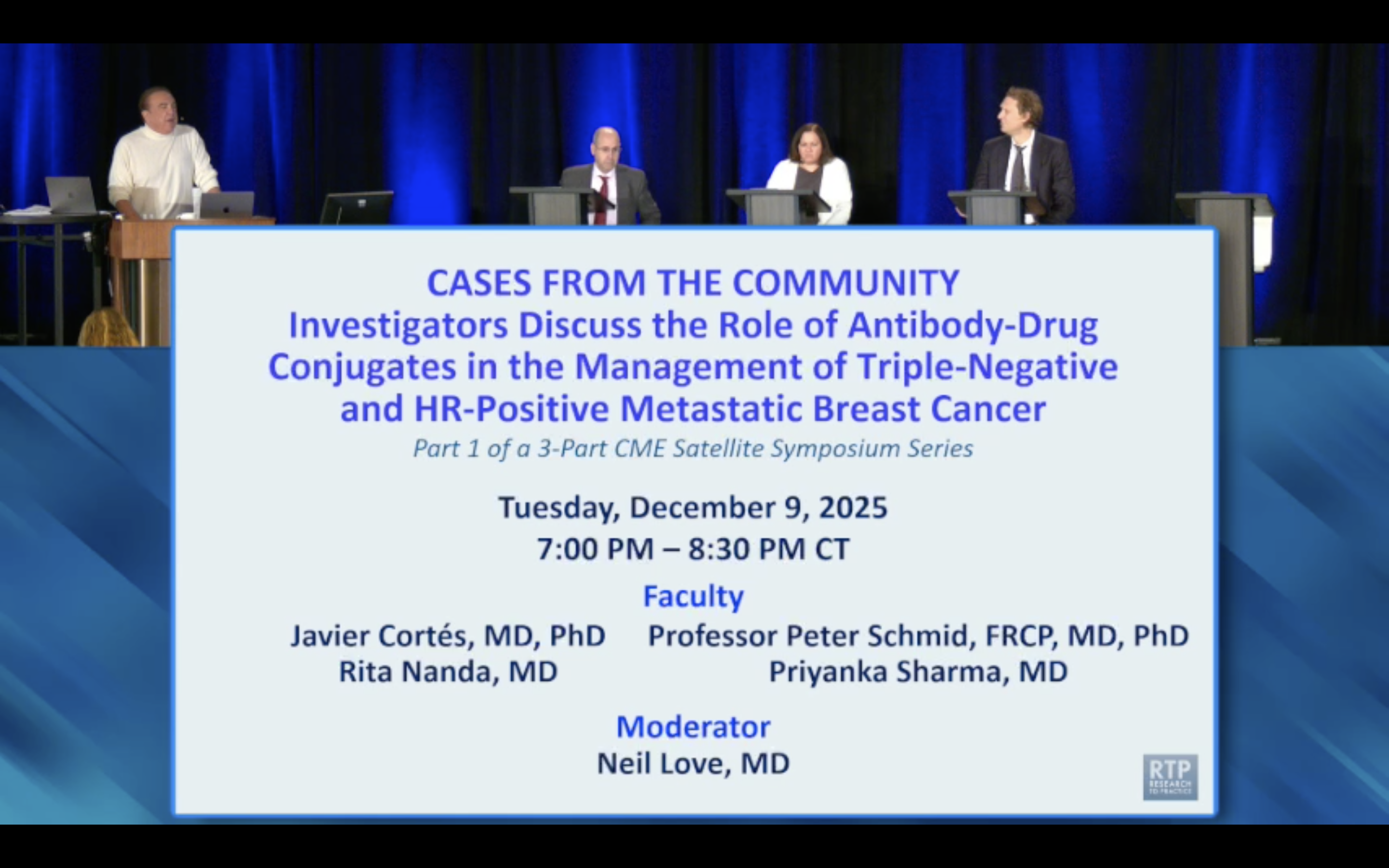
Clinical trial data shows that despite specific toxicities, antibody-drug conjugates (ADCs) can be better tolerated overall than standard chemotherapy. For example, trials for both sacituzumab govitecan and dato-DXd reported fewer patients discontinuing treatment in the ADC arm compared to the chemotherapy arm.