Get your free personalized podcast brief
We scan new podcasts and send you the top 5 insights daily.
The enzalutamide arms saw discontinuation rates of 20-25% due to adverse events. This high rate reflects a different risk calculation for patients who feel healthy and are asymptomatic. Unlike in advanced disease where patients tolerate more toxicity, this population has a very low threshold for side effects, making early intervention a significant trade-off.

Related Insights
Despite compelling data from trials like PATINA, some patients with ER+/HER2+ breast cancer refuse maintenance endocrine therapy due to side effects. This highlights a real-world gap between clinical trial evidence and patient adherence, forcing oncologists to navigate patient preferences against optimal treatment protocols.

When debating immunotherapy risks, clinicians separate manageable side effects from truly life-altering events. Hypothyroidism requiring a daily pill is deemed acceptable, whereas toxicities like diabetes or myocarditis (each ~1% risk) are viewed as major concerns that heavily weigh on the risk-benefit scale for early-stage disease.
While the feared side effect of severe lung inflammation (pneumonitis) did not increase, other immune-mediated adverse events did. This led to higher rates of treatment discontinuation in the experimental arm, potentially negating any benefits of the concurrent approach and contributing to the trial's failure.

To determine if fatigue or cognitive dysfunction is caused by enzalutamide, a clinician suggests a practical approach called the "Stevens Maneuver." The patient stops the drug for two weeks. If symptoms don't improve, the cause is likely something else. If they do improve, the drug is the culprit, and it can often be resumed at a lower dose.
A critical distinction exists between a clinical adverse event (AE) and its impact on a patient's quality of life (QOL). For example, a drop in platelet count is a reportable AE, but the patient may be asymptomatic and feel fine. This highlights the need to look beyond toxicity tables to understand the true patient experience.
The control arm in the EMBARK study was blinded to PSA results, preventing physicians from intervening with standard-of-care AR antagonists at PSA progression. This design likely delayed subsequent effective therapies, making the control arm underperform and potentially exaggerating the overall survival benefit of the experimental arms.
The EMBARK trial demonstrated an overall survival (OS) benefit, yet experts argue this doesn't automatically make treatment mandatory. For asymptomatic patients with a long life expectancy, factors like treatment-free survival and quality of life are critical considerations, challenging the primacy of OS as the sole decision-driver in this population.
Despite showing massive weight loss, new obesity drugs from Eli Lilly and others have high discontinuation rates due to side effects. This suggests the industry's singular focus on efficacy may be hitting diminishing returns, opening a new competitive front based on better patient tolerance and adherence.

Xevinapant's Phase III failure, after a promising Phase II trial, was partially attributed to the broader, more heterogeneous patient population. This group experienced greater toxicity than the Phase II cohort, suggesting early-phase safety profiles may not scale, ultimately compromising the efficacy of the entire treatment regimen.
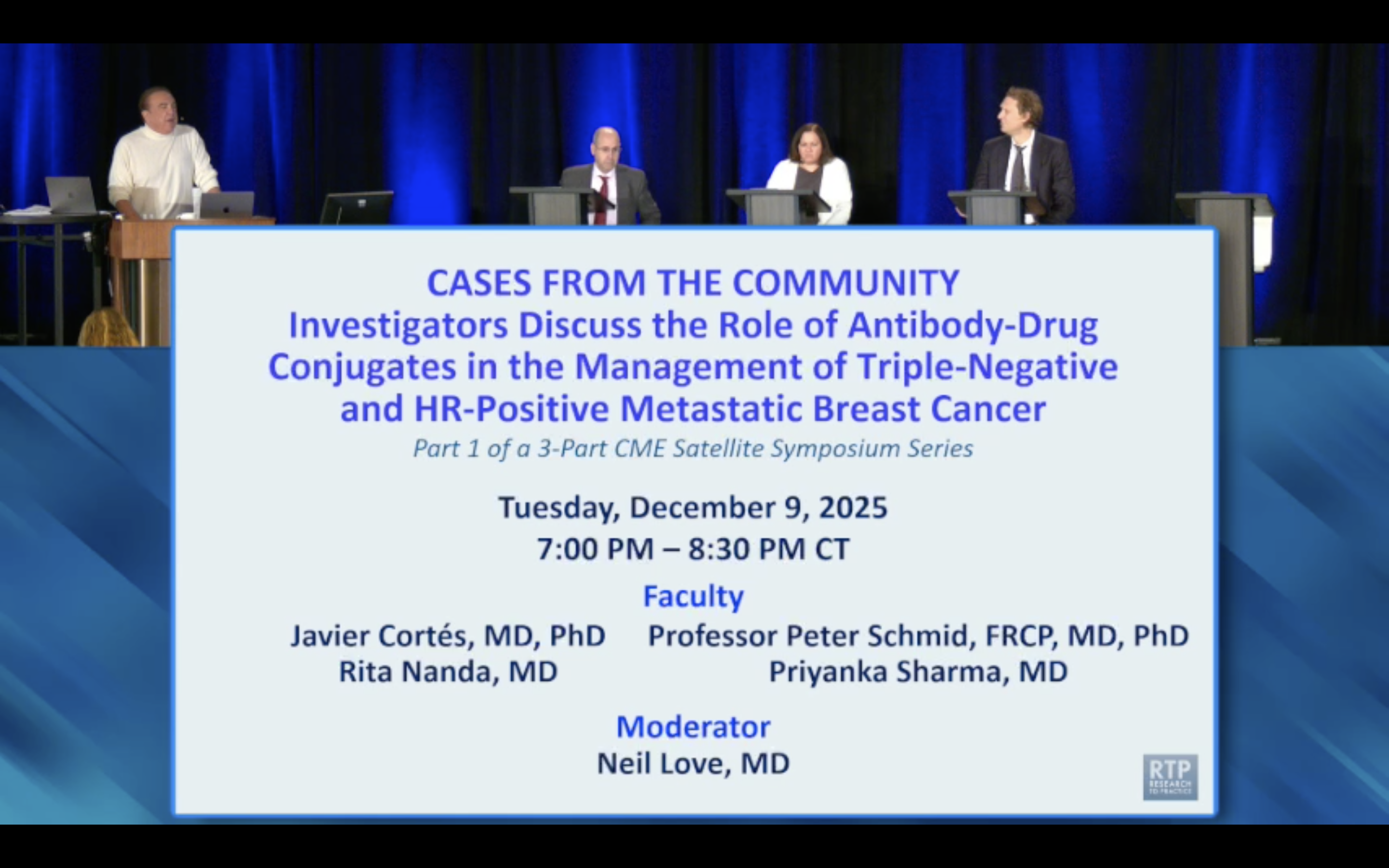
Clinical trial data shows that despite specific toxicities, antibody-drug conjugates (ADCs) can be better tolerated overall than standard chemotherapy. For example, trials for both sacituzumab govitecan and dato-DXd reported fewer patients discontinuing treatment in the ADC arm compared to the chemotherapy arm.