Get your free personalized podcast brief
We scan new podcasts and send you the top 5 insights daily.
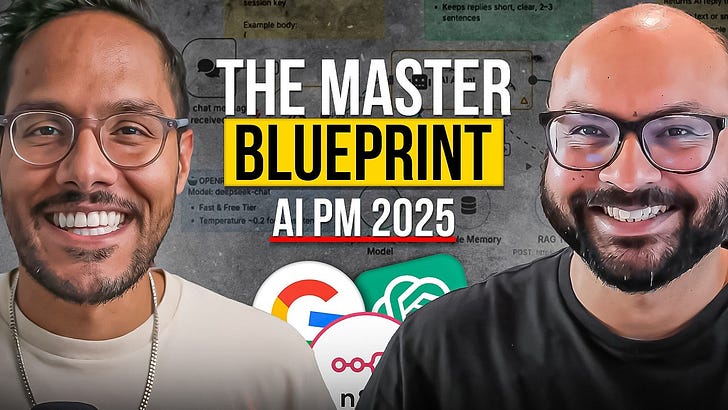
A structured path to a top AI PM role moves from building prototypes to getting production experience. The final, critical step is to build a public brand by running evaluations on major open-source models (from Google, Meta, etc.) and publishing your findings and improvements.

Related Insights
The role of an AI Product Manager is legitimate and highly compensated, as confirmed by Google's Director of AI Product. Job postings and salary data sites like Levels.fyi reflect the high demand and experience required for these positions in a competitive industry.

The 30-40% pay premium for AI PMs isn't just because "AI is hot." It's rooted in the scarcity of their specialized skillset, similar to how analytics PMs with statistics backgrounds are paid more. Companies are paying for demonstrated experience with AI tooling and technical fluency, which is rare.

For product managers not yet working on AI, the best way to gain experience is to build simple AI tools for personal use cases, like a parenting advisor or a board game timer. Using no-code prototyping tools, they can learn the entire development lifecycle—from ideation to prompting and user feedback—without needing an official AI project at work.
As AI becomes foundational, the PM role will specialize. A new "AI Platform PM" will emerge to own core infrastructure like embeddings and RAG. They will expose these as services to domain-expert PMs who focus on user-facing features, allowing for deeper expertise in both areas.
Companies can build authority and community by transparently sharing the specific third-party AI agents and tools they use for core operations. This "open source" approach to the operational stack serves as a high-value, practical playbook for others in the ecosystem, building trust.
The primary bottleneck in improving AI is no longer data or compute, but the creation of 'evals'—tests that measure a model's capabilities. These evals act as product requirement documents (PRDs) for researchers, defining what success looks like and guiding the training process.

The market places a significant premium on product managers with AI skills. Data shows compensation bands for AI PM roles are 30-40% higher than their non-AI counterparts, with senior roles reaching well into the high six-figures and even millions.

The key technical skill for an AI PM is not deep knowledge of model architecture but a higher-level understanding of how to orchestrate AI components. Knowing what AI can do and how systems connect is more valuable than knowing the specifics of fine-tuning or RAG implementation.
In the rapidly evolving AI landscape where ideas are quickly commoditized, the most valuable trait for a product manager is not having one great idea, but possessing the creative skill to generate many good ideas consistently. This creative muscle is more important than being attached to a single concept.
Instead of waiting for external reports, companies should develop their own AI model evaluations. By defining key tasks for specific roles and testing new models against them with standard prompts, businesses can create a relevant, internal benchmark.