Get your free personalized podcast brief
We scan new podcasts and send you the top 5 insights daily.
When macro downturns stall sales and create excess facility overhead, vertically integrating specialized manufacturing can preserve the company. Taking over complex technical processes like composites in-house captures higher margins across lower production volumes rather than depending on external suppliers.

Related Insights
After a public failure to outsource its engine, Boom took on the “impossible” task of building it in-house. This forced vertical integration became a core competency, enabling greater innovation, control, and ultimately led to their profitable power generation business.

Subcontracting creates fixed interfaces between teams, leading to a "calcified architecture" where system-level optimization is impossible. Vertically integrating engineering and manufacturing in-house allows for dynamic trade-offs between disciplines, accelerating innovation and reducing costs.

By manufacturing its own sensors for gas detectors—a practice unique among competitors—MSA can innovate faster and maintain higher margins. This control over the core technology stack results in more durable and advanced hardware, forming a significant competitive moat.

Relying on a traditional supply chain means inheriting its slow pace, costs, and outdated technology. By bringing core manufacturing in-house, Tesla controls its innovation speed, allowing it to move much faster and develop more integrated products than its competitors.

A core pillar of Rocket Lab's strategy is extreme vertical integration. The company builds nearly every component in-house, from engines and tanks to flight computers and solar panels. This control over the entire stack is considered a key competitive advantage across all its business units.

SpaceX's iconic vertical integration wasn't an initial strategic choice but a reaction to crisis. An early plan to outsource manufacturing was shattered when their fastest vendor abruptly closed. This forced them to insource talent and machinery out of necessity, creating the model they are known for today.
Figure designs nearly every component of its robots in-house, from motors to batteries. This extreme vertical integration, though costly upfront, prevents being at the mercy of third-party vendor timelines, code problems, or supply chain issues, enabling faster iteration and deeper system control.

For early-stage hard tech startups, the decision to vertically integrate isn't about margin improvement. It's a question of survival. You should only take on the immense risk and capital intensity of vertical integration if the company literally cannot exist without controlling that part of the supply chain or tech stack.

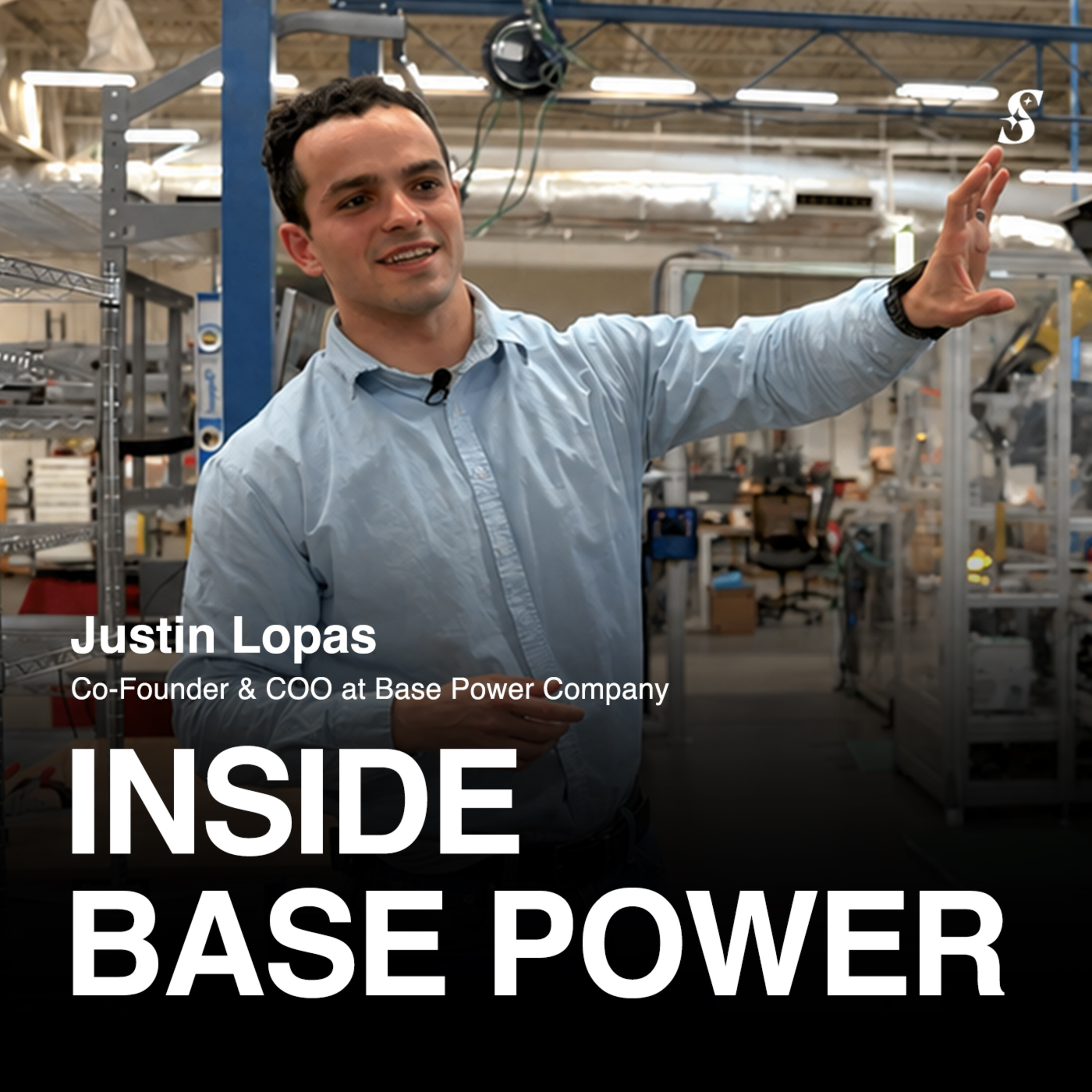
Instead of outsourcing, Base Power manufactures its batteries in-house in the US. This strategy gives them direct control over the production line, allowing for rapid hardware changes, reduced lead times, and lower costs compared to relying on contract manufacturers.
Beyond capturing more profit margin, vertically integrating your supply chain is a powerful defensive move. It mitigates the risk of key suppliers failing and disrupting your operations. By owning critical production and distribution components, you gain proactive control over quality, supply, and your company's stability.
