Get your free personalized podcast brief
We scan new podcasts and send you the top 5 insights daily.
Leadership addressed employee fears of being replaced by AI not with simple reassurances, but by structuring the AI sprint as a collective, co-created project. This gave employees agency to shape how AI would augment their roles, rather than having technology imposed top-down, which countered fear and made the process more productive.

Related Insights
A copywriter initially feared AI would replace her. She then realized she could train AI agents to ensure brand consistency in all company communications—from sales to support. This transformed her role from a single contributor into a scaled brand governor with far greater impact.

Frame internal AI initiatives not as a way to replace employees, but to automate their chores. This frees them to move 'up the stack' to perform higher-value functions like client relations, creative strategy, and founder meetings, ultimately increasing overall output.
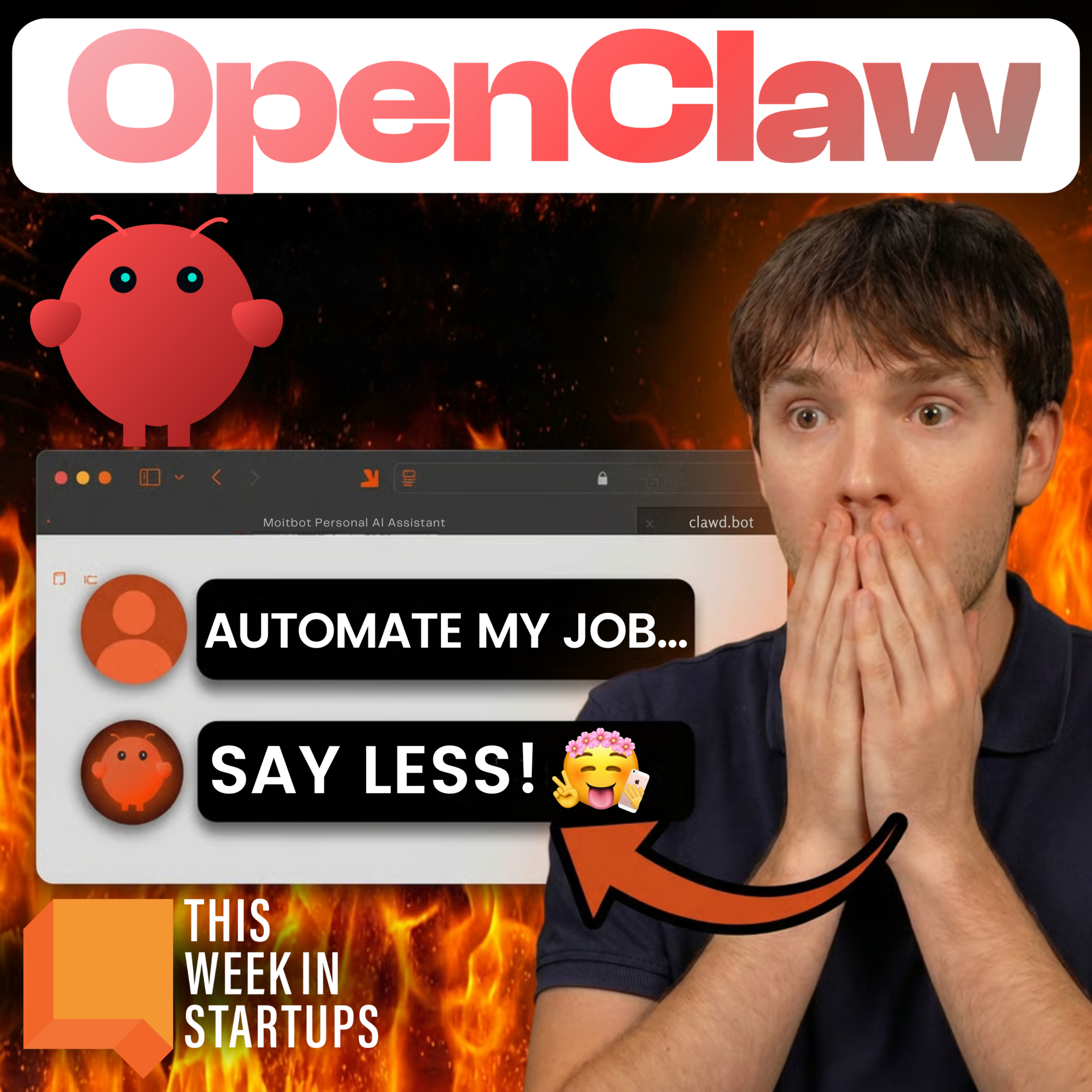
To combat employee fear of replacement, frame AI automation as a path to promotion. By automating their current IC-level tasks, employees free themselves to operate at the next level, effectively managing their new 'AI direct report' and taking on more strategic work.

The primary leadership challenge in the AI era is not technical, but psychological. Leaders must guide employees away from a defensive, scarcity-based mindset ("AI is coming for my job") and towards a growth-oriented, abundance mindset ("AI is a tool to evolve my role"), which requires creating psychological safety amidst profound change.

Contrary to fearing automation, employees will embrace it when given the tools and autonomy. Dan Martell's AI hackathon revealed that teams instinctively built solutions to automate their own core tasks, demonstrating a desire to move on to higher-level, more creative work.

When transitioning Box to be "AI first," CEO Aaron Levie explicitly communicated that the goal was not to reduce headcount or cut costs. Instead, he framed AI as a tool to increase company output, speed, and customer service, which successfully aligned employees with the new strategy by removing fear.
Employees progress through three stages of AI adoption: 1) Fearing AI will take their job, 2) Fearing a person using AI will take their job, and 3) Realizing they cannot perform their job without AI. Leaders must actively guide their organization to this third level of indispensability.

To drive team adoption of AI, Descript's CEO framed it as a tool to automate disliked tasks (e.g., project management, documentation) to free up time for high-value work like strategy and customer engagement. This positive framing reduces fear and increases buy-in by focusing on enhancement rather than replacement.

Approaching new technology like AI from a place of fear ("I'll lose my job if I don't learn this") is a poor motivator. A more powerful construct is to ask, "How can I use this new tool to serve my clients and constituents at a higher level?" This shifts the focus from survival to service.

Address employee fear by defining a job as "skills applied times processes followed." Communicate that while AI will change which skills and processes are valuable, the core human ability to learn and adapt remains essential. This shifts the focus from replacement to liberation from low-value tasks, fostering a growth mindset.
