Get your free personalized podcast brief
We scan new podcasts and send you the top 5 insights daily.
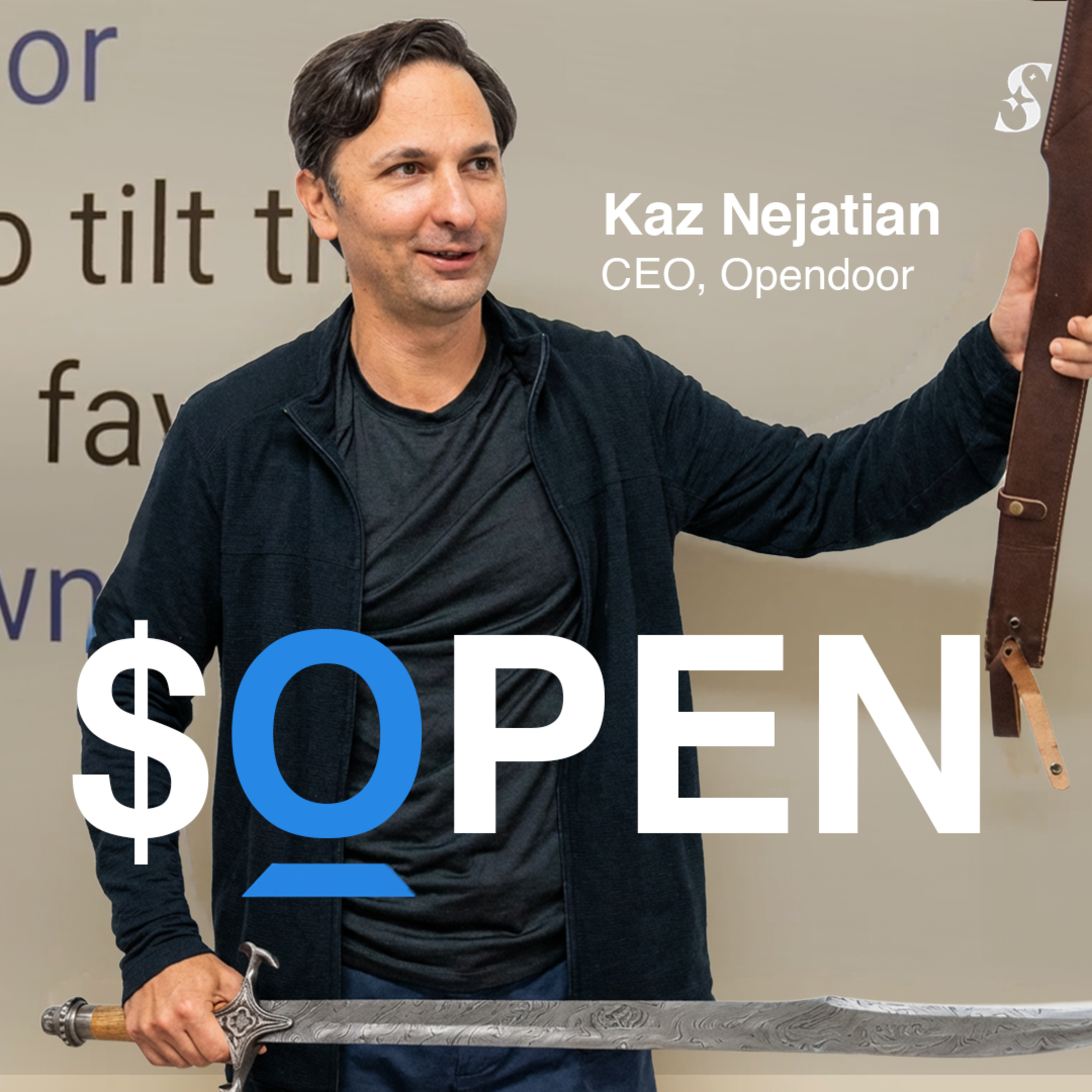
Opendoor's CEO believes the stock ticker is a distraction, like a football player staring at the scoreboard. The stock price is a lagging indicator of company performance. By focusing exclusively on building a great company, the score will eventually take care of itself.
Related Insights
Howard Marks describes the downside of being a public company as receiving a constant, often arbitrary, 'report card' from the market. Daily stock price movements, driven by people with limited understanding of the company's long-term strategy, create noise and pressure that private companies can avoid.

A key differentiator for companies that scale successfully is their focus. Failing companies obsess over and incentivize leading indicators like MQL volume. Successful ones use them only as directional guides while remaining fixated on lagging indicators like revenue.

Following Warren Buffett, the speaker measures investment success by tracking a company's "owner's earnings" (cash from operations minus maintenance capex), not its stock price. If operating results are growing as expected, short-term price drops become irrelevant, preventing emotional decisions and reinforcing a long-term, business-focused perspective.

Founder Jesse Cole largely ignores financial meetings, focusing instead on metrics that directly impact fan experience. He obsessively tracks merchandise line wait times, game speed, and trick plays, believing that optimizing these customer-facing KPIs is the true driver of long-term financial success.

Klarna's CEO candidly revealed that his management team vowed never to watch the company's stock price after its IPO, but they immediately broke that promise and checked it daily. This highlights the intense, almost unavoidable psychological pressure that public market fluctuations exert on company leadership.

Ariel Cohen acknowledges employee morale is 100% correlated with the stock price. He sees his role as a counter-force, continuously focusing the team on strong internal metrics and the 2-to-10-year journey, conditioning them to treat daily market fluctuations as irrelevant noise to the real business performance.
The stock price and the narrative around a company are tightly linked, creating wild oscillations. Investors mistakenly equate a rising stock with a great company. In reality, the intrinsic value of a great business rises gradually and steadily, while the stock price swings dramatically above and below this line based on shifting market sentiment.

The intense drive for achievement in many founders isn't primarily about wealth accumulation. Instead, it's a competitive need to win and prove themselves, similar to an athlete's mindset. Financial success serves as a quantifiable measure of their performance in this "sport."

As a public company CEO, Dylan Field actively avoids focusing on daily stock fluctuations. He believes the only controllable factors are the business inputs—improving the product and creating customer value. This is an application of Bill Walsh's philosophy, "the score takes care of itself," to public market management, prioritizing long-term fundamentals over short-term sentiment.

CEO Kaz Nejatian's compensation is a $1 salary, and he pays for his own benefits, resulting in a net-negative cash flow. This is an extreme form of "skin in the game" that aligns his incentives entirely with long-term shareholder value over a personal paycheck.