Get your free personalized podcast brief
We scan new podcasts and send you the top 5 insights daily.
The AI robotics industry is entering a high-stakes period as companies move from research to reality by shipping general-purpose robots for testing in consumer homes. This marks a critical test of whether the technology is robust enough for real-world environments, with a high probability of more failures than successes.

Related Insights
The robotics sector is poised for a hype cycle collapse as companies inevitably miss ambitious timelines. This environment favors incumbents like Tesla and Waymo, who have deep capital reserves and manufacturing expertise, mirroring the evolution of the self-driving car industry.

Insiders in top robotics labs are witnessing fundamental breakthroughs. These “signs of life,” while rudimentary now, are clear precursors to a rapid transition from research to widely adopted products, much like AI before ChatGPT’s public release.

The future of humanoid robotics is not in our homes. While they will revolutionize structured B2B environments like 'dark' factories and data centers, consumer adoption will lag significantly due to a fundamental lack of desire for robots in personal, nuanced spaces.

While consumer robots are flashy, the real robotics revolution will start in manufacturing. Specialized B2B robots offer immediate, massive ROI for companies that can afford them. The winner will be the company that addresses factories first and then adapts that technology for the home, not the other way around.

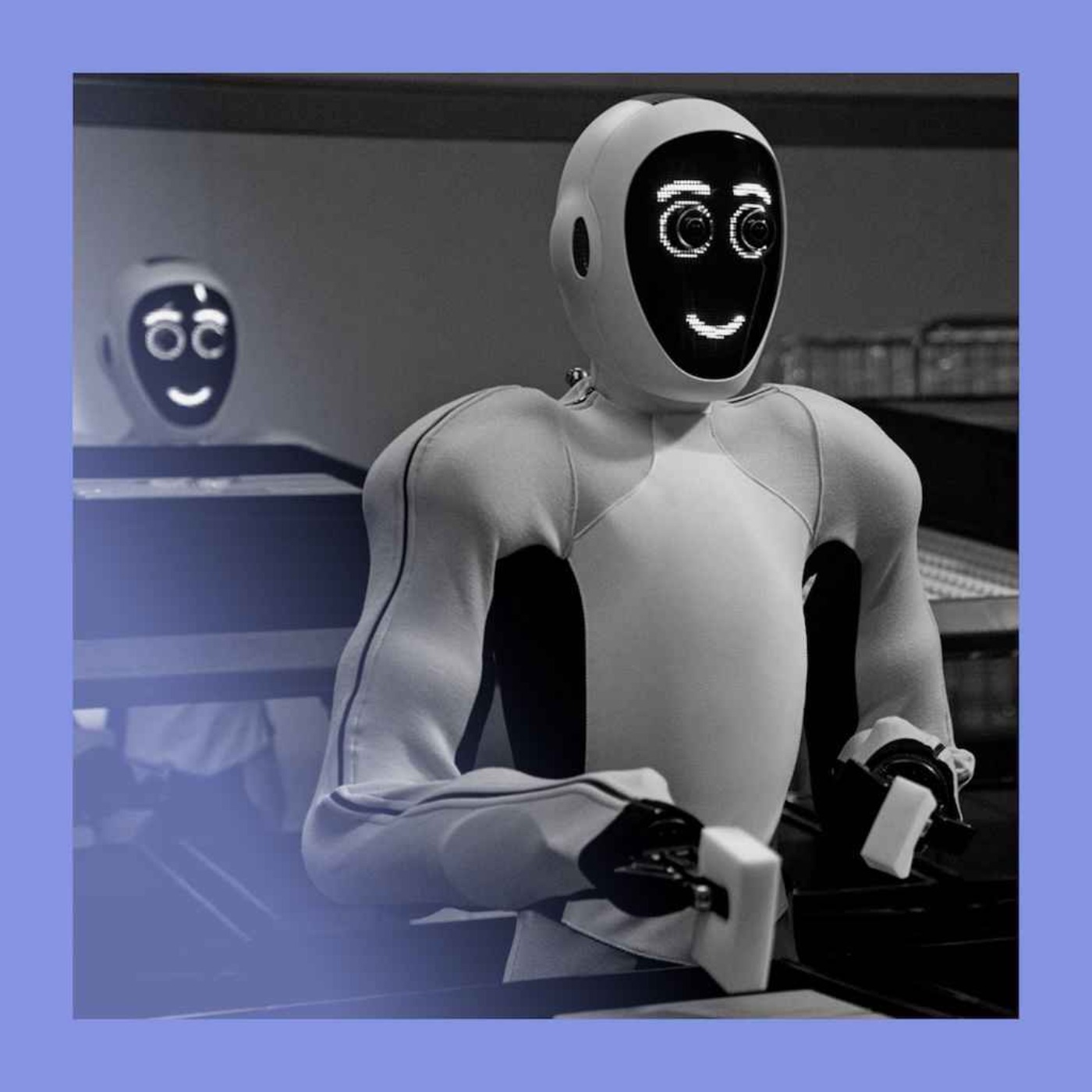
Leading robotics companies are taking different paths to market. Boston Dynamics targets industrial use cases (e.g., DHL, BP). In contrast, both Figure AI and 1X are now focused on the home, but 1X is moving more aggressively by accepting consumer pre-orders first.

While 2025 saw major advancements for robots in commercial settings like autonomous driving (Waymo) and logistics (Amazon), consumer-facing humanoid robots remain impractical. They lack the fine motor skills and dexterity required for complex household chores, failing the metaphorical "laundry test."

The robotics field has a scalable recipe for AI-driven manipulation (like GPT), but hasn't yet scaled it into a polished, mass-market consumer product (like ChatGPT). The current phase focuses on scaling data and refining systems, not just fundamental algorithm discovery, to bridge this gap.
Self-driving cars, a 20-year journey so far, are relatively simple robots: metal boxes on 2D surfaces designed *not* to touch things. General-purpose robots operate in complex 3D environments with the primary goal of *touching* and manipulating objects. This highlights the immense, often underestimated, physical and algorithmic challenges facing robotics.

Moving a robot from a lab demo to a commercial system reveals that AI is just one component. Success depends heavily on traditional engineering for sensor calibration, arm accuracy, system speed, and reliability. These unglamorous details are critical for performance in the real world.

Firms are deploying consumer robots not for immediate profit but as a data acquisition strategy. By selling hardware below cost, they collect vast amounts of real-world video and interaction data, which is the true asset used to train more advanced and capable AI models for future applications.