Get your free personalized podcast brief
We scan new podcasts and send you the top 5 insights daily.
Today's conflicts in places like Ukraine and Gaza are marked by highly restrictive government access and risk-averse newsrooms. This has forced a change in reporting tactics, moving away from traditional embedding towards analyzing a flood of battlefield videos from soldiers and civilians to verify events remotely.

Related Insights
The frontline in modern warfare, like in Ukraine, is no longer a few kilometers wide. Pervasive drone surveillance and attacks have created vast 'no-man's zones' up to 30km wide where any visible movement is immediately eliminated. This strategic shift is forcing the development of larger, longer-range FPV drones.

In the current media landscape, the political impact of military casualties depends on their virality. A non-visual event described in a traditional news article lacks the resonance of a graphic video shared on platforms like TikTok. This creates a grim calculus where policy is only influenced by losses that are visually shocking and widely shared.

The concept of a clear "front line" is gone. The battlefield is a porous zone where infiltration is constant. Control is better understood not by infantry positions, but by the operational reach and coverage of each side's UAV teams, which dictates who can see and strike within an area.

Artillery was historically called the 'god of war' for causing ~80% of battlefield casualties. In Ukraine, FPV (First-Person View) drones have now taken that role, accounting for 70-80% of casualties on the frontline, fundamentally shifting modern combat dynamics.
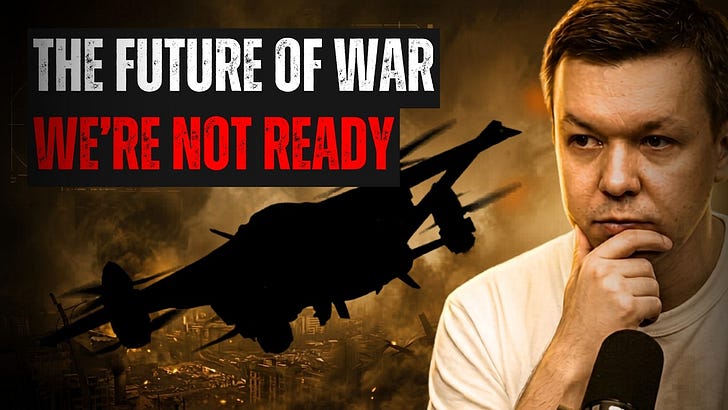
Ukraine has deployed millions of drones, creating a 20-mile-wide transparent zone on the frontline. They can see and strike any Russian movement, inflicting massive casualties and completely stopping Russia's ability to advance. This represents a fundamental shift in modern warfare.

During military operations, all sides release conflicting stories. The official government version, the enemy's counter-narrative, and online conspiracies are all weapons in an information war, requiring extreme skepticism to discern any semblance of truth.

Geopolitical events create a "fog of war" where official statements are contradictory and designed for political support, not accuracy. The right approach is to slow down, ignore reactive headlines, and triangulate the truth from diverse, primary sources like on-the-ground video footage.

Former National Security Advisor Jake Sullivan argues that Israel's refusal to allow foreign journalists into Gaza is a significant problem. It prevents independent verification of claims from combatants on either side of the conflict, creating an information vacuum and setting back the cause of transparency.

Advanced sensors, drones, and satellites make it nearly impossible for either side in the Ukraine war to concentrate large forces without being immediately detected and destroyed. This technological shift enforces a static, sluggish front line characterized by small, dismounted infantry movements.
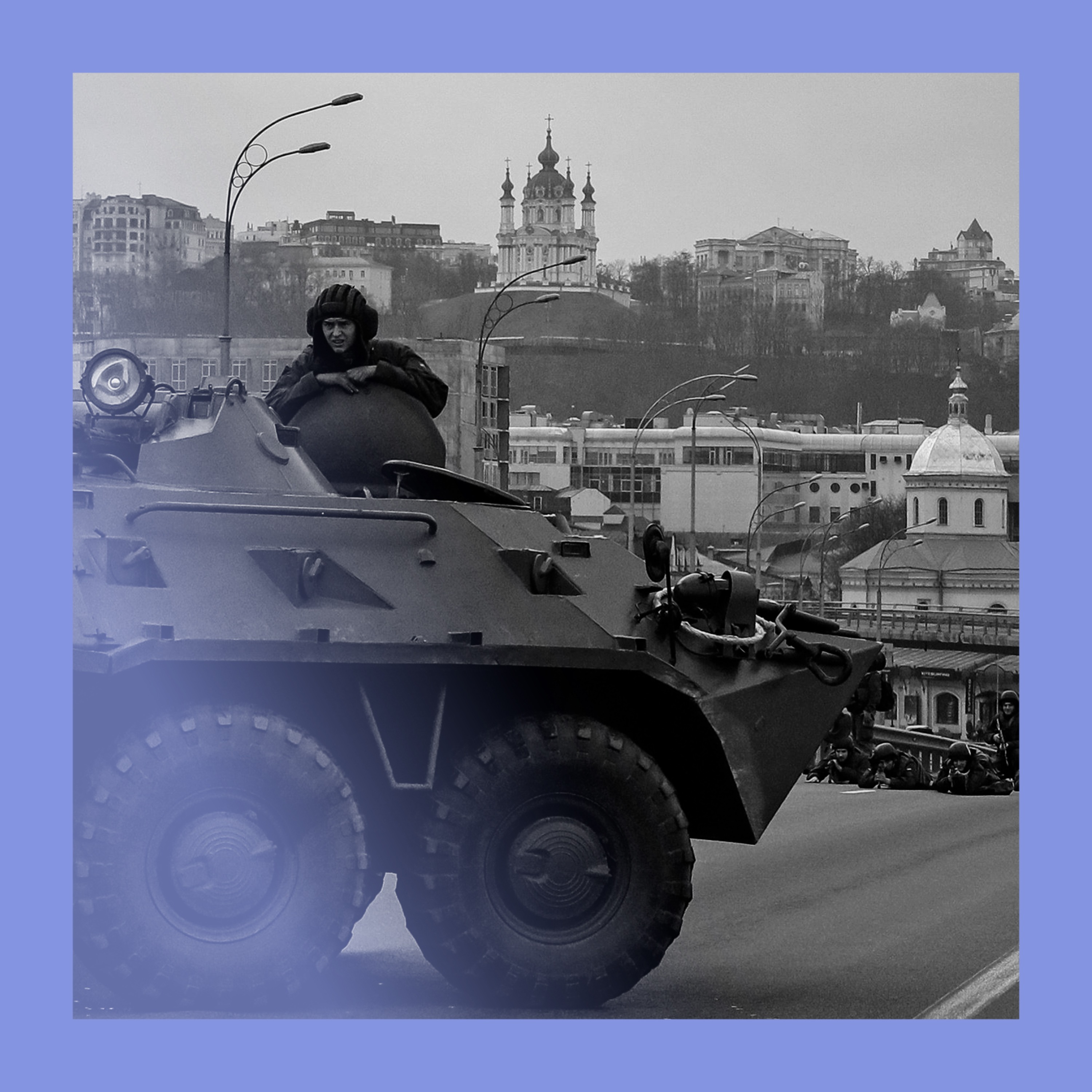
The war in Ukraine has evolved from a traditional territorial conflict into a "robot war," with drones dominating the front lines. This real-world battlefield is accelerating innovation at an "unbelievable" pace, driving new solutions for secure communications and autonomous targeting, providing critical lessons for US drone strategy.