Get your free personalized podcast brief
We scan new podcasts and send you the top 5 insights daily.
Despite public displays of diplomacy, the US and China are engaged in a high-stakes cold war for global dominance, with the AI race as the central battlefield. Their cooperation is purely transactional, masking a fundamental divergence of interests and a drive to win.

Related Insights
The competition in AI infrastructure is framed as a binary, geopolitical choice. The future will be dominated by either a US-led AI stack or a Chinese one. This perspective positions edge infrastructure companies as critical players in national security and technological dominance.
The discourse on AI's cultural missteps is a distraction. The correct strategic framework is viewing it as an arms race for intelligence between the US and China, which recontextualizes the massive spending and urgency as matters of national security and dominance.
The proliferation of powerful open-weight models from Chinese entities is not just a commercial move. It's a calculated geopolitical strategy to commoditize the AI model layer. By reducing the technological gap and preventing US companies from establishing an unassailable lead, China aims to dilute America's economic dominance in a field potentially worth trillions.

Robert Wright argues the most immediate existential danger isn't a superintelligent AI takeover, but the geopolitical competition. A breakneck race for AI supremacy could provoke one nation to launch a preemptive war to prevent the other from achieving a perceived decisive advantage.

High-level US-China talks on AI risk management have produced little substance. Despite agreeing to a "dialogue," both nations view AI as a "fierce competition" rather than an area for collaboration. No significant breakthroughs, like a risk hotline, have been established, indicating a focus on national advantage over global safety.
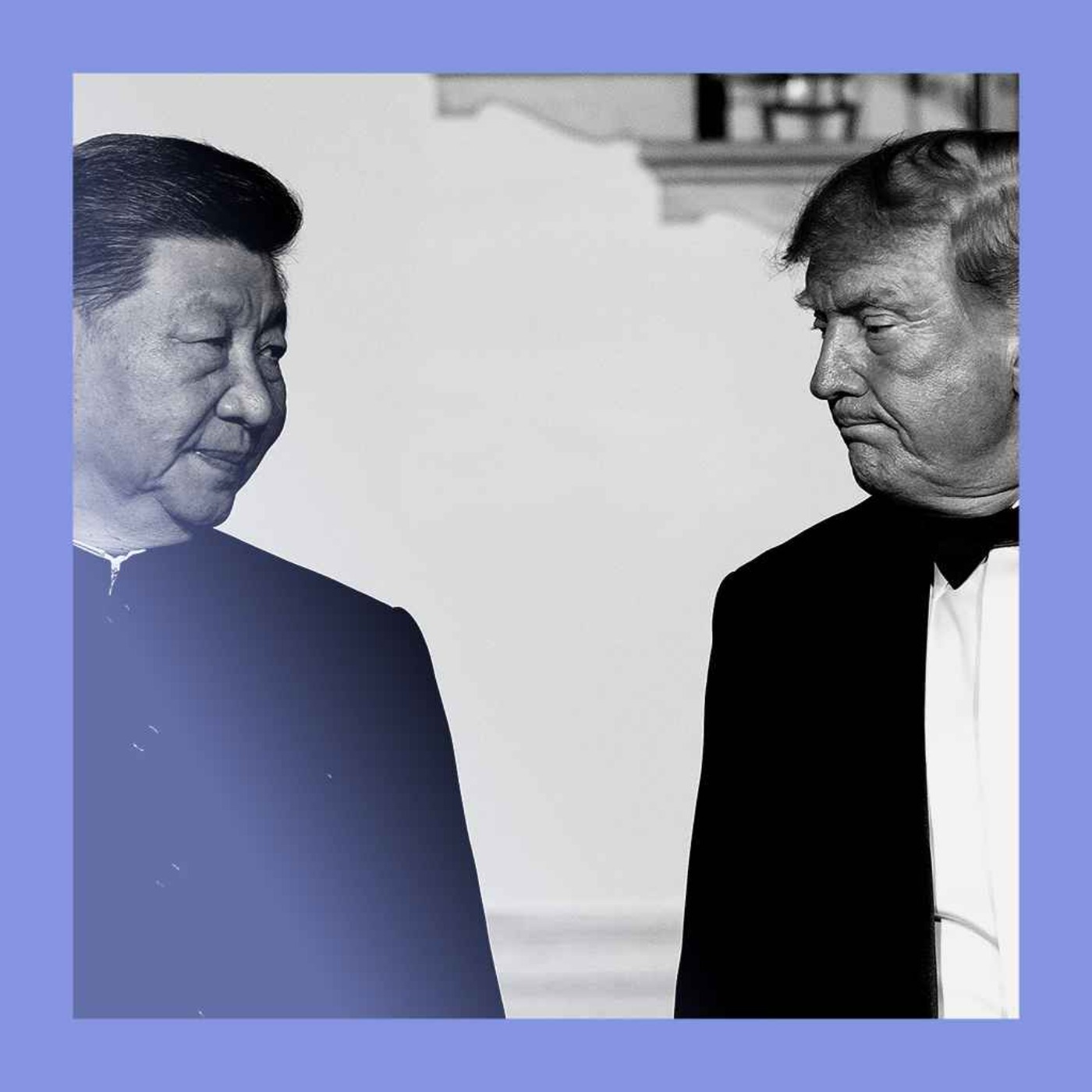
The dynamic between the two superpowers has fundamentally shifted. Economic and technological issues, from AI and semiconductors to biotech and pharma, are no longer seen as purely commercial. Instead, both Washington and Beijing view them through a national security lens, treating them as potential weapons in a broader strategic conflict.

The competition for AI supremacy is a two-country race between the US and China, with all other nations playing peripheral roles. This singular dynamic is so powerful that it will consume global capital and force all other geopolitical issues to align around it, defining the next era of international relations.

The brazen smuggling of NVIDIA chips to China signals that the competition for AI dominance is an "all-out sprint" and a matter of national security. Control over compute infrastructure is now as geopolitically critical as energy, making it the central battleground of a new technological Cold War.

Framing the US-China AI dynamic as a zero-sum race is inaccurate. The reality is a complex 'coopetition' where both sides compete, cooperate on research, and actively co-opt each other's open-weight models to accelerate their own development, creating deep interdependencies.

Unlike the Cold War's 'mutually assured destruction,' if one nation secretly believes it can control a superintelligence, it will pursue it. The only path to a stable pause is if both the US and China agree that superintelligence is uncontrollable by anyone, leading to 'assured destruction' for all, thus aligning their incentives to truly halt development.